Phlox
The genus Phlox consists of approximately 65 species of herbaceous plants within the Polemoniaceae family. Primarily native to North America, these plants…
What are the main characteristics of phlox plants?
The genus Phlox consists of approximately 65 species of herbaceous plants within the Polemoniaceae family. Primarily native to North America, these plants can be annuals or perennials and are widely admired for their clustered, often fragrant flowers.12
Key characteristics include:
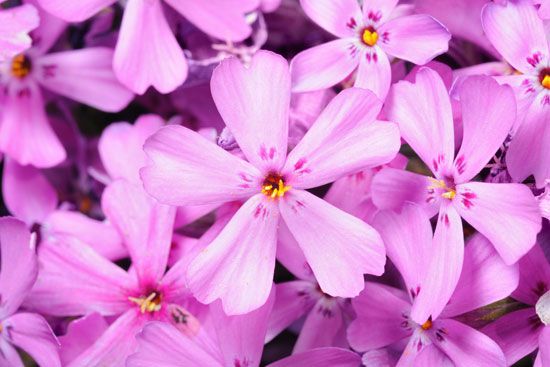
- Physical Structure: Plants typically feature oval or linear leaves and tubular flowers with five flaring lobes. The fruit is a one-seeded or 3-valved capsule1.12
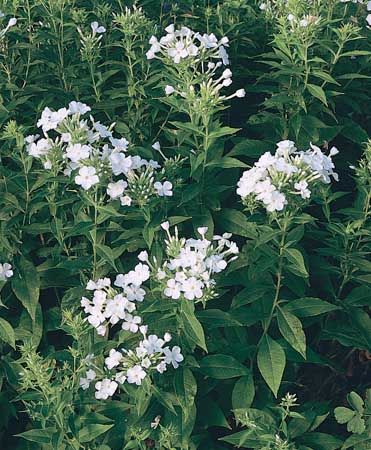
- Appearance: Blooms range in color from white to pale blue, purple, pink, and red. Some varieties, such as annual phlox, exhibit variegated petals.12
- Diversity: Species vary significantly in habit, ranging from the tall, stiff-stemmed summer phlox to low-growing, creeping forms like moss pink, which acts as an evergreen mat.1
The name Phlox is derived from the Greek word for “flame,” reflecting the vibrant, blaze-like colors of the flowers.2
How many species of phlox exist, and where are they primarily found?
The genus Phlox comprises approximately 65 species of plants. While they are found in diverse environments, they are primarily native to North America, with the exception of one species that is native to northeastern Asia.1
What is the origin of the name ‘phlox’ and what does it mean?
The name Phlox is derived from the Greek word phlóx, which translates to “flame,” “blaze,” or “radiance.” This term was historically used to describe flame-colored flowers and is an o-grade derivative of the Greek verb phlégein, meaning “to burn up” or “to gleam.”2
The genus name was formally introduced by Carl Linnaeus in his 1753 work Species plantarum. Linnaeus adapted the name from Theophrastus, an ancient Greek philosopher and botanist, who originally used the term to identify a plant thought to be the wallflower (Erysimum cheiri).2
What are the most popular varieties of phlox used in gardens?
Several species of Phlox are highly valued in gardening for their vibrant, fragrant blooms and varied growth habits. Popular varieties include:
- Summer phlox (Phlox paniculata): Also known as fall phlox, this tall perennial can reach over 1.5 meters (5 feet). It is prized for its large, flat, fragrant flower heads that range from reddish-purple to white.1
- Annual phlox (P. drummondii): A branching plant reaching about 45 cm (1.5 feet). It is popular for its diverse cultivated forms, which often feature starlike shapes and petals with two colors.1
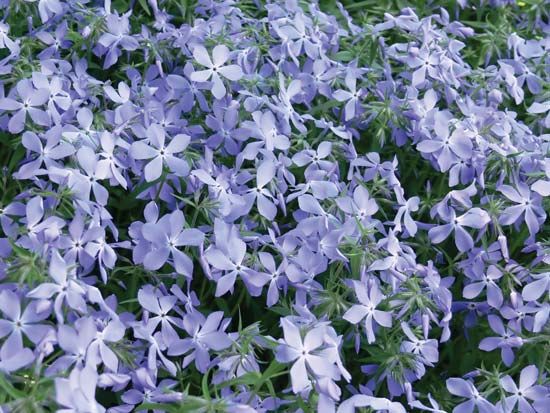
- Blue phlox (P. divaricata): A spring-flowering woodland perennial that grows up to 45 cm, known for its clusters of blue to white flowers.1
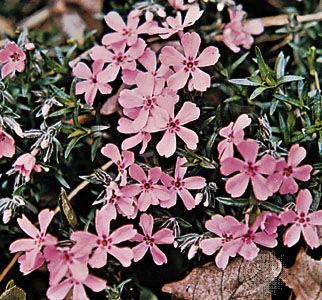
- Moss pink (P. subulata): Also called creeping phlox, this low-growing, evergreen perennial forms mats that are covered in massed blooms during early spring, making it an excellent choice for rocky ledges or ground cover.1
- Perennial phlox (P. pilosa): A summer-blooming species that bears red-purple flowers on hairy stems.1
Sources
- Phlox — Encyclopædia Britannica
- phlox — Merriam-Webster
- Polemoniaceae — Encyclopædia Britannica
Published on · 2 min read