Pilea
The Chinese money plant (Pilea peperomioides) has gained significant popularity as a houseplant due to its unique aesthetic, ease of care, and symbolic…
What makes the Chinese money plant (Pilea peperomioides) a popular houseplant?
The Chinese money plant (Pilea peperomioides) has gained significant popularity as a houseplant due to its unique aesthetic, ease of care, and symbolic meaning.
Its appeal stems from several key characteristics:
- Distinctive Appearance: The plant is prized for its dark green, circular leaves that resemble coins, which are attached to long petioles (leaf stalks) connected to the center of the leaf’s underside.12
- Resilience: It is considered an easy-to-care-for, resilient plant, making it an excellent choice for indoor environments.1
- Safety: The plant is pet-friendly, providing peace of mind for indoor gardeners with animals.1
- Symbolism: Beyond its physical beauty, the Pilea peperomioides is often associated with welcoming wealth and fortune to those who keep it.1
Thriving best in bright spots, this evergreen perennial requires regular watering during the summer, though it should be allowed to dry out slightly between waterings and receive only sparse water during the winter months.1
Are there any interesting cultural or historical uses associated with Pilea plants?
While the Pilea genus is primarily recognized today for its ornamental value as indoor foliage, certain species possess unique biological and cultural associations:
- Symbolism of Wealth: The Chinese money plant (Pilea peperomioides) is widely celebrated for its cultural reputation as a bringer of wealth and fortune. Its common name and popularity as a gift are derived from the resemblance of its circular, coin-like leaves to currency.1
- Botanical Curiosities: The artillery plant (Pilea microphylla) earned its descriptive name through a fascinating biological mechanism. When the plant’s anthers mature, they forcefully expel pollen into the air, a process that mimics the firing of a weapon.2
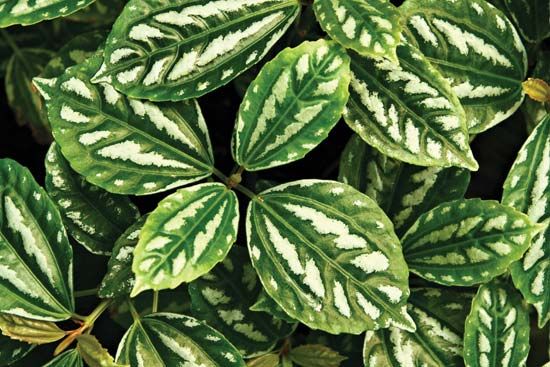
- Common Naming: Many Pilea species have acquired colloquial names based on their appearance or growth habits, such as the aluminum plant for its silvery leaf markings, and the friendship plant, which is often shared among gardeners.2
While these plants are members of the Urticaceae family, they are notable for lacking the stinging hairs typically associated with other nettles.2
What are the distinctive characteristics of plants in the Pilea genus?
The Pilea genus consists of 600–715 species of herbaceous, creeping plants belonging to the nettle family (Urticaceae). Despite their classification within this family, a defining characteristic of Pilea is that they lack the stinging hairs (trichomes) typically found on other nettles.23
These plants are widespread across temperate and tropical regions and are highly valued as ornamental plants for indoor pots, hanging baskets, and border-edging in warm climates. Their physical characteristics vary significantly by species:2
- Growth Habit: Many are creeping or trailing, such as the artillery plant (P. microphylla) and the vigorous P. nummulariifolia.2
- Leaf Diversity: Foliage ranges from the quilted, bronzy leaves of the friendship plant (P. involucrata) to the silvery-marked, glossy leaves of the aluminum plant (P. cadierei).2
- Unique Mechanisms: Some species exhibit specialized biological behaviors, such as the artillery plant, which forcefully expels pollen from its mature anthers.2
Are there any known medicinal properties or uses for Pilea plants?
Sorry, the Britannica knowledge base does not contain information regarding medicinal properties or uses for Pilea plants. While Pilea belongs to the Urticaceae family, it is distinct from other members of that family, such as the stinging nettle, which is well-documented for its historical use in herbal medicine.
Sources
- Chinese money plant — Merriam-Webster
- Pilea — Encyclopædia Britannica
- Urticaceae — Encyclopædia Britannica
- stinging nettle — Encyclopædia Britannica
Published on · 2 min read