Pill Bug
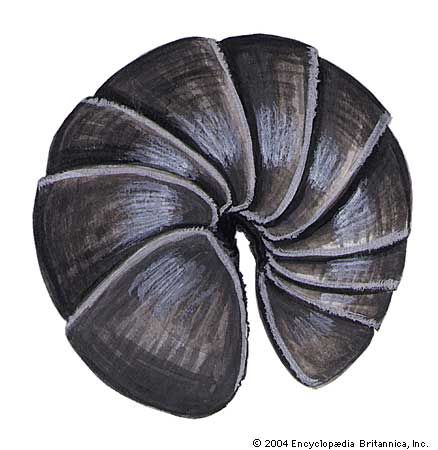
Pill bugs, which are terrestrial crustaceans belonging to the order Isopoda, possess a distinct defense mechanism to protect themselves from predators. When…
How do pill bugs defend themselves from predators, and what is the purpose of their ability to roll into a ball?
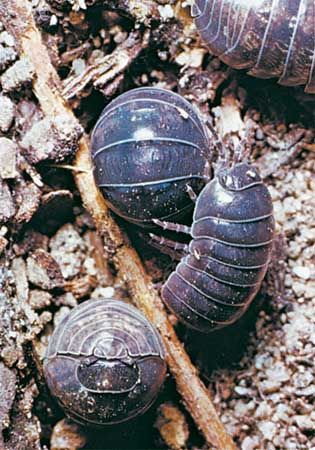
Pill bugs, which are terrestrial crustaceans belonging to the order Isopoda, possess a distinct defense mechanism to protect themselves from predators. When disturbed, they curl their segmented, platelike bodies into a tight, protective ball.12
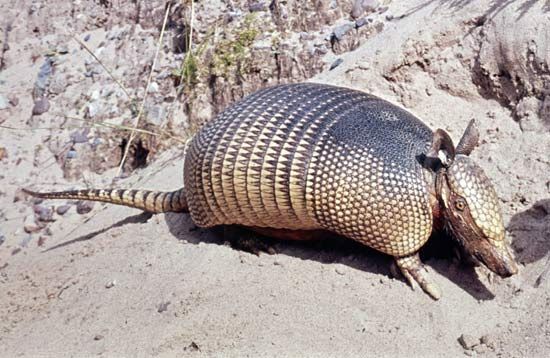
This behavior, known as conglobation, serves as a primary defensive strategy. By rolling into a ball, the pill bug shields its vulnerable underside and soft internal organs, presenting only its hardened, armored exterior to potential threats. This physical adaptation is similar to that of the armadillo, which employs a comparable tactic for protection. Because of this unique ability, they are often referred to as wood lice, though they are distinct from related species like the sow bug that cannot roll up.12
What is the scientific name for pill bugs, and why are they sometimes called roly-polies?
Pill bugs do not have a single scientific name; rather, they are terrestrial crustaceans belonging to the families Armadillididae and Armadillidae. The most common species is Armadillidium vulgare, while other examples include Armadillidium nasatum and Armadillo officinalis.2
They are frequently called “roly-polies” because of their distinct behavioral adaptation: when disturbed, they roll their segmented, platelike bodies into a tight, protective ball. This physical resemblance to a miniature armadillo—which also curls into a ball for defense—is a defining characteristic that distinguishes them from related species like the sow bug, which cannot roll up.2
In what types of habitats are pill bugs commonly found, and how widespread are they globally?
Pill bugs are primarily found in environments that provide moisture and shelter, such as leaf litter, dry and sunny locations, and the edges of wooded areas. While they require specific microhabitats to thrive, they are remarkably adaptable creatures.2
Regarding their global distribution, pill bugs are widespread across the world. Although many species, such as Armadillidium vulgare and Armadillidium nasatum, are native to Europe, they have been introduced to various regions globally, including North America, through human activity and migration. Their ability to inhabit diverse environments has allowed them to establish populations far beyond their original native ranges.23
What is the difference between a pill bug and a sow bug?
The primary difference between a pill bug and a sow bug lies in their defensive behavior. When disturbed, a pill bug is capable of rolling its segmented, platelike body into a tight, protective ball, a trait that earns it the nickname “roly-poly.” In contrast, a sow bug cannot roll into a ball.2
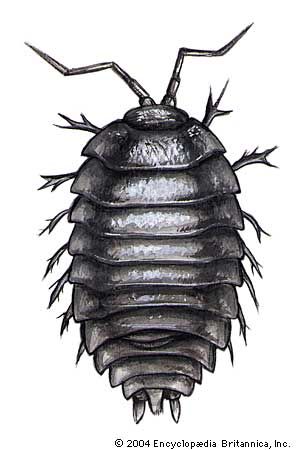
Both creatures are terrestrial crustaceans belonging to the order Isopoda and are often collectively referred to as wood lice. While they share a similar appearance—both having gray, oval bodies covered with armorlike plates—the sow bug’s body is generally more flattened and arched. Additionally, while both are found in moist environments like leaf litter, pill bugs are often associated with drier, sunnier locations compared to the sow bug, which is frequently found in damp areas such as cellars or under stones.245
Sources
- pill bug — Merriam-Webster
- pill bug — Encyclopædia Britannica
- Armadillidium — Merriam-Webster
- wood louse — Encyclopædia Britannica
- sow bug — Encyclopædia Britannica
- wood louse — Merriam-Webster
Published on · 2 min read