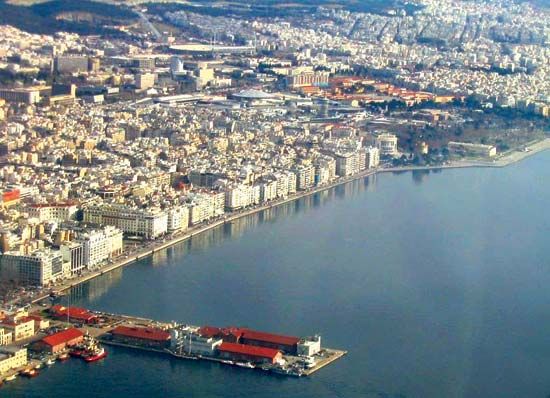
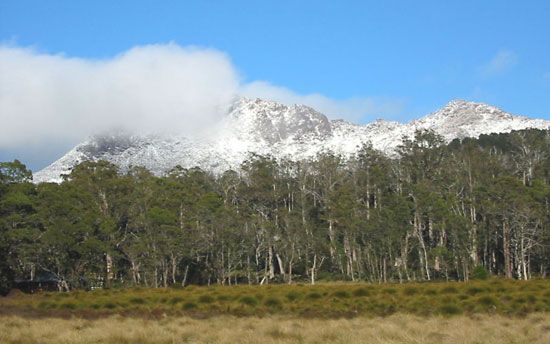
Pineiós River
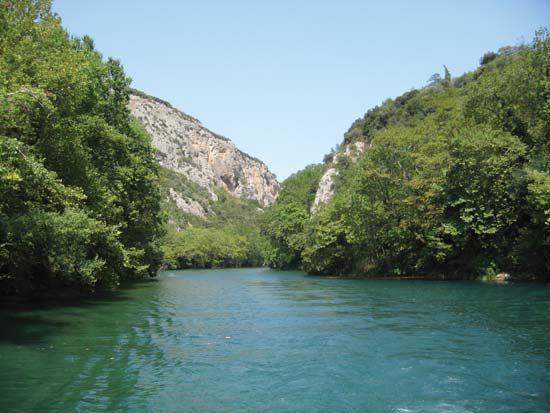
The Vale of Tempe is a narrow gorge located between the Olympus and Ossa massifs in Greece. Its formation is linked to the geological history of the Pineiós…
How does the Pineiós River contribute to the formation of the Vale of Tempe?
The Vale of Tempe is a narrow gorge located between the Olympus and Ossa massifs in Greece. Its formation is linked to the geological history of the Pineiós River, which once fed a prehistoric body of water known as the Larissian Lake.12
During the Quaternary Period, the stream that would eventually become the lower course of the Pineiós eroded backward through the landscape. This erosive action eventually breached the natural barrier, creating a fracture ravine that allowed the Larissian Lake to drain. As the lake emptied, the water carved out the deep, narrow defile that exists today. Consequently, the river transitioned from being dammed by the lake to flowing directly through the newly formed gorge on its path to the Aegean Sea. While ancient legends attribute this dramatic landscape to the trident of Poseidon or seismic activity, geologists identify it as a result of long-term stream erosion.21
Are there any major cities or towns situated along the Pineiós River?
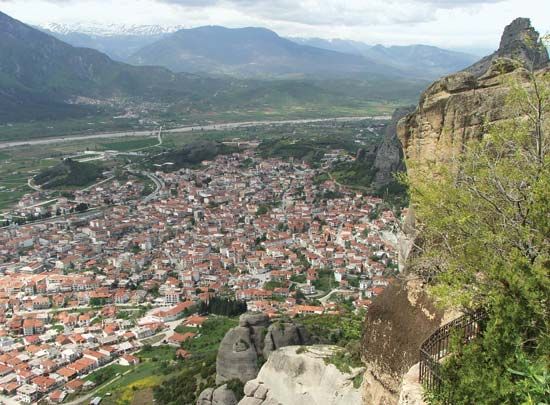
The Pineiós River flows through the heart of the Thessaly region in Greece. While the river traverses mountainous terrain and the Thessalian plain, the most prominent urban center situated directly on its banks is Lárissa.
Lárissa serves as the capital of the Thessaly region and has been a significant settlement since antiquity. Located in the center of the Thessalian plain, the town has historically functioned as an agricultural and economic hub, benefiting from its position along the river. Other settlements, such as Métsovon, are located near the river’s source in the Pindus Mountains, though Lárissa remains the primary major city associated with the river’s course through the plains.14
What is the historical significance of the Pineiós River in Greek mythology?
The Pineiós River holds significant status in Greek mythology, primarily through its association with the god Apollo. According to legend, after Apollo slew the serpent Python, he traveled to the waters of the Pineiós to undergo ritual purification. In honor of this event, the Vale of Tempe—the gorge through which the river flows—was dedicated to his cult. A temple was established on the river’s bank, and every eight years, a sacred procession traveled from Delphi to the site to collect laurel branches, which were then used to crown victors of athletic and artistic contests.2
Additionally, the river is linked to the myth of the dryad Daphne. As the daughter of a river god, she was pursued by Apollo; to escape his advances, she was transformed into a laurel tree. This myth further cements the laurel’s connection to both the river and the god of music and prophecy. While some ancient legends credit the formation of the river’s path through the Vale of Tempe to the trident of Poseidon, these stories reflect the cultural reverence for the river’s powerful role in the landscape.12
How long is the Pineiós River and what are its major tributaries?
The Pineiós River flows for a total length of 127 miles (205 km) through the mountains and plains of the Thessaly region in Greece.1
As it traverses the landscape, the river is fed by several tributaries, including:
- Enipévs: Joins the river as it enters the western Thessalian plain.1
- Lithaíos: A tributary that contributes to the river’s flow.1
- Titarísios: Another significant tributary of the Pineiós.1
Rising in the Lákmos mountains of the Pindus range, the river eventually carves its way through the Vale of Tempe before emptying into the Gulf of Thérmai in the Aegean Sea.1
Sources
- Pineiós River — Encyclopædia Britannica
- Vale of Tempe — Encyclopædia Britannica
- Tempe, Vale of — Merriam-Webster
- Lárissa — Encyclopædia Britannica
- Greece - Drainage — Encyclopædia Britannica
- Peneus — Merriam-Webster
- dryad and Greek Mythology — Merriam-Webster
Published on · 3 min read