Gulf of Thérmai
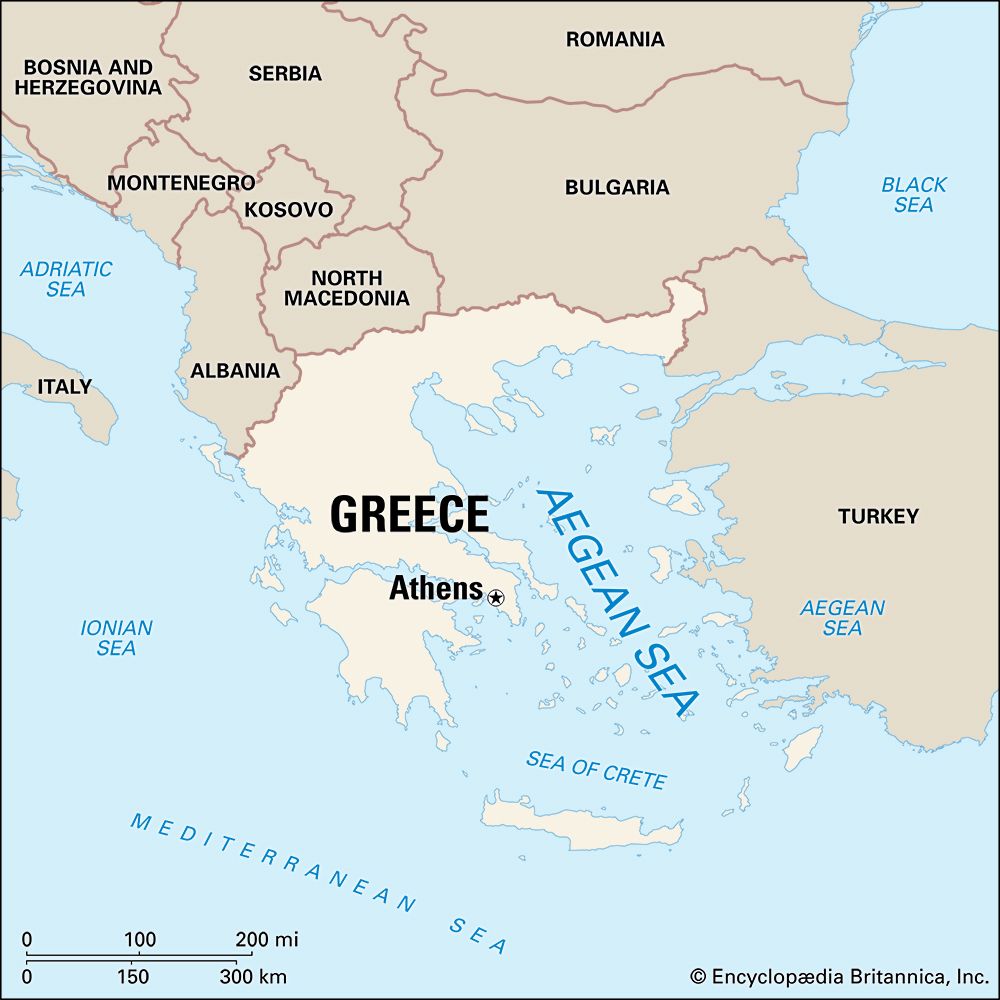
The Gulf of Thérmai (also known as the Thermaïkós Gulf) is a large inlet of the Aegean Sea located in northeastern Greece.
What is the Gulf of Thérmai and where is it located in Greece?
The Gulf of Thérmai (also known as the Thermaïkós Gulf) is a large inlet of the Aegean Sea located in northeastern Greece.12
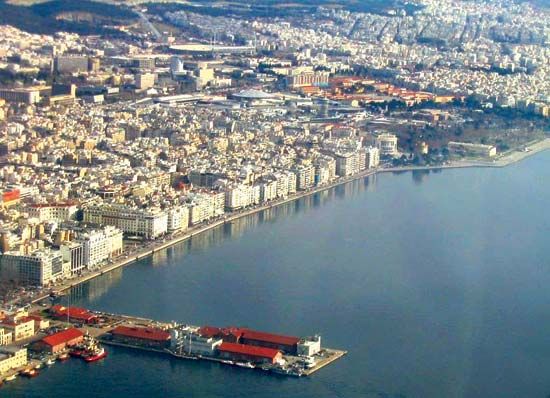
It is situated between the regions of Thessaly, Macedonia, and the Chalcidice peninsula. The gulf extends approximately 60 miles (100 km) in a northwest-southeast direction and reaches a width of about 40 miles (65 km) at its broadest point near the isthmus of Kassándra. In its extreme northeast, the gulf narrows into the Kólpos Thessaloníkis (Saloniki Bay), which serves as the location for the port of Thessaloníki, Greece’s second-largest city and a major industrial hub.1
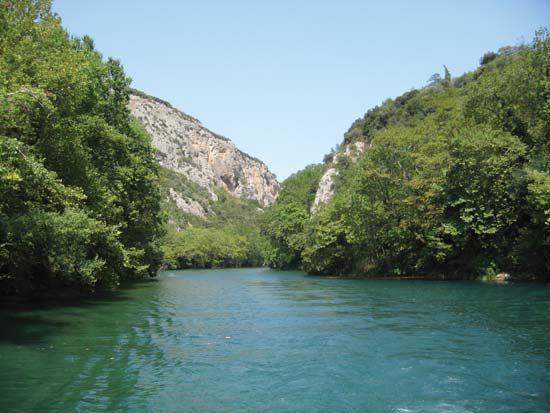
The area is fed by several significant rivers, including the Vardar (Axiós), the Aliákmon, and the Pineiós River, which empties into the gulf near Cape Dhermatás. A ship canal, completed in 1937, connects the gulf to the Kólpos Kassándras to the east.12
How has the coastline of the Gulf of Thérmai changed over time due to geological processes?
The coastline of the Gulf of Thérmai has been significantly altered over time by the accumulation of sediment deposited by major rivers. The northern basin of the gulf receives substantial discharge from the Vardar (Axiós), the Loudhiás, and the Aliákmon rivers, which carry large quantities of silt into the basin.1
This ongoing process of sedimentation has led to the silting up of historical coastal features. A notable example is the Touzla Marsh, which was once the harbour of the ancient city of Pydna. The transformation of this harbour into a marshy, silted-up area illustrates how geological deposition has reshaped the shoreline, effectively moving the coastline seaward and rendering former maritime access points inaccessible.1
Are there any significant environmental concerns or conservation efforts related to the Gulf of Thérmai?
What are the main economic activities associated with the Gulf of Thérmai?
The economic activities associated with the Gulf of Thérmai are primarily centered around the city of Thessaloníki, which serves as a major industrial and commercial hub for Greece.
Key economic sectors include:
- Industry and Manufacturing: Since the 1960s, Thessaloníki has developed into a significant industrial center. Major facilities include oil refineries, petrochemical plants, and steel works. Other local industries produce textiles, liquors, hides, carpets, bricks, tiles, soap, and flour.
- Trade and Logistics: The harbour of Thessaloníki, opened to navigation in 1901, is a vital port for the region. The city acts as a terminus for rail lines connecting to the rest of Greece and the Balkans, facilitating the export of chrome, manganese, and various raw and processed agricultural products.
- Agriculture: The surrounding plains, particularly the plain of Piería, support agricultural production, with centers like Kateríni specializing in tobacco.
While the gulf itself has few natural harbours, smaller ports such as Paralía and Néa Mikhanióna support local maritime activity. Additionally, a ship canal through the isthmus of Kassándra links the Gulf of Thérmai to the Kólpos Kassándras, aiding regional maritime transit.
Sources
- Gulf of Thérmai — Encyclopædia Britannica
- Pineiós River — Encyclopædia Britannica
- Greece - Southern Greece: the Pelopónnisos — Encyclopædia Britannica
- Thessaloníki — Encyclopædia Britannica
- Persian Gulf - Biological and mineral resources — Encyclopædia Britannica
- Bahrain - Services — Encyclopædia Britannica
Published on · 2 min read