Piperales
The order Piperales represents an early evolutionary branch within the angiosperm tree of life. Together with the Laurales, Magnoliales, and Canellales, it…
What is the evolutionary history of the Piperales order?
The order Piperales represents an early evolutionary branch within the angiosperm tree of life. Together with the Laurales, Magnoliales, and Canellales, it forms the magnoliid clade, which diverged early in the history of flowering plants.1
Evidence of the order’s ancient lineage is supported by the fossil record. For instance, pollen from the genus Lactoris—a member of the order—has been recovered from sediments in southern Africa dating back to the Late Cretaceous Epoch (approximately 100.5 million to 66 million years ago).1
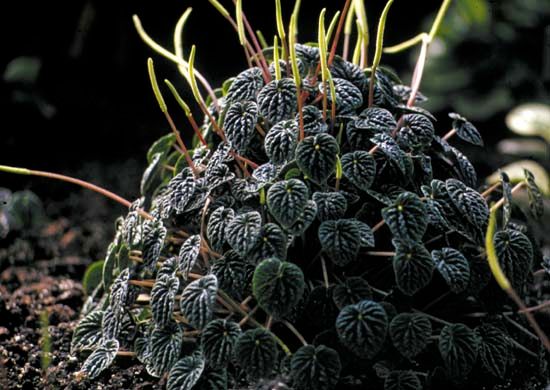
While the order is characteristically herbaceous, its evolutionary history is marked by a unique mix of traits. Members often display features typically associated with monocotyledons, such as discrete vascular bundles in the stem and threefold flower parts, suggesting complex evolutionary relationships within the early angiosperms. Today, the order comprises three primary families: Piperaceae, Saururaceae, and Aristolochiaceae.1
What are some common uses of Piperales plants in traditional medicine?
Plants within the order Piperales have a long history of use in traditional medicine across various cultures. Their applications are primarily found within the families Piperaceae and Aristolochiaceae.
Medicinal Uses in Piperaceae
Many species in the genus Piper are utilized for their physiological properties, often attributed to alkaloids like piperine.56
- Piper cubeba: Known as the source of cubeb, this plant is used in various traditional medicinal preparations.5
- Piper methysticum: The root of this plant is used to create kava, a ceremonial drink valued for its narcotic and sedative effects.5
- Piper betle: In parts of the Orient, the leaves are chewed with betel nut and lime for their mildly stimulating effects.5
Medicinal Uses in Aristolochiaceae
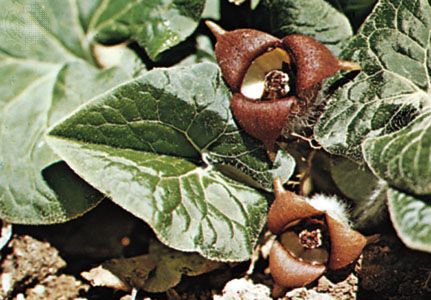
The birthwort family contains several species historically significant in herbal medicine, though some are known to be poisonous.7
- Aristolochia clematitis: Historically, extracts from this plant were used to facilitate childbirth and to treat snakebites.7
- Thottea: Several species within this Asian genus are recognized for their importance in traditional and Ayurvedic medicine.7
How do Piperales plants reproduce, and what are their unique reproductive structures?
Plants in the order Piperales primarily reproduce through seeds, which serve as the main method for species dispersal. In addition to sexual reproduction, some members, particularly in the Saururaceae family, utilize the fragmentation of rhizomes to ensure vegetative propagation.1
Unique Reproductive Structures
The reproductive morphology of Piperales is characterized by several distinct features:
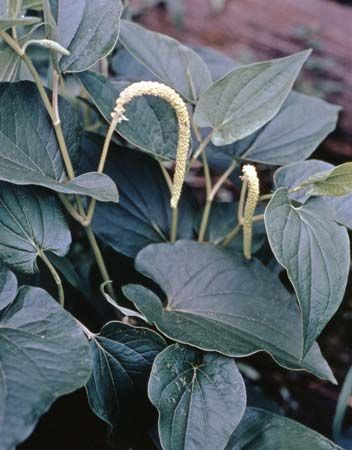
- Inflorescences: In the families Piperaceae and Saururaceae, flowers are arranged in slender, spikelike inflorescences. These spikes are often covered with numerous, closely appressed, and inconspicuous flowers.1
- Floral Characteristics: Most species in these families lack sepals and petals. The flowers are typically bisexual, containing both stamens and carpels, and feature one erect ovule per ovary chamber.1
- Specialized Adaptations: In some Saururaceae, expanded bracts arise below the inflorescence, making the floral spike resemble a single, showy flower. Conversely, the Aristolochiaceae family often produces larger, complex flowers that utilize unpleasant odors to trap pollinating insects.1
- Fruit Types: The drupe is the prevailing fruit type in the Piperaceae family, while the other families in the order are characterized by dry fruits.1
How are Piperales plants distributed geographically around the world?
The order Piperales exhibits a diverse global distribution, with its members found across tropical, subtropical, and temperate regions. The geographic range of the order is best understood by examining its primary families:
- Piperaceae: This is the largest family in the order and is pantropical, meaning it is widely distributed throughout tropical and subtropical regions worldwide.15
- Aristolochiaceae: Most species in this family are found in the tropics of both hemispheres, though several genera are native to the temperate zone. For instance, the genus Asarum is most diverse in eastern Asia and is found throughout the northern temperate zone. Additionally, the subfamily Hydnoroideae has a specific distribution: Prosopanche is found in Central and South America, while Hydnora occurs in Africa, Madagascar, and the Arabian Peninsula. The rare Lactoris fernandeziana is endemic to a single island in the Juan Fernández Archipelago off the coast of Chile.114
- Saururaceae: This family is native to North America and Southeast Asia, typically inhabiting wet environments.1
Sources
- Piperales — Encyclopædia Britannica
- Piperales — Merriam-Webster
- bryophyte - Evolution and paleontology — Encyclopædia Britannica
- heteropteran - Evolution and paleontology — Encyclopædia Britannica
- Piperaceae — Encyclopædia Britannica
- piperine — Encyclopædia Britannica
- Saururaceae — Merriam-Webster
- Saururus — Merriam-Webster
- Aristolochiaceae — Encyclopædia Britannica
- Magnoliales - Magnoliaceae — Encyclopædia Britannica
- pollination — Encyclopædia Britannica
- Botanical Sex: 9 Alluring Adaptations — Encyclopædia Britannica
- frog and toad - Direct development from egg to froglet — Encyclopædia Britannica
- Piperaceae — Merriam-Webster
- Aristolochiaceae — Merriam-Webster
- Laurales - Distribution and abundance — Encyclopædia Britannica
Published on · 3 min read