Pipsissewa
Pipsissewa refers to evergreen, herbaceous plants belonging to the genus Chimaphila within the heath family. These woodland plants are characterized by…
What are the unique physical characteristics of the pipsissewa plant?
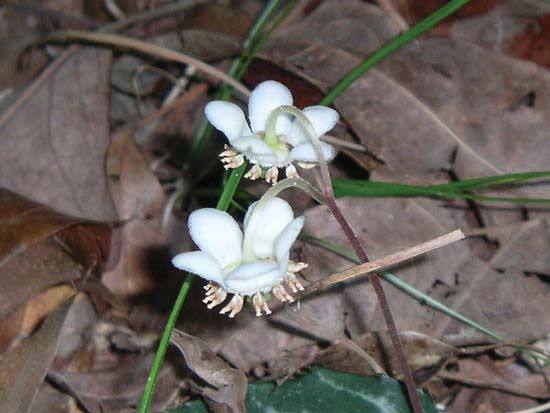
Pipsissewa refers to evergreen, herbaceous plants belonging to the genus Chimaphila within the heath family. These woodland plants are characterized by several distinct physical traits:
- Stems and Roots: The plants grow from underground rhizomes, with stems reaching heights between 10 and 30 cm (4 to 12 inches) depending on the species.1
- Leaves: They feature leathery leaves that are lance-shaped. In the species C. maculata, these leaves are marked with white spots along the veins, whereas C. umbellata possesses broader, unspotted leaves.1
- Flowers: Pipsissewa produces fragrant, five-petalled flowers that are pink or white. These blooms typically grow in small clusters at the end of the stems and are known to nod.1
While these plants are sometimes cultivated in gardens, they are generally considered difficult to grow.1
What is pipsissewa and where is it commonly found?
Pipsissewa refers to any evergreen, herbaceous plant within the genus Chimaphila, which is part of the heath family (Ericaceae)1. These woodland plants are named after a Cree word that references the diuretic properties of their leaves.1
These plants are found in various regions across the globe:
- C. umbellata: This species is widely distributed, occurring in North America (ranging from Canada to Mexico), as well as in Europe and Japan.1
- C. maculata: This species is native to North America, where it is found from Canada down to the southern United States.1
Pipsissewas are characterized by their leathery leaves and fragrant, five-petalled flowers that grow in clusters at the end of stems arising from underground rhizomes. While they are sometimes grown in gardens, they are generally considered difficult to cultivate.1
What is the scientific name of pipsissewa and what does it mean?
The scientific name for pipsissewa is Chimaphila.32
The name is derived from New Latin, combining the Greek word cheima, meaning “winter,” and the suffix -phila, which relates to the plant’s evergreen nature as it remains visible throughout the winter months.3
In contrast, the common name “pipsissewa” is believed to originate from a Cree word that refers to the diuretic properties of the plant’s leaves. Another theory suggests the name may come from the Eastern Abenaki word kpi-pskʷáhsawe, which translates literally to “flower of the woods”.21
How did pipsissewa get its common name?
The common name “pipsissewa” has two primary etymological theories:
- Cree Origin: The name is widely cited as deriving from a Cree word that references the diuretic properties of the plant’s leaves when consumed.2
- Eastern Abenaki Origin: Another theory suggests the name originates from the Eastern Abenaki word kpi-pskʷáhsawe, which translates literally to “flower of the woods.”1
The term was first recorded in English usage around 1789.1
Sources
- pipsissewa — Encyclopædia Britannica
- pipsissewa — Merriam-Webster
- Chimaphila — Merriam-Webster
Published on · 2 min read