Heath
The term "heath" refers to two distinct concepts: a type of landscape and a specific genus of plants.
What is heath?
The term “heath” refers to two distinct concepts: a type of landscape and a specific genus of plants.
As a Landscape
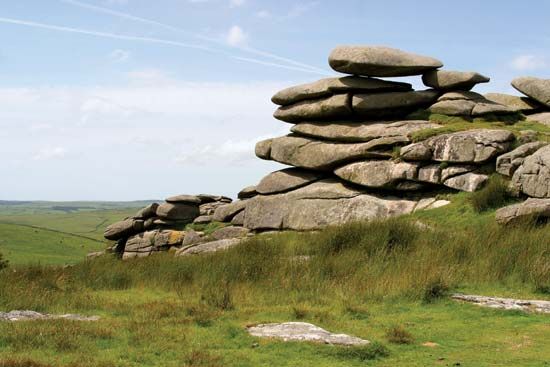
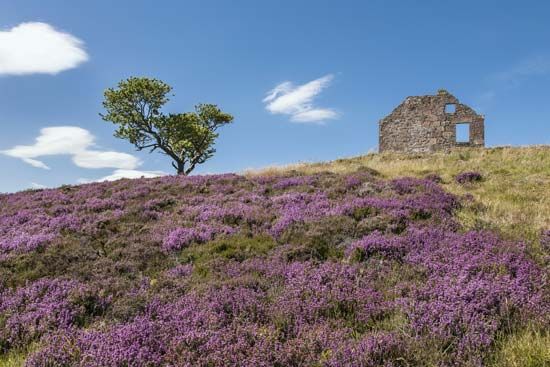
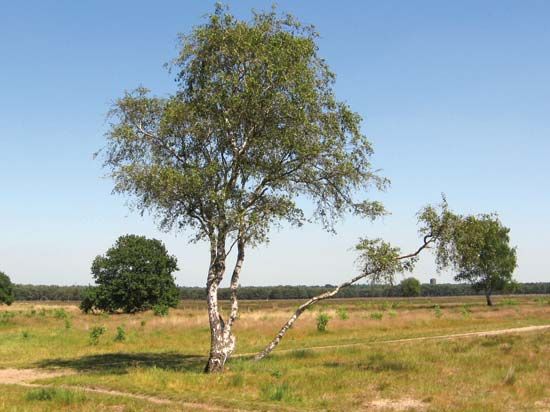
A heath is a broad, open area of level or rolling, treeless country. These environments are often characterized by uncultivated, infertile land that may be uninhabited or unsuitable for traditional crops. In many regions, heaths are closely associated with moors, which are tracts of open country featuring heather or acid peat vegetation.123
As a Plant
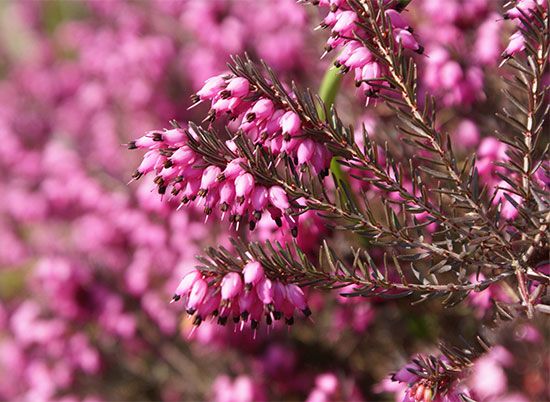
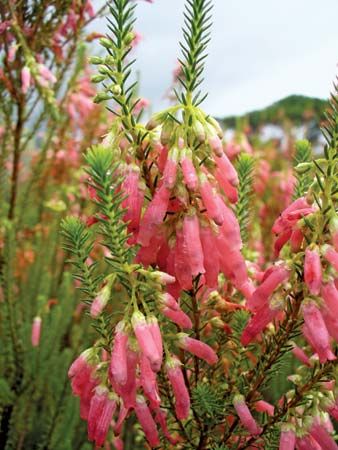
The heath also refers to a genus of plants (Erica) consisting of approximately 800 species of low evergreen shrubs within the family Ericaceae. Most species are native to South Africa, though they are also found in the Mediterranean and northern Europe. These plants are known for their small, narrow leaves and bell-shaped or tubular flowers. Some species, such as the tree heath, are economically significant as the source of briar root used for pipes.4
What types of plants typically grow in heathlands?
Heathlands are characterized by open, nutrient-poor, and often acidic soils that support a specialized range of vegetation. While the specific species vary significantly by geography, the following plants are typically found in these environments:57
- Heathers and Heaths: The most iconic plants of these regions include true heaths (Erica) and heather (Calluna vulgaris), which often dominate the landscape.879
- Shrubs and Bushes: Many heathlands feature a variety of shrubs from the Ericaceae family, such as azaleas, rhododendrons, and mountain laurel. In Mediterranean regions, shrubs like oaks, pistachio, and olive are common.57
- Herbaceous Plants: Beneath the shrub canopy, one can often find smaller plants including sedges, irises, grasses, lilies, and orchids.7
- Regional Variations: In the fynbos of South Africa and Australian scrublands, proteoids like Protea and Banksia are prominent, while Australian heathlands often feature epacrids and myrtles instead of true heathers.7
How do heathlands differ from moorlands?
While the terms “heath” and “moor” are often used interchangeably to describe open, treeless landscapes, they possess distinct characteristics based on their soil and topography.
Key Differences
- Soil and Moisture: A moor is frequently associated with wet, acidic peat soil, making it synonymous with a bog in many contexts. In contrast, heathlands are typically characterized by drier, sandy, and nutrient-poor soils.31
- Topography: In the British Isles, the term “moorland” is commonly used to describe uncultivated, hilly, or upland areas. Heaths are generally described as broad, level, or rolling plains.31
- Vegetation: While both environments support heather, moors are defined by their ability to support acid-loving, water-saturated vegetation, whereas heaths are defined by their open, often barren appearance where little grows besides hardy shrubs.31
Essentially, while both are open, uncultivated tracts of land, the primary distinction lies in the water content of the soil and the elevation of the terrain.3110
What animals are commonly found in heath habitats?
Heath habitats support a variety of specialized animal life, though the specific species present depend heavily on the geographic location and the local climate.
- Birds: In many heathlands, birds are both varied and abundant. In the fynbos of South Africa, nectar-eating birds such as sunbirds and the Cape Sugarbird have coevolved with the local flora to act as pollinators. In Australia, various honeyeaters (family Meliphagidae) serve a similar role. Additionally, the heath-wren is a notable ground-nesting bird found in the open rangelands of southern Australia.
- Insects: Insects play a critical role in heath ecosystems. Many species are highly specialized, such as those that rely on specific host plants for food or egg-laying. In many heathlands, ants are essential for seed dispersal. While some insects are pollinators, others, such as various heteropterans, inhabit protected areas like the undersides of foliage or crevices within the scrubland.
- Small Mammals: While larger mammals are typically absent from many heathlands due to the lack of nutritious forage and the presence of unpalatable, thorny vegetation, small mammals are often common. These animals significantly influence the regeneration of the habitat by consuming seeds.
Sources
- heaths — Merriam-Webster
- heathlands — Merriam-Webster
- Moor — Encyclopædia Britannica
- heathland — Merriam-Webster
- heath — Encyclopædia Britannica
- heath — Merriam-Webster
- Ericaceae — Encyclopædia Britannica
- Scrubland - Biota — Encyclopædia Britannica
- heather — Encyclopædia Britannica
- moors — Merriam-Webster
- heath-wren — Merriam-Webster
- reptile - Distribution and ecology — Encyclopædia Britannica
- heteropteran - Habitats — Encyclopædia Britannica
- amphibian — Encyclopædia Britannica
- homopteran - Habitats — Encyclopædia Britannica
Published on · 3 min read