Herbaceous Plant
A herbaceous plant is any vascular plant that lacks true woody tissues. Unlike trees and shrubs, which develop durable, lignified stems through secondary…
What is Herbaceous plant?
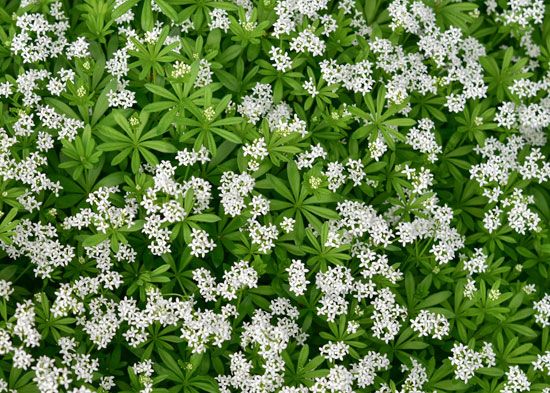
A herbaceous plant is any vascular plant that lacks true woody tissues. Unlike trees and shrubs, which develop durable, lignified stems through secondary growth, herbaceous plants typically possess soft, flexible green stems.12
While some herbaceous species undergo limited secondary growth, most do not, often because their vascular bundles are “closed” and lack the cambium necessary for producing wood. Many of these plants are adapted to seasonal changes; in temperate regions, their aerial portions often die back annually, allowing the plant to survive the winter via underground storage organs like roots, rhizomes, bulbs, or corms.134
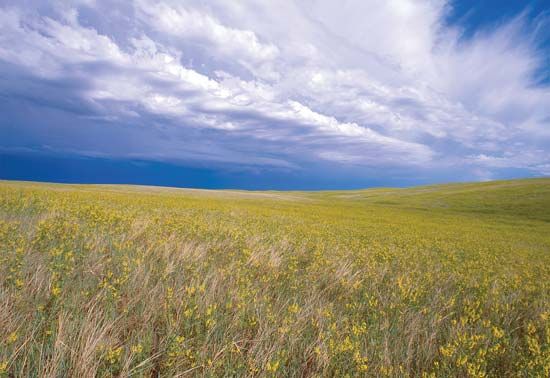
Herbaceous plants include nearly all annuals and biennials, as well as many perennials. They are ecologically vital as primary producers in diverse habitats—such as grasslands and marshes—and economically significant, as they comprise the majority of the world’s food crops, including cereal grains and most vegetables.1
What is the difference between annual, biennial, and perennial plants?
Plants are often classified by their life span, which describes how long they take to complete their life cycle from germination to seed production.
Annuals
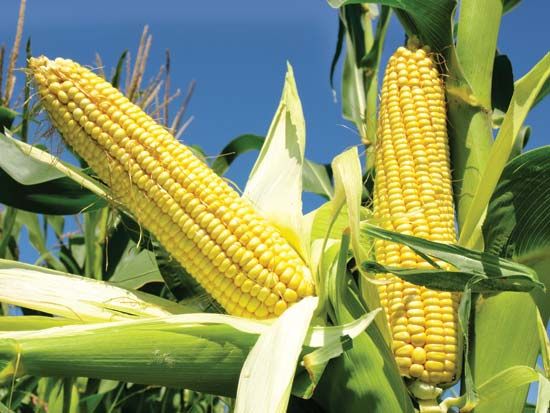
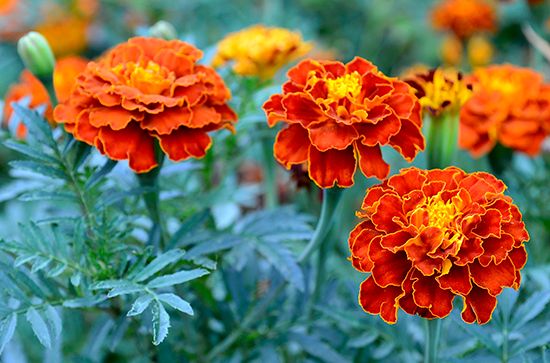
Annuals complete their entire life cycle—germinating, growing, flowering, and producing seeds—within a single growing season. Once the seeds mature, the plant dies. Examples include corn, wheat, and many common garden flowers like marigolds.567
Biennials
Biennials require two growing seasons to complete their life cycle. During the first year, they focus on vegetative growth, often storing food in roots or stems. In the second year, they produce flowers, fruits, and seeds before dying. Common examples include carrots, beets, and parsley.8627
Perennials
Perennials persist for several years. While all trees and shrubs are perennials, many herbaceous perennials exist as well. In cold climates, the aboveground parts of herbaceous perennials often die back in autumn, but the plant survives underground through structures like bulbs, rhizomes, or tubers, sending up new growth the following season.976
How do herbaceous plants survive the winter if their stems die back?
Herbaceous plants that die back in autumn survive the winter by retreating into specialized underground storage organs located at or below the soil surface. These structures protect the plant’s vital tissues from freezing temperatures and desiccation while the aerial portions are dormant.108
Common types of these underground modifications include:
- Bulbs: Compact structures often composed of fleshy leaf bases attached to a basal plate of stem tissue.410
- Corms: Swollen, starchy stem tissues that are typically round and often covered by protective, papery tunics.410
- Tubers: Irregularly shaped stem tissues that lack special coverings and can persist for several years.410
- Rhizomes: Prostrate, creeping stems that grow horizontally underground, producing roots and new shoots.410
By storing energy in these organs, the plants are able to remain alive during unfavorable conditions and resume growth when environmental cues, such as rising temperatures or longer day lengths, signal the return of spring.108
Why are some plants like bananas considered herbaceous even though they grow like trees?
Banana plants are classified as herbaceous because they lack true woody tissues. While they may reach heights of 3–6 meters (10–20 feet), they do not develop the secondary vascular tissues—such as xylem and phloem organized into wood—that characterize trees.311
The structure that appears to be a trunk is actually a “false trunk,” or pseudostem. This cylinder is composed of tightly rolled, overlapping leaf sheaths that grow upward from a stocky, subterranean rhizome. Because these plants do not undergo significant secondary growth, they remain flexible and lack the rigid, lignified wood found in true trees.12113
Essentially, the banana plant is a gigantic herb that relies on the structural support of its massive, layered leaf bases rather than a woody stem to achieve its impressive height.1211
Sources
- herbaceous perennial — Merriam-Webster
- Plant - Classification of angiosperms — Encyclopædia Britannica
- Herbaceous plant — Encyclopædia Britannica
- Plant development - Seasonal adaptations — Encyclopædia Britannica
- life span - Biennials — Encyclopædia Britannica
- Biennial — Encyclopædia Britannica
- Annual — Encyclopædia Britannica
- Perennial — Encyclopædia Britannica
- Angiosperm - General features — Encyclopædia Britannica
- Asparagales - Storage organs — Encyclopædia Britannica
- Banana — Encyclopædia Britannica
- banana-plant — Merriam-Webster
- Zingiberales - General features — Encyclopædia Britannica
Published on · 3 min read