Piranha
There are more than 60 species of piranha, which are razor-toothed, primarily South American fish. While often depicted as aggressive, most species are…
How many species of piranha exist, and what are some of the most common types?
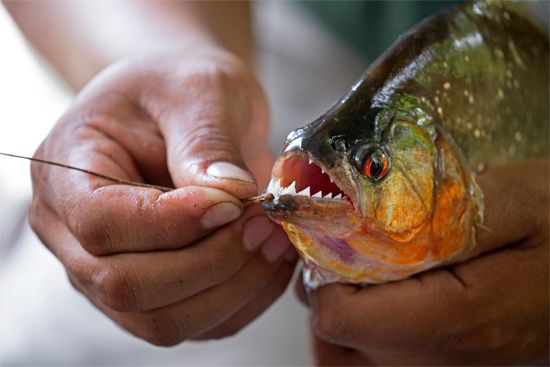
There are more than 60 species of piranha, which are razor-toothed, primarily South American fish. While often depicted as aggressive, most species are actually scavengers or feed on plant material.1
Common and notable types include:
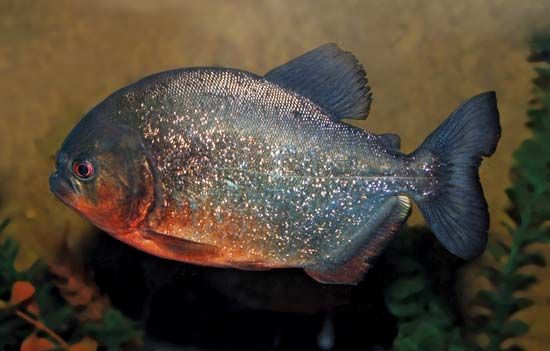
- Red-bellied piranha (Pygocentrus nattereri): The most infamous species, known for having the strongest jaws and sharpest teeth. They are known to hunt in groups, particularly during low-water seasons.1
- Lobetoothed piranha (P. denticulata): Found primarily in the Orinoco River basin and lower Amazon tributaries.1
- San Francisco piranha (P. piraya): A species native to the San Francisco River in Brazil.1
- Wimple piranhas (genus Catoprion): A group of about 12 species that survive by nipping morsels from the fins and scales of other fish, which then heal.1
Ichthyologists often distinguish “true piranhas” from vegetarian members of the subfamily Serrasalminae, though classifications vary based on dental and evolutionary characteristics.1
What are some natural predators of piranhas?
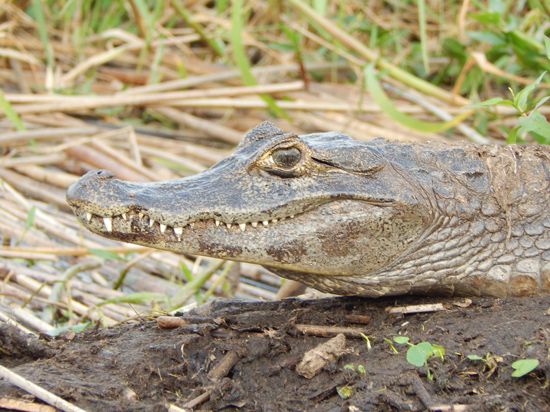
The provided search results do not explicitly list the natural predators of piranhas. While the articles note that caimans are amphibious carnivores that inhabit the same South American river systems and feed on fish, the text does not specifically identify piranhas as a primary food source for them or any other predator.
Are piranhas really as dangerous to humans as often portrayed in popular culture?
The reputation of the piranha as a ravenous, indiscriminate killer is largely exaggerated by popular culture, such as the 1978 film Piranha. In reality, most of the more than 60 species are scavengers or feed on plant material rather than hunting large prey.12
While certain species, such as the red-bellied piranha, the lobetoothed piranha, and the San Francisco piranha, are considered dangerous to humans, attacks on people are actually quite rare. Even when these fish hunt in groups—a behavior often observed during low-water seasons—they typically prefer prey that is smaller than or only slightly larger than themselves. Although they are attracted to the scent of blood, they rarely engage in the dramatic “feeding frenzies” depicted in movies, and many species, such as the wimple piranha, survive by simply nipping small morsels from the fins or scales of other fish.12
How have piranhas been portrayed in movies and popular media?
In popular media, the piranha is frequently portrayed as a ravenous, indiscriminate killer. This exaggerated reputation for extreme ferocity has been solidified by films such as the 1978 movie Piranha, which depicts the fish as a dangerous threat to humans.12
In reality, this cinematic portrayal is largely inaccurate. While piranhas possess sharp, triangular teeth and strong jaws, most of the more than 60 species are primarily scavengers or feed on plant material. Even the species known to be more aggressive, such as the red-bellied piranha, rarely engage in the dramatic “feeding frenzies” seen on screen. Attacks on humans are quite rare, and most species do not hunt large animals at all, preferring prey that is smaller than or only slightly larger than themselves.12
Sources
- piranha — Encyclopædia Britannica
- 10 of the World’s Most Dangerous Fish - Piranha — Encyclopædia Britannica
- caiman — Encyclopædia Britannica
Published on · 2 min read