Pacu
Pacu refers to several ostariophysan fishes native to South America within the family Serrasalmidae. While they are related to piranhas, they are distinct in…
What is pacu?
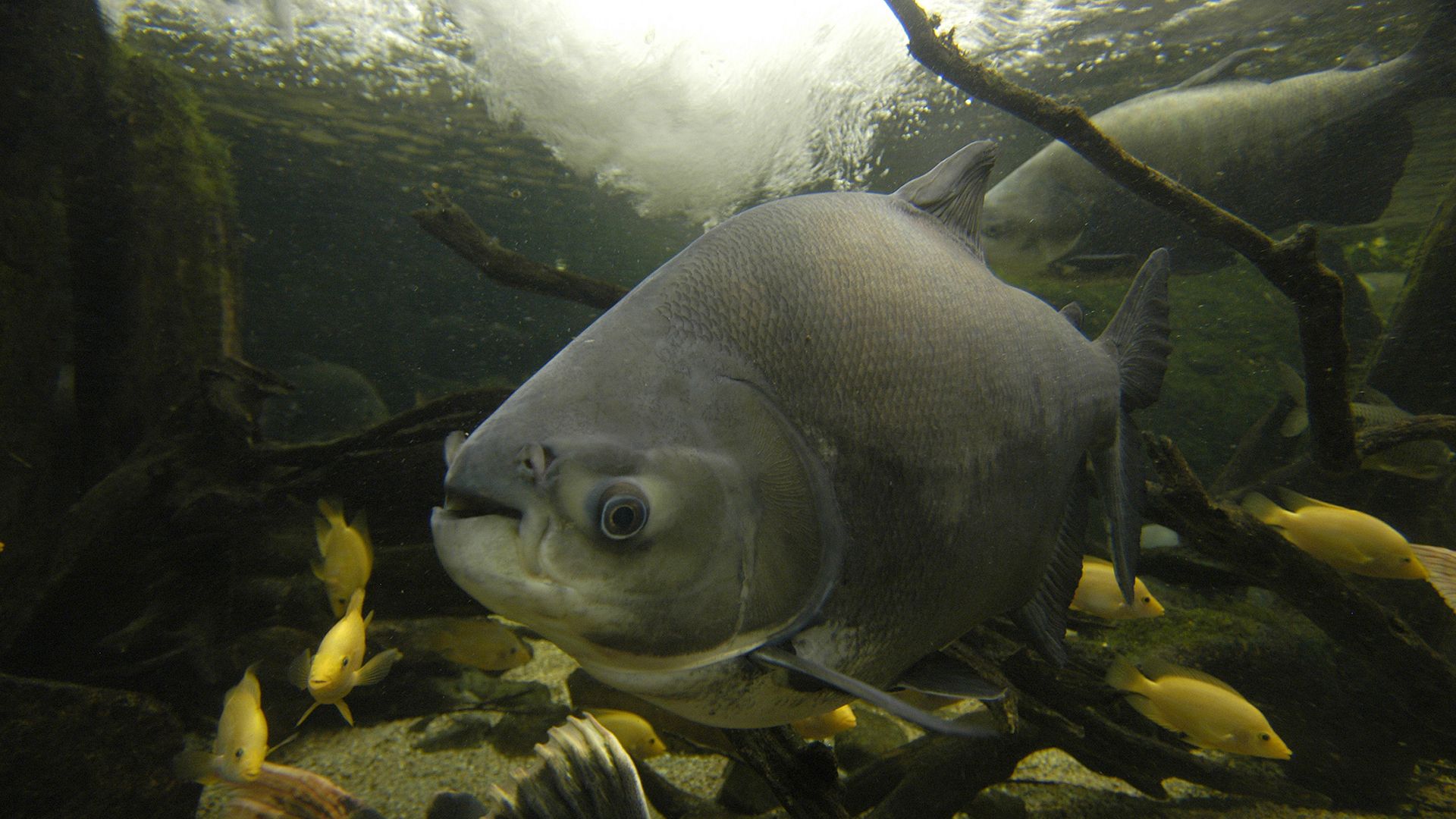
Pacu refers to several ostariophysan fishes native to South America within the family Serrasalmidae. While they are related to piranhas, they are distinct in their anatomy and diet. Unlike the sharp, triangular teeth of piranhas, pacu possess molar-like teeth specialized for crushing and grinding seeds and nuts, as they are primarily herbivorous.1
These robust fish vary significantly in size, ranging from 4 cm to over 1 meter in length, and can weigh up to 40 kg. They play a vital role in their ecosystem by dispersing seeds through their waste. Some species, such as the red-bellied pacu, have been introduced globally for aquaculture or the aquarium trade, sometimes becoming invasive when released into non-native waters.1
How do the teeth of a pacu differ from those of a piranha?
The teeth of pacu and piranhas differ significantly, reflecting their distinct dietary habits and ecological roles within the family Serrasalmidae.3
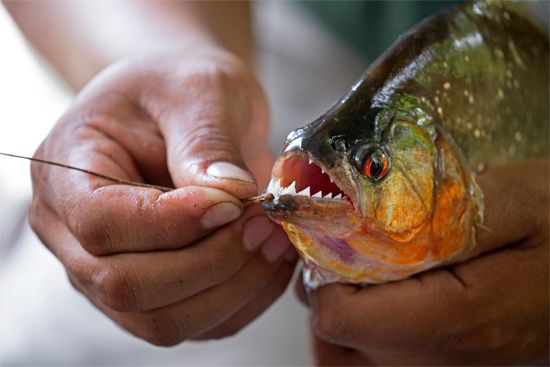
- Piranha Teeth: These fish are characterized by sharp, triangular teeth that meet in a scissor-like bite, which is highly effective for their carnivorous or scavenging lifestyle.14
- Pacu Teeth: In contrast, most pacu species possess teeth that resemble small human molars. These molariform teeth are specialized for crushing and grinding, as pacu primarily consume seeds and nuts.53
While most pacu rely exclusively on these grinding teeth, there are exceptions. For instance, the pacu-capivara (Ossubtus xinguense) possesses both incisor and molariform teeth, with the incisors specifically adapted for cutting the aquatic plants that make up its diet.3
Why are some pacu species considered invasive in certain regions?
Some pacu species, such as the red-bellied pacu (Piaractus brachypomus) and the silver pacu (Colossoma brachypomus), are considered invasive species in regions outside their native South American habitats. Their status as an invasive threat primarily stems from two human-related activities:
- Aquaculture: These fish are frequently raised in fish farms globally for food production. When they escape or are introduced into local waterways, they can establish self-sustaining populations that disrupt local aquatic environments.1
- Aquarium Trade: Due to their popularity as pets, pacu are often released by aquarium owners into non-native waters once they outgrow their tanks. Because these fish are robust, long-lived, and capable of reaching significant sizes—sometimes exceeding 1 meter in length—they can successfully outcompete native fish for resources in these new environments.13
Once established, these populations can alter the balance of local ecosystems, potentially displacing indigenous species that are not adapted to compete with the pacu’s size and feeding habits.13
What role do pacu play in their ecosystem regarding seed dispersal?
Pacu play a vital role in their ecosystem by acting as essential agents of seed dispersal, a process known as zoochory.36
Because pacu are primarily herbivorous, they feed on a variety of submerged and floating seeds and nuts that fall into the waterways they inhabit. Their specialized molar-like teeth allow them to crush and grind these food sources effectively. As they travel through the river systems, they consume these materials in one location and deposit them elsewhere through their excrement, thereby spreading seeds across different areas of the habitat.31
This ecological service is so significant that some plant species, such as the palm Bactris glaucescens, are thought to rely exclusively on pacu for their dispersal. This relationship is particularly important in regions like the Pantanal, where seasonal flooding coincides with the period when many plants release their fruits, making pacu a critical link in the survival and distribution of local flora.6
Sources
- pacu — Encyclopædia Britannica
- PAC — Merriam-Webster
- pacu: Top Questions — Encyclopædia Britannica
- 10 of the World’s Most Dangerous Fish - Piranha — Encyclopædia Britannica
- piranha — Encyclopædia Britannica
- Seed dispersal - Fish — Encyclopædia Britannica
Published on · 3 min read