Pencil Fish
The term "pencil fish" refers to several slender freshwater fish native to South America, primarily belonging to the group known as characins. While some…
What is pencil fish?
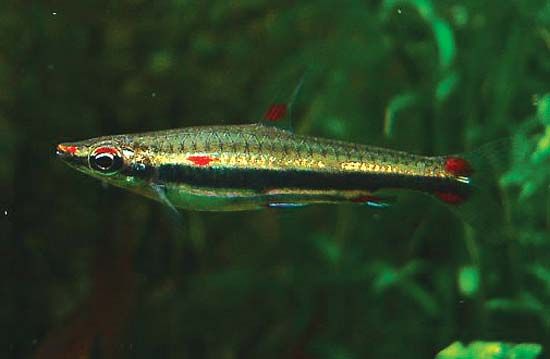
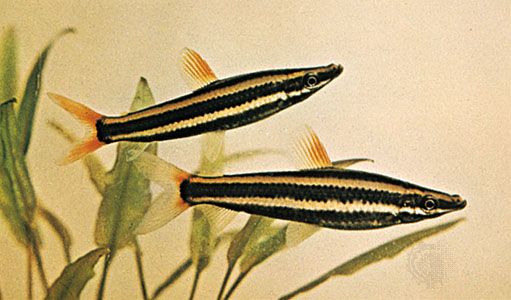
The term “pencil fish” refers to several slender freshwater fish native to South America, primarily belonging to the group known as characins. While some sources identify specific species like the golden-striped Poecilobrycon auratus as pencil fish, the name generally encompasses a variety of species across different families, such as Anostomidae, Hemiodontidae, and Lebiasinidae.12
These fish are characterized by their slender bodies and unique swimming habits; depending on the species, they may swim horizontally, tail-down, or tail-up. They typically inhabit slow-moving waters and feed by picking food from the bottom or off plant surfaces.1
In the aquarium hobby, these fish range significantly in size. Larger varieties, such as the striped headstander, can grow over 20 cm (8 inches), while pygmy species within the genus Nannostomus—such as N. eques, N. beckfordi, and N. marginatus—are much smaller, reaching only 2.5 to 4 cm (1 to 2 inches).1
What are characins and how are they classified?
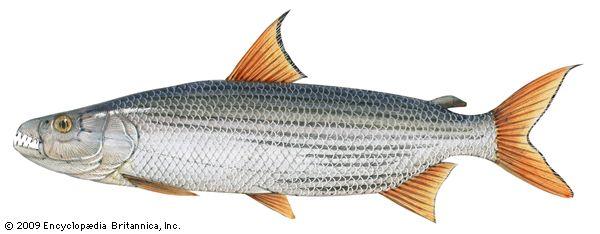
Characins are a diverse group of freshwater bony fishes belonging to the family Characidae within the order Characiformes. They are primarily found in Central and South America, with a smaller number of species inhabiting tropical Africa.34
Characteristics
Characins are distinguished by several key anatomical features:
- Jaws: They possess toothed jaws, though the specific structure and function of these teeth vary significantly across species.35
- Fins: Most characins feature an adipose fin—a small, fleshy second dorsal fin located on the back.3
- Diversity: They exhibit tremendous morphological and ecological variety, ranging from small, peaceful aquarium fish like tetras to larger, predatory species such as the piranha and the African tigerfish. Their sizes range from 2.5 cm to 152 cm (1 inch to 5 feet).35
Classification
Characins are classified under the order Characiformes, which contains 18 families and over 1,600 species. While the term “characin” specifically refers to the family Characidae, the broader order includes several other distinct families that are sometimes grouped with them depending on the classification system used:53
- Family Characidae: The most generalized group, including popular aquarium fish like tetras and bloodfins.35
- Related Families: Other families within the order Characiformes include:
- Lebiasinidae: Includes pencil fishes.5
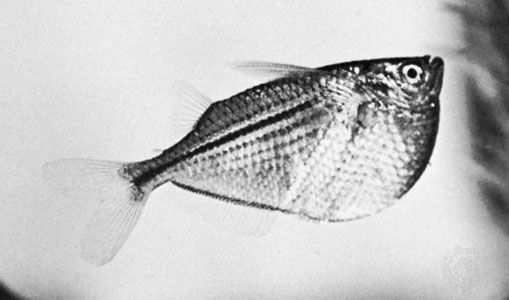
- Gasteropelecidae: Includes hatchetfishes, which are capable of flight.5
- Anostomidae: Includes headstanders.5
- Other specialized groups: Such as the Erythrinidae (trahiras), Ctenoluciidae (pike-characids), and Alestiidae (African tetras).5
Why do some pencil fish swim at an angle?
Some pencil fish exhibit unique swimming postures, such as tilting their bodies with the head pointing downward or the tail positioned upward, as a departure from the standard horizontal swimming posture common in most fishes.89
While these specific behaviors are noted as distinct adaptations within the group, they are part of a broader range of specialized locomotion found among ostariophysan fishes. These postures are often associated with the fish’s specific habits and environmental interactions, such as how they forage for food along plant surfaces or the bottom of slow-moving freshwater habitats. Unlike some other species that utilize specialized body shapes or internal modifications—such as the displacement of the swim bladder seen in upside-down catfishes—the exact physiological drivers for every angular swimming variation in pencil fish remain a subject of study within their diverse families.89
What are the best conditions for a freshwater aquarium?
Maintaining a healthy freshwater aquarium requires careful attention to water quality and environmental stability. The primary requirement is ensuring the water supply is free of pollutants, such as chlorine and industrial wastes, which must be removed via carbon filtration or chemical treatment before use.10
Key Maintenance Factors
- Water Quality and Filtration: In closed systems, metabolic wastes like ammonia must be rapidly removed or converted. Beneficial bacteria residing in filter materials perform this essential task, transforming harmful ammonia into less toxic compounds. Regular water changes—replacing 1 to 10 percent of the volume monthly—are necessary to manage nitrate levels.10
- Environmental Control: Aquariums require consistent temperature regulation, often managed by thermostatically controlled heaters. Aeration via air stones is also critical to ensure adequate oxygen levels and prevent asphyxia.1110
- Materials: When setting up a tank, use non-toxic materials such as glass, stainless steel, or specific plastics like Plexiglas, as many common adhesives and metals can be toxic to aquatic life.11
Sources
- pencil fish — Encyclopædia Britannica
- pencil fish — Merriam-Webster
- characin — Encyclopædia Britannica
- ostariophysan - Annotated classification — Encyclopædia Britannica
- scorpaeniform - General features — Encyclopædia Britannica
- ostariophysan - Body covering — Encyclopædia Britannica
- Characidae — Merriam-Webster
- ostariophysan - Swimming — Encyclopædia Britannica
- coloration - Background matching — Encyclopædia Britannica
- aquarium - Maintenance problems — Encyclopædia Britannica
- aquarium - Design and architecture — Encyclopædia Britannica
- How the Nitrogen Cycle Works — Encyclopædia Britannica
- Why is nitrogen essential to life? — Encyclopædia Britannica
Published on · 3 min read