Plasterer Bee
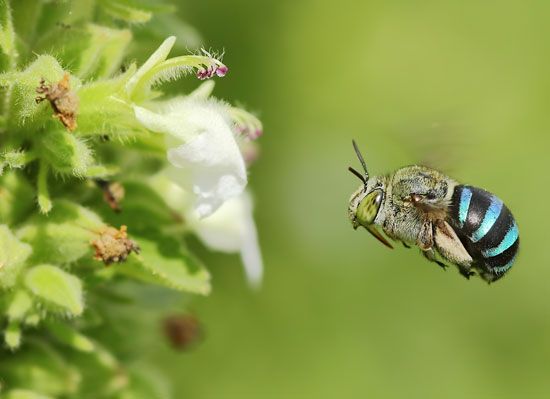
A plasterer bee is a member of the Colletidae family, a large group comprising over 2,500 species of bees found worldwide. Their name refers to a unique…
What is a plasterer bee?
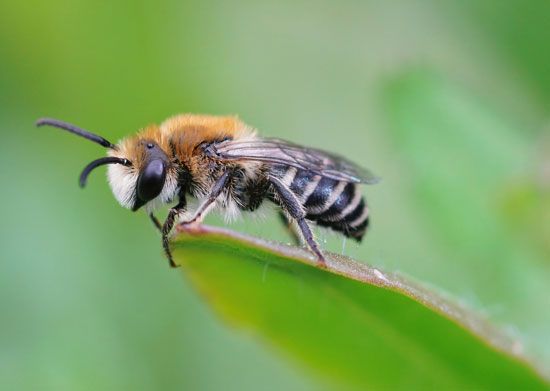
A plasterer bee is a member of the Colletidae family, a large group comprising over 2,500 species of bees found worldwide. Their name refers to a unique behavior: females secrete a cellophane-like, polyester substance from their salivary glands to line the walls of their brood cells, protecting their eggs from moisture and pathogens.1
These insects are solitary, do not produce honey, and are generally docile. They are essential native pollinators that have coevolved with local flowering plants. Plasterer bees typically nest in the ground, often in sandy soil, though some utilize hollow stems or wood cavities. They are most diverse in Australia and the Americas, with some species, such as those in the genus Colletes, currently listed as endangered1.
Where do plasterer bees live?
Plasterer bees (family Colletidae) have a cosmopolitan distribution, meaning they are found worldwide, with the greatest diversity occurring in Australia and the Americas. They occupy a wide variety of habitats, including forests, grasslands, wetlands, and backyards.1
Regarding their specific nesting locations, these bees typically live in the following environments:
- Ground: Most species excavate nests in bare, sandy soil, often reaching depths of 15 cm (6 inches) or more. While solitary, they may form nesting aggregations where females build nests in close proximity to one another.1
- Cavities: Some species utilize hollow plant stems or existing cavities in wood.1
- Artificial structures: They may inhabit human-made “bee hotels” that provide holes and canes of varying sizes.1
While they are found on every continent except Antarctica, their specific regional presence varies by genus; for example, Colletes is primarily found in North America, while many other genera are exclusive to Australia.1
How do plasterer bees build their nests?
Plasterer bees (family Colletidae) are solitary insects that build their nests through a meticulous process carried out entirely by the female.
- Excavation: The female typically digs a tunnel in bare, sandy soil, which can reach depths of 15 cm (6 inches) or more. Some species may also utilize existing cavities, such as hollow plant stems, wood, or human-made “bee hotels.”1
- Lining: The defining behavior of these bees is the application of a unique, cellophane-like polyester substance. The female secretes this material from her salivary glands and plasters it onto the walls of her brood cells. This lining acts as a protective barrier, shielding the developing eggs from moisture and preventing the growth of fungi or other pathogens.1
- Provisioning: Once the cell is lined, the female fills it with a mixture of nectar and pollen. She then deposits a single egg and seals the cell before moving on to build additional brood cells.1
Although they are solitary, some females may nest in close proximity to one another, forming what is known as a nesting aggregation.1
What special material do plasterer bees use in their nests?
Plasterer bees (family Colletidae) are named for their unique ability to secrete a special, cellophane-like polyester substance from their salivary glands.
The female bee plasters this material onto the interior walls of her brood cells to create a protective, waterproof lining. This specialized coating is essential for the survival of the offspring, as it shields the developing eggs from moisture and prevents the growth of harmful fungi or other pathogens within the nest.
Sources
- plasterer bee — Encyclopædia Britannica
- bee — Encyclopædia Britannica
Published on · 2 min read