Plover
Plovers are a diverse group of plump-breasted shorebirds belonging to the family Charadriidae. While specific traits vary among the approximately three dozen…
What are the distinctive physical characteristics of plover birds?
Plovers are a diverse group of plump-breasted shorebirds belonging to the family Charadriidae. While specific traits vary among the approximately three dozen species, they generally share several distinctive physical characteristics:
- Body Structure: They are typically 15 to 30 centimetres (6 to 12 inches) long, featuring long wings, moderately long legs, and short necks.1
- Bills: Plovers possess straight bills that are notably shorter than their heads.1
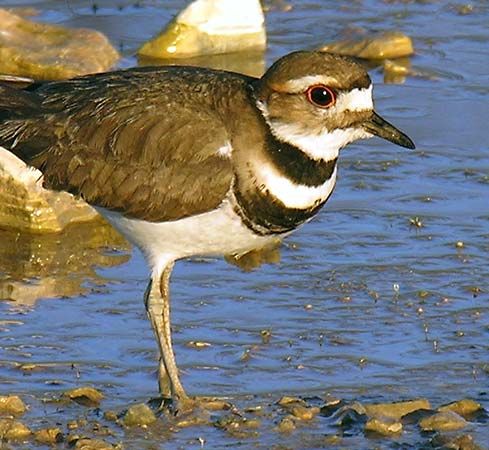
- Coloration: Many species exhibit cryptic coloration to aid in camouflage, appearing plain brown, gray, or sandy above and whitish below. In many Charadrius species, white foreheads and one or two black bands across the breast help break up the bird’s outline against the ground.12
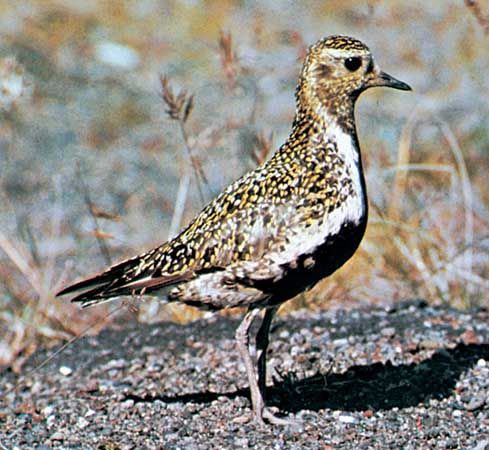
- Breeding Plumage: Some species, such as the golden plover, display intricate patterns of dark and light feathers above and black coloration below during the breeding season.1
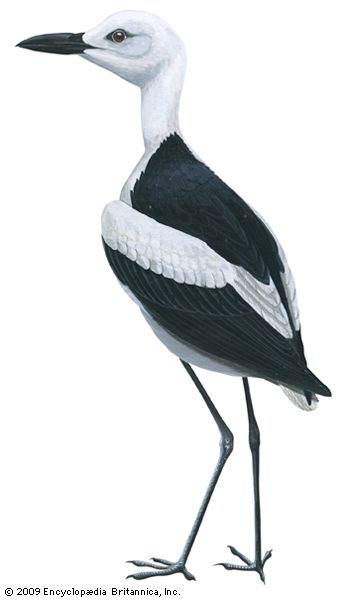
The crab plover, a related species, is distinct for being larger (about 40 cm), having a hunched posture, and possessing a heavy bill used for crushing prey.3
Where can plovers be found in the world, and what are their typical habitats?
Plovers are found in most parts of the world, inhabiting a wide variety of open environments. As members of the shorebird family Charadriidae, they are primarily associated with coastal areas, including beaches and shorelines, where many species feed by running along the water’s edge to capture small aquatic invertebrates.14
Beyond coastal regions, plovers also occupy inland habitats. Many species, such as the killdeer, are commonly found in upland meadows and grasslands, where they primarily feed on insects. Generally, these birds prefer open country or open water, and they are frequently observed near inland waterways.15
While their distribution is nearly worldwide, many plovers are highly migratory, particularly those that breed in northern regions. These birds often travel in flocks, with some species, such as the American golden plover, undertaking extensive long-distance migrations between their Arctic breeding grounds and wintering sites in the Southern Hemisphere.1
How many species of plovers exist, and which are some of the most well-known?
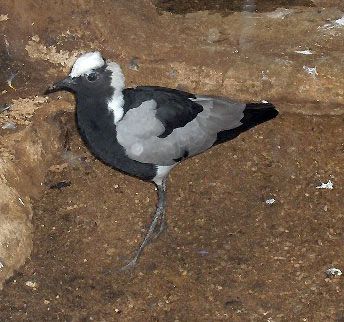
There are approximately three dozen species of plovers, which belong to the shorebird family Charadriidae.1
Some of the most well-known species include:
- Killdeer: A familiar species often found in upland meadows and grasslands rather than just coastal areas, known for being primarily insectivorous.1
- Golden Plover: Notable for their long-distance migrations, these birds, including the American golden plover, travel from Arctic breeding grounds to wintering sites as far away as the Southern Hemisphere.1
- Black-bellied Plover: Known scientifically as Squatarola squatarola, this species is recognized for its distinct breeding plumage, which features dark and light patterns above and black coloration below.1
- Crab Plover: A distinct relative of the typical plovers, often categorized separately due to its unique physical traits and behavior.1
What is the diet of plover birds and how do they forage for food?
Plovers are primarily carnivorous, feeding on a variety of small invertebrate animals. While many species that frequent beaches and shorelines consume small aquatic invertebrates, others—such as the killdeer—inhabit upland meadows and grasslands, where they are chiefly insectivorous.16
Their foraging behavior is highly distinctive and relies heavily on sight to locate prey on open ground. A typical foraging sequence involves the bird running a few steps, pausing with its head cocked to scan the area, and then pecking at potential prey before running again. While most plovers are diurnal and feed during the day, the crab plover is a notable exception, as it feeds primarily at twilight.6
Sources
- Plover — Encyclopædia Britannica
- Charadriiform - Shorebirds (suborder Charadrii) — Encyclopædia Britannica
- Crab plover — Encyclopædia Britannica
- Charadriiform - General features — Encyclopædia Britannica
- Charadriiform — Encyclopædia Britannica
- Charadriiform - Locomotion and feeding behaviour — Encyclopædia Britannica
Published on · 3 min read