Plum
Plums belong to the genus Prunus and exhibit significant diversity in size, flavor, color, and texture. While many species exist, they are generally…
What are the different species of plums and how do they vary?
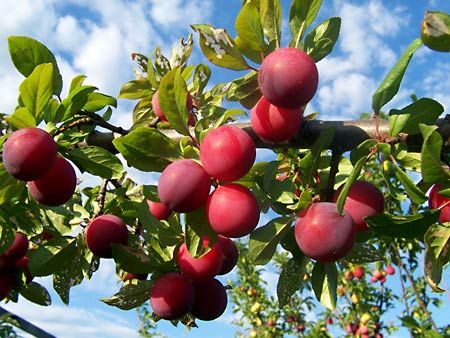
Plums belong to the genus Prunus and exhibit significant diversity in size, flavor, color, and texture. While many species exist, they are generally categorized by their use and origin:1
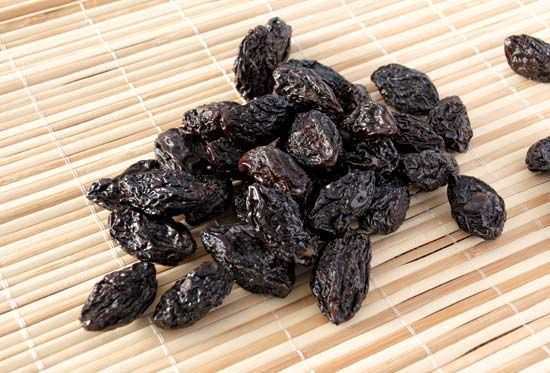
- European Plum (P. domestica): Originating near the Caucasus and Caspian Sea, this species has been cultivated for over 2,000 years. It is often used for producing prunes, as its firm flesh and high sugar content allow it to be dried without fermenting.1
- Japanese Plum (P. salicina): Domesticated in China and developed in Japan, these are the most common fresh plums sold commercially due to their longer shelf life compared to European varieties.1
- Damson Plum (P. insititia): An Old World species historically associated with the region around Damascus.1
- Wild Plums: These include uncultivated species such as P. americana, as well as the wild-goose plums (P. hortulana and P. munsoniana) native to the central and south-central United States, which have contributed to various cultivated varieties.23
- Ornamental Species: Some species, such as the purple-leaf plum (P. cerasifera), are grown primarily for their aesthetic flowers and foliage rather than fruit.1
How are plums cultivated, and what are the ideal growing conditions?
Plums are widely cultivated globally, with many varieties adapted to a diverse range of soils and climatic conditions. Successful cultivation requires careful attention to planting strategies, pollination needs, and disease management.1
Planting and Growth
Plum trees are often grown in orchards where spacing is determined by management efficiency and light requirements. Because many plum varieties require cross-pollination by insects to produce fruit, growers must plant at least two compatible varieties in close proximity to ensure successful fertilization. Once established, plum trees generally do not require extensive pruning and can thrive in home gardens provided that pests and diseases are monitored.41
Disease Control
Maintaining tree health is critical, as plums are susceptible to several fungal pathogens. Key management practices include:5
- Pruning: Removing and destroying infected branches, such as those affected by black knot, is essential for preventing the spread of disease.6
- Sanitation: Eliminating nearby wild plum or cherry trees that may harbor pathogens helps protect cultivated orchards.6
- Chemical Control: The use of fungicides on vegetative buds can help manage infections.6
What are the main differences between European and Japanese plum varieties?
The European plum (Prunus domestica) and the Japanese plum (Prunus salicina) are the two primary species grown commercially, yet they differ significantly in their history, physical characteristics, and market use.1
Key Differences
- Origin and History: The European plum is an ancient species, cultivated for at least 2,000 years and believed to have originated near the Caucasus and Caspian Sea. In contrast, the Japanese plum was domesticated in China thousands of years ago but underwent extensive development in Japan before being introduced globally.1
- Shelf Life and Commercial Use: Japanese plums are the most common variety found in fresh produce markets because they possess a longer shelf life than most European varieties.1
- Processing: European plums are frequently used to produce prunes. Their firm flesh and high sugar content allow them to be dried effectively without fermenting, a quality that distinguishes them from many other plum types.1
What is a plum?
A plum is any of various trees or shrubs belonging to the genus Prunus in the Rosaceae family, as well as their edible fruits. Closely related to peaches and cherries, plums are drupes—fleshy fruits with a single hard stone or pit that encloses the seed.17
These fruits exhibit a wide range of sizes, colors, and textures and are commonly consumed fresh, cooked into jams or compotes, or baked in pastries. Varieties that can be dried without fermenting are known as prunes. While the European plum (P. domestica) and the Japanese plum (P. salicina) are the primary species grown commercially, other species like the purple-leaf plum (P. cerasifera) are cultivated as ornamental plants for their attractive foliage and flowers.1
Beyond the botanical definition, the term “plum” can also refer to a dark reddish-purple color or, colloquially, to something highly desirable.7
Sources
- Plum — Encyclopædia Britannica
- wild plum — Merriam-Webster
- wild-goose plum — Merriam-Webster
- Plant disease - Control — Encyclopædia Britannica
- Fruit farming - Planting and spacing systems — Encyclopædia Britannica
- Black knot — Encyclopædia Britannica
- plum — Merriam-Webster
Published on · 3 min read