Spirea
Spirea (genus Spiraea) is a group of nearly 100 species of hardy, deciduous shrubs belonging to the rose family (Rosaceae). Native to the north temperate…
What is spirea?
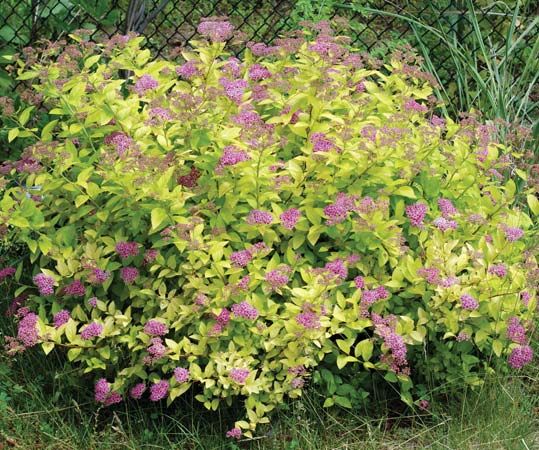
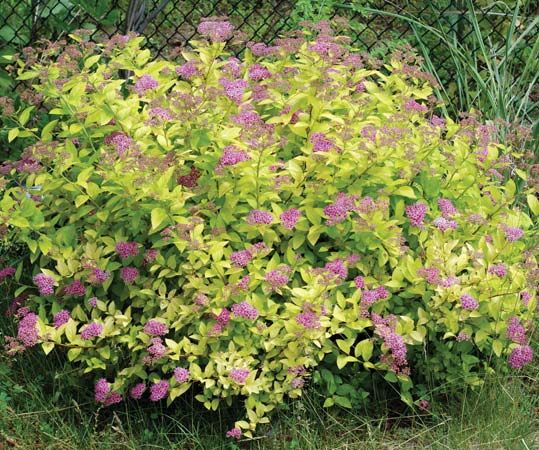
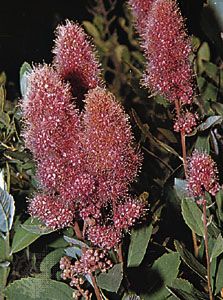
Spirea (genus Spiraea) is a group of nearly 100 species of hardy, deciduous shrubs belonging to the rose family (Rosaceae). Native to the north temperate zone, these plants are widely cultivated for their attractive growth habits and dense clusters of small, five-petaled flowers.12
Physical Characteristics
Spirea plants typically feature simple leaves with toothed margins and produce flowers in various arrangements, such as racemes or corymbs. Most species contain salicylic acid within their tissues. Their fruit generally consists of an aggregate of follicles.12
Varieties
Cultivated species are often categorized by their blooming season:
- Spring-flowering: Includes the popular Vanhoutte spirea (bridal wreath), S. crenata, and S. prunifolia.1
- Summer-flowering: Includes Japanese spirea (S. japonica), willowleaf meadowsweet (S. salicifolia), and steeplebush (S. tomentosa).1
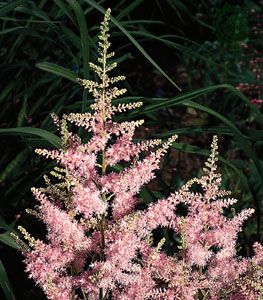
Note that some plants, such as Astilbe or Sorbaria species, are sometimes called “false spirea” but are not members of the Spiraea genus.12
What other plants belong to the rose family?
The Rosaceae family, commonly known as the rose family, encompasses approximately 2,500 species across more than 90 genera. These plants are primarily found in the north temperate zone and include many economically significant food crops and popular ornamentals.34
Food Crops
Many members of the rose family are cultivated for their edible fruits, including:
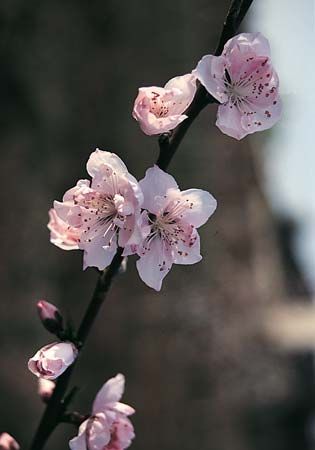
- Almond, apricot, cherry, nectarine, peach, and plum (Prunus species)4
- Apple and pear34
- Blackberry, boysenberry, loganberry, and raspberry (Rubus species)4
- Strawberry (Fragaria species)4
- Loquat and quince4
Ornamentals
Beyond the rose itself, the family includes various plants grown for their aesthetic value:
- Avens, cinquefoil, and goatsbeard34
- Cotoneaster, firethorn, and hawthorn4
- Flowering quince, mountain ash, and serviceberry4
- Lady’s mantle and burnet4
How does salicylic acid function in plants?
Sorry, the Britannica knowledge base does not contain information regarding the specific biological functions of salicylic acid within plants. While it is known to occur naturally in many species, such as those in the genus Spiraea, the provided search results focus primarily on its chemical properties, commercial synthesis, and pharmaceutical applications.
What is the difference between deciduous and evergreen shrubs?
The primary difference between deciduous and evergreen shrubs lies in their leaf-retention habits and how they adapt to seasonal changes.
Deciduous Shrubs
Deciduous plants shed their leaves at the end of every growing season. This strategy is common in temperate regions where winter conditions—such as freezing temperatures and shorter days—make it difficult for leaves to function efficiently. By dropping their “throwaway” leaves, these plants avoid the metabolic cost of maintaining delicate foliage during stressful periods, replacing them with new growth in the spring. Common examples include forsythia, viburnum, privet, lilac, and clematis.789
Evergreen Shrubs
Evergreen shrubs retain their leaves throughout the year, often keeping them for several years. These plants typically possess thicker, leathery, or needlelike leaves that are better adapted to resist water loss and freezing damage. Because these leaves require a significant investment of energy and nutrients to produce, the plants benefit from keeping them for multiple seasons rather than replacing them annually. Evergreens are categorized into:1078
Sources
- spirea — Encyclopædia Britannica
- spirea — Merriam-Webster
- Rosaceae — Encyclopædia Britannica
- Rosales — Encyclopædia Britannica
- list of economically important members of the family Rosaceae — Encyclopædia Britannica
- salicylic acid — Encyclopædia Britannica
- Evergreen — Encyclopædia Britannica
- Temperate forest - Environment — Encyclopædia Britannica
- Plant - Classification of angiosperms — Encyclopædia Britannica
- horticulture - Shrubs — Encyclopædia Britannica
- Shrub — Encyclopædia Britannica
- subshrub — Merriam-Webster
Published on · 3 min read