Globe Amaranth
Globe amaranth (Gomphrena globosa) is an annual ornamental plant belonging to the Amaranthaceae family. Native to regions including Brazil, Panama, and…
What is globe amaranth?
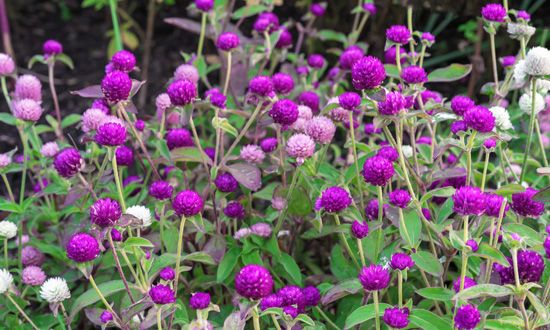
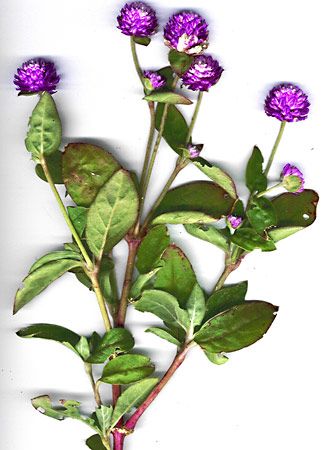
Globe amaranth (Gomphrena globosa) is an annual ornamental plant belonging to the Amaranthaceae family. Native to regions including Brazil, Panama, and Guatemala, it is widely cultivated for its dense, spherical flower clusters that bloom throughout the summer and fall.12
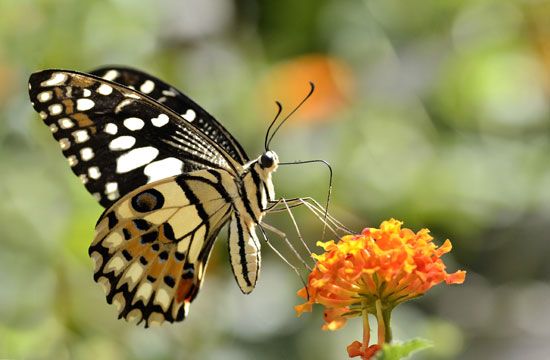
The plant typically grows between 30 and 90 cm (1–3 feet) tall and features simple leaves arranged oppositely along reddish stems. While the plant’s minute flowers lack true petals, they are surrounded by colorful bracts—ranging from white and pink to purple, red, or orange—that provide the plant’s showy appearance. These clusters are highly attractive to butterflies and are frequently dried for use in crafts and floral arrangements, as they retain their vibrant color exceptionally well.12
What are the differences between annual and perennial plants?
The primary difference between annual and perennial plants lies in the duration of their life cycles and their ability to regrow.
Annual Plants
An annual is a plant that completes its entire life cycle—from germination to seed production and death—within a single growing season. Because they do not survive to the next year, the only part of the plant that persists is the dormant seed. Many common food crops, such as cereal grains, peas, and lettuce, are annuals.34
Perennial Plants
A perennial is a plant that persists for several years. These plants typically regrow from the same root system or specialized storage structures (such as bulbs, tubers, or rhizomes) that survive from one season to the next. While the aboveground portions of herbaceous perennials may die back in autumn, the plant remains alive underground. This category includes all trees and shrubs, as well as many garden flowers.56
It is worth noting that some plants, such as tomatoes, are technically perennials in their native tropical climates but are often grown as annuals in temperate zones because they cannot survive the cold.46
How do bracts differ from true flower petals?
The primary difference between a bract and a true petal lies in their botanical origin and position on the plant.
Definitions and Roles
- Petals: These are specialized, often brightly colored floral organs that form the inner layer of the perianth (collectively called the corolla). They are part of the flower itself and serve to protect the reproductive structures and attract pollinators.8
- Bracts: These are modified, often small, leaflike structures positioned beneath a flower or an inflorescence. Unlike petals, which are internal floral appendages, a bract is typically the last leaf before the flower or flower cluster begins.91011
Why They Are Often Confused
Confusion arises because some plants have evolved showy, brightly colored bracts that mimic the appearance of petals to assist in attracting pollinators. For example, the colorful parts of poinsettias and dogwood blossoms are actually bracts, not petals. In some species, such as Bougainvillea, the bracts are so prominent that they serve the visual function of petals, while the actual floral organs may be reduced or modified.9108
What other plants are in the Amaranthaceae family?
The Amaranthaceae family is a diverse group of approximately 2,500 species, ranging from common food crops to garden ornamentals and weeds.
Food Crops
Several members of this family are significant agricultural plants:
- Beets and relatives: Various forms of Beta vulgaris, including garden beets, chard, and sugar beets.
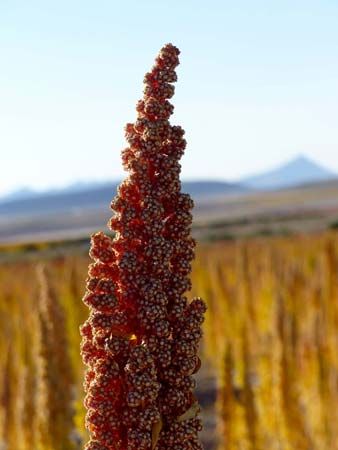
- Pseudo-grains: Quinoa and various amaranth species, such as love-lies-bleeding and red amaranth.
- Leafy greens: Spinach and lamb’s quarters.
Ornamentals and Other Genera
Many species are cultivated for their aesthetic appeal or are found in the wild:
Sources
- globe amaranth — Encyclopædia Britannica
- globe amaranth — Merriam-Webster
- Is That Plant 'Perennial' or 'Annual'? — Merriam-Webster
- Biennial — Encyclopædia Britannica
- Perennial — Encyclopædia Britannica
- Annual — Encyclopædia Britannica
- life span - Perennials — Encyclopædia Britannica
- Bract — Encyclopædia Britannica
- Angiosperm - General features — Encyclopædia Britannica
- Angiosperm - The receptacle — Encyclopædia Britannica
- bract — Merriam-Webster
- Amaranthaceae — Encyclopædia Britannica
- list of plants in the family Amaranthaceae — Encyclopædia Britannica
Published on · 3 min read