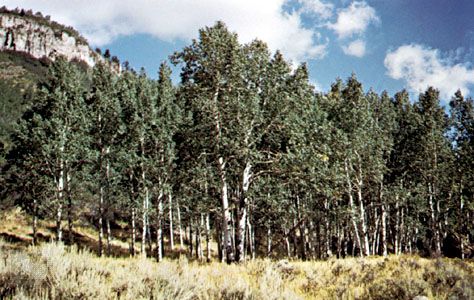
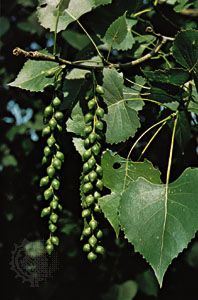
Poplar
Poplar trees (genus Populus) are characterized as rapid-growing but relatively short-lived trees. While the specific lifespan can vary by species and…
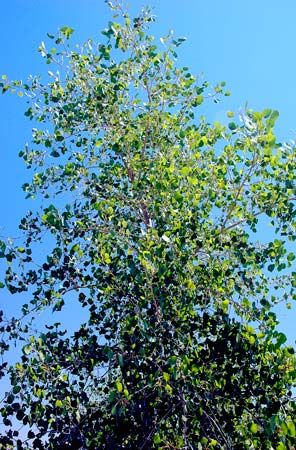
How long do poplar trees typically live?
Poplar trees (genus Populus) are characterized as rapid-growing but relatively short-lived trees. While the specific lifespan can vary by species and environmental conditions, they are generally not considered long-lived compared to many other forest tree species.1
What are the unique features of poplar tree leaves?
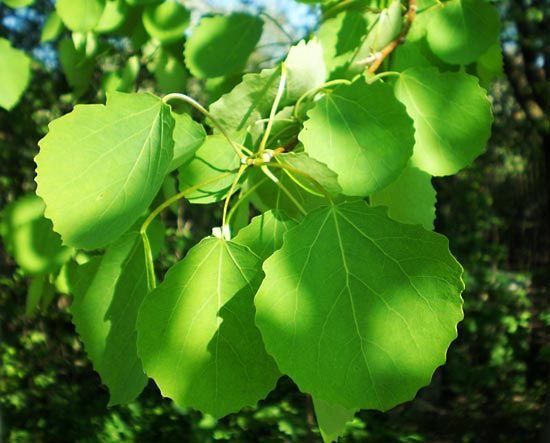
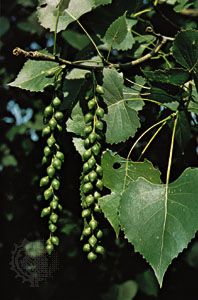
Poplar trees (genus Populus) exhibit several distinct leaf characteristics that help define the group:
- Shape and Arrangement: Leaves are arranged alternately along the stem and are generally oval or heart-shaped in outline.3
- Margins: The edges of the leaves, or margins, range from finely to coarsely toothed. Some species, such as the white poplar, feature lobed margins, which has earned them the nickname “maple leaf poplar”.3
- Movement: A defining feature of many poplars is their tendency to tremble or flutter in the breeze. This occurs because the leaves are supported by flat petioles (leaf stalks).3
- Color and Texture: While typically green, leaves of certain species have unique undersides. For example, the white poplar has white, felted undersides, while the gray poplar has woolly, grayish undersides. In the autumn, many species, particularly aspens, turn a brilliant yellow.32
- Species Variation: Leaf size and shape can vary significantly; for instance, the American big-tooth aspen has large, rounded leaves, while the eastern cottonwood bears thick, glossy leaves.23
Where are poplar trees typically found in nature?
Poplar trees (genus Populus) are native to the Northern Hemisphere and are widely distributed throughout northern temperate regions. Their natural range spans across:2
- North America: Poplars are found throughout the continent, from the extreme northern United States and Canada to the southwestern regions. Specific species, such as the balsam poplar, are native to areas ranging from Labrador to Alaska.21
- Eurasia: They are widely distributed across the Eurasian landmass.2
- Northern Africa: The genus also extends into northern parts of the African continent.2
Within these regions, poplars occupy various habitats. For instance, the balsam poplar is typically found in swampy soil, while cottonwood trees are noted for their exceptional tolerance to flooding and erosion. Additionally, some species, such as the quaking aspen, are known for forming large clonal colonies that can dominate local landscapes.2
How are poplar trees used in landscaping and industry?
Poplar trees (Populus) have been valued for both their aesthetic and practical utility since ancient times, when they were frequently planted around public meeting places in Rome.2
Landscaping Uses
Poplars are popular in ornamental landscaping due to their rapid growth and distinct forms.
- Ornamental Planting: Columnar varieties of the black poplar are widely used in landscape design, particularly in southern Europe, where they are a common sight among Italian villas.2
- Versatility: Species such as the white and black poplar are frequently planted throughout Canada and the eastern United States for their visual appeal.2
Industrial Applications
Because poplar wood is relatively soft, it is highly valued for specific manufacturing purposes rather than heavy construction. Its primary industrial uses include:2
- Packaging: The wood is commonly processed into cardboard boxes and shipping crates.2
- Paper Production: Poplar serves as a source of wood fiber for the production of paper. As a hardwood, it can be processed using various pulping methods to create paper products.25
- Wood Products: The timber is also utilized in the creation of veneer.2
- Medicinal/Specialty: The resinous buds of certain species, such as the balm of Gilead poplar, are used in the production of ointments.2
Sources
- balsam poplar — Encyclopædia Britannica
- poplar — Encyclopædia Britannica
- aspen — Encyclopædia Britannica
- Why do leaves change colors in the fall? — Encyclopædia Britannica
- paper pulp — Encyclopædia Britannica
- Populus — Merriam-Webster
Published on · 3 min read