Popocatépetl
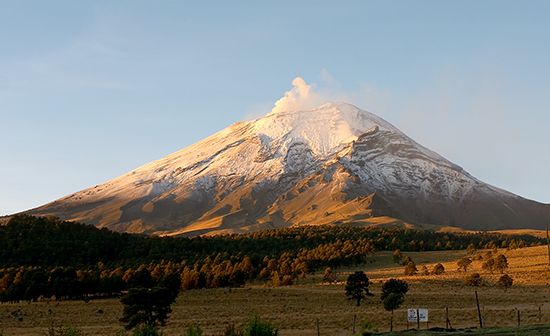
Popocatépetl is an active volcano located approximately 45 miles (72 km) southeast of Mexico City. Its proximity to densely populated regions makes its…
How does Popocatépetl’s activity affect nearby communities and Mexico City?
Popocatépetl is an active volcano located approximately 45 miles (72 km) southeast of Mexico City. Its proximity to densely populated regions makes its activity a significant concern for public safety.1
The volcano’s eruptions have historically impacted surrounding areas in several ways:
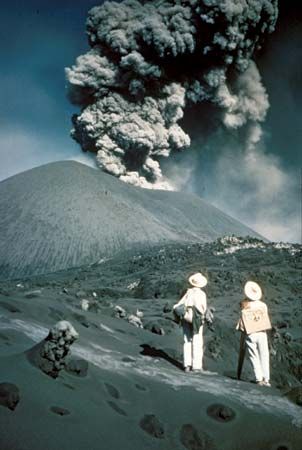
- Ashfall: Eruptions, such as the one in December 1994, have caused significant ashfall over the state of Puebla, which can disrupt daily life, agriculture, and air quality.1
- Evacuations: Increased volcanic activity often necessitates emergency measures. For instance, an eruption in December 2000 forced thousands of local villagers to evacuate their homes to ensure their safety.1
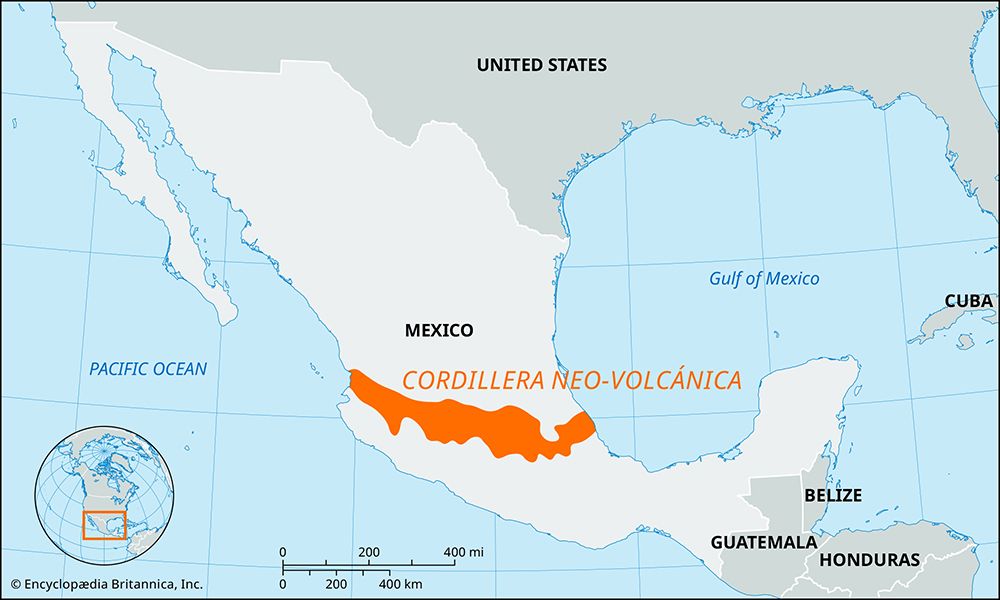
- Regional Risk: Because the volcano is situated on the Cordillera Neo-Volcánica, its ongoing activity requires constant monitoring to protect the millions of people living in the shadow of the mountain and the nearby metropolitan areas.1
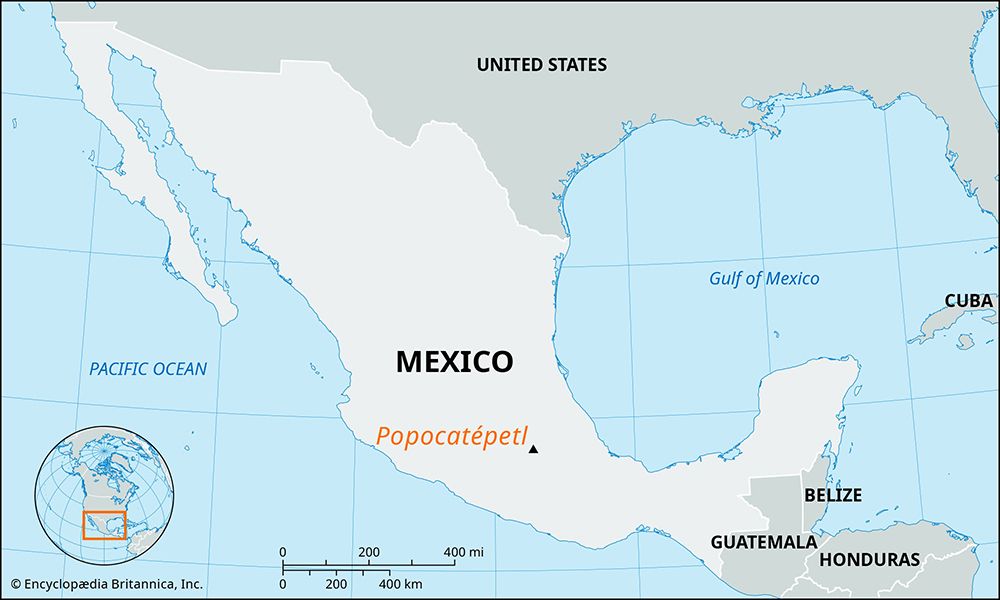
What is the geographical location of Popocatépetl and why is it significant?
Popocatépetl is a prominent volcano situated on the border of the states of México and Puebla in central Mexico. It lies along the Cordillera Neo-Volcánica at the southern edge of the Mexican Plateau, positioned 10 miles (16 km) south of its twin peak, Iztaccíhuatl, and 45 miles (72 km) southeast of Mexico City.1
Its significance stems from several factors:
- Physical Stature: Rising to 17,930 feet (5,465 meters), it is the second-highest volcano in Mexico, surpassed only by Pico de Orizaba.1
- Geological Activity: As an active volcano, it poses a recurring hazard to the densely populated surrounding regions, necessitating ongoing monitoring and emergency preparedness, as demonstrated by significant eruptions in 1994 and 2000.1
- Historical Context: The mountain has long been a landmark in the region; notably, it was the site of a 1522 expedition by Hernán Cortés to secure sulfur for gunpowder production.1
How tall is Popocatépetl, and how does its height compare to other volcanoes in Mexico?
Popocatépetl reaches an elevation of 17,930 feet (5,465 meters). In terms of height, it is the second-tallest volcano in Mexico, surpassed only by Pico de Orizaba, which stands at 18,406 feet (5,610 meters).12
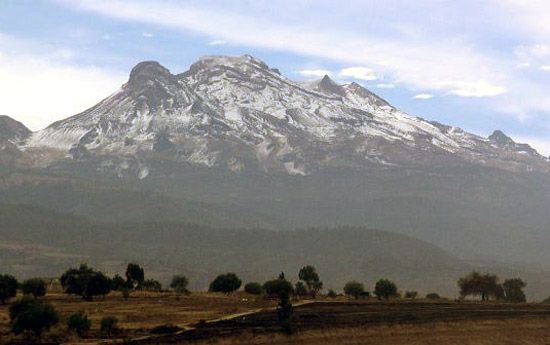
Compared to other prominent peaks in the Cordillera Neo-Volcánica, Popocatépetl is taller than its nearby neighbor Iztaccíhuatl, which reaches 17,159 feet (5,230 meters), and significantly higher than the Colima volcano, which stands at 13,451 feet (4,100 meters).23
What is the volcanic history of Popocatépetl, including its major eruptions?
Popocatépetl has a long history of activity, though it remained dormant for over 70 years prior to its modern reawakening. Its historical significance includes a 1522 expedition by Hernán Cortés’s men, who climbed the peak to extract sulfur for gunpowder production.1
Following its long period of inactivity, the volcano entered a new phase of eruptive behavior in the late 20th century:1
- 1994: In December, the volcano erupted, resulting in significant ashfall over the state of Puebla.1
- 1996–1997: Renewed volcanic activity occurred in March and October 1996, followed by further eruptions in April 1997.1
- 2000: A major eruption in December necessitated the evacuation of thousands of villagers living in the surrounding areas.1
These events highlight the ongoing geological volatility of the Cordillera Neo-Volcánica and the persistent risks posed to the nearby population centers.1
We could dive deeper into the monitoring systems used to track volcanic activity in central Mexico.
Sources
- Popocatépetl — Encyclopædia Britannica
- Cordillera Neo-Volcánica — Encyclopædia Britannica
- Iztaccíhuatl — Encyclopædia Britannica
- mountain - Volcanism — Encyclopædia Britannica
Published on · 3 min read