Porcupine Fish
Porcupine fish are members of the family Diodontidae and are typically found in shallow waters across seas around the world. They are particularly common in…
Where are porcupine fish typically found in the ocean, and what is their preferred habitat?
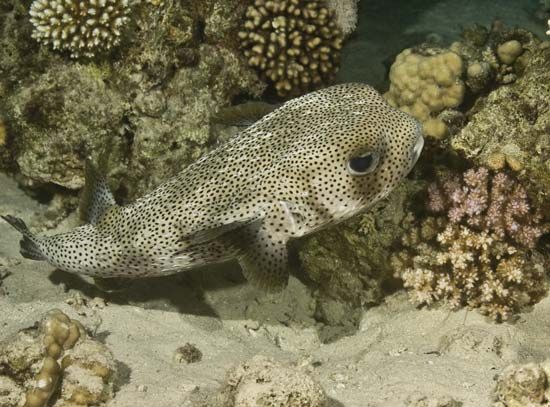
Porcupine fish are members of the family Diodontidae and are typically found in shallow waters across seas around the world. They are particularly common in tropical regions.12
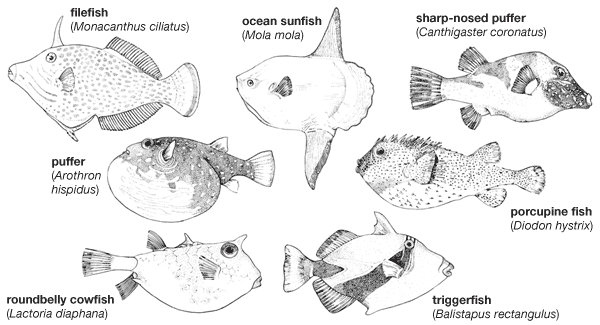
These fish are characterized by their short, broad bodies and their ability to inflate themselves into a sphere when threatened, which causes their spines to become erect. While some species, such as the burrfishes of the genus Chilomycterus, have spines that are permanently erect, others like those in the genus Diodon keep their spines against their bodies until they inflate. A widely distributed example is Diodon hystrix, a dark-spotted, brownish fish that can reach up to 90 centimeters in length.12
What are the main characteristics that distinguish porcupine fish from other fish species?
Porcupine fish (family Diodontidae) are distinguished from other fish species by several unique physical and behavioral traits:
- Body Inflation: Like their relatives the puffer fishes, porcupine fish can swallow water when threatened to inflate their bodies into a sphere, often reaching up to five times their normal size to deter predators.134
- Spiny Skin: Their skin is covered in spines, which are a defining characteristic. In some species, such as those in the genus Diodon, these spines lie flat against the body until the fish inflates. In others, like the burrfishes (genus Chilomycterus), the spines are permanently erect.12
- Dental Structure: Unlike the four tooth plates found in pufferfishes, porcupine fish possess only two tooth plates—one in each jaw—which form a beaklike structure.12
- Physical Build: They are generally short and broad-bodied with large eyes.1
These features, combined with their ability to inflate, make them distinct within the order Tetraodontiformes.2
How long do porcupine fish typically live, and how big can they grow?
Regarding the size and lifespan of porcupine fish, the available information provides specific details on their physical growth but does not contain data regarding their typical lifespan.
In terms of size, the porcupine fish (Diodon hystrix), which is a widely distributed member of the family Diodontidae, can reach a maximum length of approximately 90 centimeters (3 feet). When these fish feel threatened, they are capable of swallowing water to inflate their bodies into a spherical shape, which can expand them to up to five times their normal size to deter potential predators.14
Because the current search results do not provide information on the average lifespan of these fish, I cannot answer that part of your query.
Are porcupine fish dangerous to humans, and if so, in what ways?
Porcupine fish can be dangerous to humans primarily due to the presence of tetrodotoxin, a potent neurotoxin found in their tissues. This toxin is also common in their close relatives, the puffer fishes, and functions by blocking nerve conduction, which can be fatal if ingested.1
Additionally, the physical characteristics of the fish pose a secondary risk. Porcupine fish are covered in sharp spines that are either permanently erect or become so when the fish inflates its body to deter predators. Handling these fish, especially when they are inflated, can result in painful puncture wounds. It is important to exercise caution and avoid consuming or mishandling these animals to prevent poisoning or injury.5
Sources
- porcupine fish — Encyclopædia Britannica
- porcupine fish — Merriam-Webster
- tetraodontiform - Annotated classification — Encyclopædia Britannica
- 14 Questions About Aquatic Animals Answered - Which fishes blow themselves up like balloons? — Encyclopædia Britannica
- tetrodotoxin — Merriam-Webster
Published on · 3 min read