Frilled Lizard
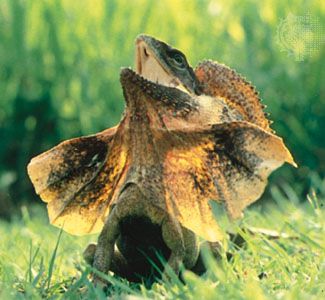
The frilled lizard (Chlamydosaurus kingii) is a reptile native to Australia and New Guinea. It is well-known for its unique ability to run on its hind legs…
What is frilled lizard?
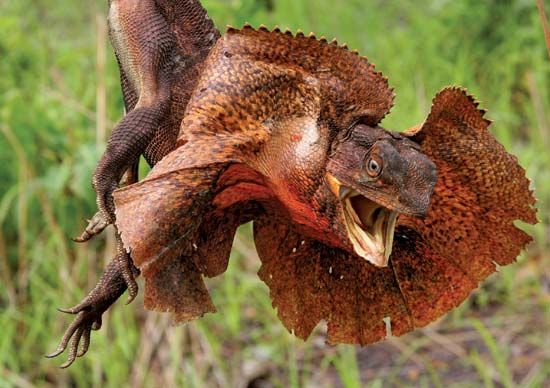
The frilled lizard (Chlamydosaurus kingii) is a reptile native to Australia and New Guinea. It is well-known for its unique ability to run on its hind legs while keeping its forelegs and tail in the air.1
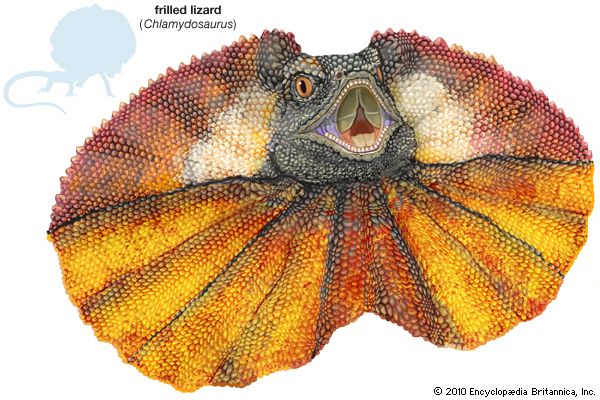
The lizard is named for the large, scaly membrane around its neck. While this frill typically rests like a cape over the shoulders, the lizard can extend it perpendicularly when threatened or irritated. This display makes the lizard appear significantly larger, serving as a defensive mechanism to surprise potential predators.1
Averaging about 85 cm (33 inches) in length, these lizards are primarily arboreal, spending most of their time in trees where they hunt for insects and small mammals.1
How does the frilled lizard run on its hind legs?
The frilled lizard (Chlamydosaurus kingii) is capable of bipedal locomotion, meaning it runs on its two hind limbs while keeping its forelegs and tail held in the air.13
During this movement, the lizard maintains its body at an angle of approximately 60° off the horizontal. Because the lizard’s centre of gravity is positioned in front of its hips, it must move forward continuously to maintain this semi-erect posture; it cannot remain standing still in this position for more than very brief periods. The tail serves as a vital counterweight, helping the lizard balance as it runs.34
This bipedal behavior is primarily used as a means to achieve faster running speeds, a trait that was also widespread among dinosaurs.3
What other animals use displays to scare off predators?
Many animals utilize specialized displays to deter predators, often by signaling danger, appearing larger, or deceiving potential threats. These behaviors are highly adaptive, as they frequently allow animals to avoid physical conflict and conserve energy.6
Visual and Physical Displays
- Size Alteration: When threatened, puffer fish and porcupine fish swallow water to inflate their bodies up to five times their normal size. This sudden increase makes them appear intimidating and physically difficult for predators to consume.7
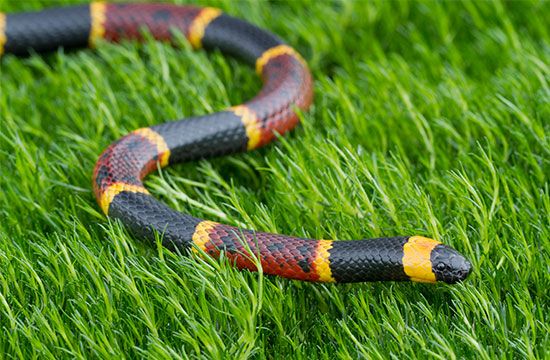
- Warning Coloration: Many snakes, such as the ring-necked snake and the coral snake, expose brightly colored undersides (red, orange, or yellow) when threatened. These colors often serve as a warning to predators that the animal may be distasteful or dangerous.8
- Deceptive Behavior: Some birds perform a “broken-wing display,” fluttering along the ground as if injured to lure predators away from their nests.6
Mimicry and Signaling
- Batesian Mimicry: Harmless species may evolve to resemble dangerous or inedible models. By mimicking the appearance of a harmful species, the mimic is often avoided by predators that have learned to associate those specific patterns with danger.89
- Auditory and Territorial Displays: Animals like the howler monkey use loud vocalizations to warn intruders away from their territory, effectively signaling their presence and readiness to defend their space without needing physical contact.6
What are some other unique reptiles found in Australia?
Australia is home to a diverse array of unique reptiles, ranging from highly venomous snakes to massive lizards and specialized crocodiles. Because of its distinct geological history, the continent hosts a reptilian fauna that includes a high proportion of venomous snake species compared to nonvenomous ones.10
Notable Australian Reptiles
- Taipans (Oxyuranus): These are highly venomous snakes found in Australia and New Guinea. The fierce snake, or inland taipan (O. microlepidotus), is widely recognized as having the most toxic venom of any terrestrial snake in the world.11
- Perentie (Varanus giganteus): Found in central Australia, this is one of the largest monitor lizards in the world, capable of reaching lengths of up to 2.4 meters (8 feet).12
- Freshwater Crocodile (Crocodylus johnsoni): Unlike the larger and more aggressive estuarine crocodile, this species is relatively shy and is distinguished by its narrow, V-shaped snout. It is known for being one of the fastest crocodiles on land.13
- Endemic Lizards and Skinks: Australia hosts a great variety of agamid lizards and skinks. Specific examples include the gibber dragon (Ctenophorus gibba) and the Woomera slider (Lerista elongata), both of which are endemic to South Australia.1014
- Side-necked Turtles: The family Chelidae, which includes various side-necked turtles, is a notable part of the Australian reptilian landscape.10
Sources
- frilled lizard — Encyclopædia Britannica
- frilled lizard — Merriam-Webster
- lizard - Locomotion and limb adaptations — Encyclopædia Britannica
- reptile - Walking and crawling — Encyclopædia Britannica
- lizard - Defensive strategies — Encyclopædia Britannica
- reptile - Display of colour — Encyclopædia Britannica
- 14 Questions About Aquatic Animals Answered - Which fishes blow themselves up like balloons? — Encyclopædia Britannica
- Display behaviour — Encyclopædia Britannica
- coloration - Mimicry — Encyclopædia Britannica
- reptile - Australia — Encyclopædia Britannica
- taipan — Encyclopædia Britannica
- South Australia - Plant and animal life — Encyclopædia Britannica
- crocodile - Size range and diversity of structure — Encyclopædia Britannica
- lizard - Water loss and other variables — Encyclopædia Britannica
- freshwater crocodile — Encyclopædia Britannica
- monitor — Encyclopædia Britannica
Published on · 3 min read