Rabbitfish
The term "rabbitfish" can refer to several distinct types of marine life, which often leads to confusion.
What is rabbitfish?
The term “rabbitfish” can refer to several distinct types of marine life, which often leads to confusion.
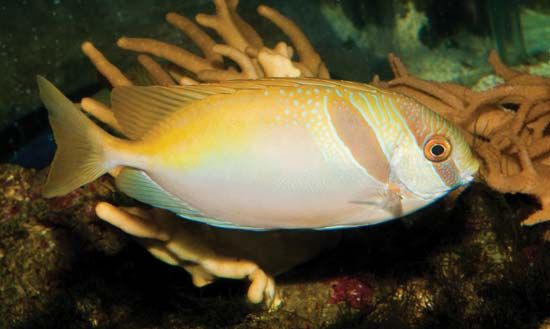
The most common scientific classification for rabbitfish refers to the family Siganidae (order Perciformes). These fish are found in shallow tropical waters, such as those near reefs from the Red Sea to Tahiti. They are typically olive or brown, grow to about 30 cm (1 foot), and are known for having sharp, poisonous spines on their fins.1
However, the name is also applied to other species depending on the region and context:
- Chimaeras: The species Chimaera monstrosa, a deep-water fish with a long tail found in the Atlantic.2
- Pufferfish: Sometimes referred to by this name.2
- Promethichthys prometheus: A slender, steel-blue food fish found in warm regions.2
The name “rabbitfish” generally derives from the animal’s rabbit-like nose.2
How do venomous spines protect fish from predators?
Venomous spines serve as a highly effective defensive mechanism for many fish species, providing protection through both physical and chemical means.
Physical Defense
The spines themselves are hardened fin rays located in the dorsal and pectoral fins. These structures act as a significant physical deterrent, as they can produce deep, painful wounds when they puncture the skin of a potential attacker. For many species, such as scorpionfish, these spines are a primary defense against predators in their environment.34
Chemical Defense
The effectiveness of these spines is often enhanced by venom glands located at their base. When a predator is punctured by a spine, the fish injects venom into the wound. This chemical defense is a form of poison delivery that can paralyze muscles by blocking nerve transmission at the neuromuscular junction5.3
While these injuries are rarely fatal to humans, they are intensely painful and serve as a powerful warning to predators, which often learn to avoid such species in the future. This combination of structural armor and chemical toxicity allows many sedentary or slow-moving fish to survive in competitive aquatic ecosystems.354
Why are rabbitfish important for healthy coral reefs?
Rabbitfish are vital to the health of coral reefs primarily because they are active grazers that feed on algae and other plants.1
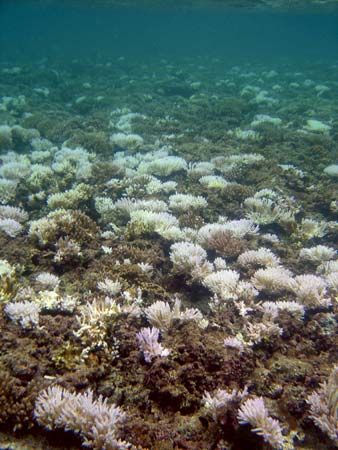
By consuming algae, rabbitfish help prevent the overgrowth of seaweed and other algal species that can colonize and degrade reef structures. This grazing activity is essential for maintaining the balance of the ecosystem, as unchecked algal growth can outcompete corals for space and light, particularly in reefs already stressed by factors like coral bleaching or ocean acidification. By keeping algal populations in check, rabbitfish support the survival of the coral colonies that serve as the foundation for diverse marine life.16
What are some other types of fish that live in coral reefs?
Coral reefs are incredibly biodiverse environments, home to a wide variety of fish species that have adapted to fill specific ecological roles. Beyond the herbivorous rabbitfishes, many other groups thrive in these habitats:
- Herbivorous Reef Fish: In addition to rabbitfish, several other groups graze on algae and reef vegetation, helping to maintain the balance of the ecosystem. These include parrotfishes, damselfishes, butterfly fishes, and surgeonfishes.
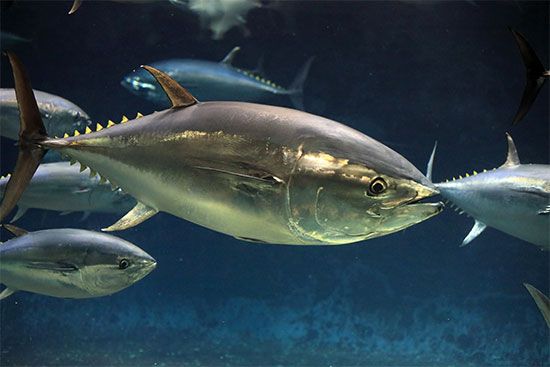
- Predatory Fish: Many species occupy higher positions in the food chain, preying on smaller fish or other reef organisms. Notable examples include barracudas, groupers, tunas, and billfishes.
- Diverse Families: The term “coral fish” is often used to describe various bright-colored species belonging to families such as Chaetodontidae, Apogonidae, and Pomacentridae.
These fish are essential components of the reef’s complex food web, and their presence is closely tied to the health of the coral colonies themselves.
Sources
- rabbitfish — Encyclopædia Britannica
- rabbitfish — Merriam-Webster
- ostariophysan - Defense — Encyclopædia Britannica
- scorpionfish — Encyclopædia Britannica
- Avoidance behaviour - Protection reflexes, armour, and spines — Encyclopædia Britannica
- Coral bleaching — Encyclopædia Britannica
- perciform - Feeding behaviour — Encyclopædia Britannica
- coral fish — Merriam-Webster
- Coral Bleaching: A Threat to Our Reefs — Encyclopædia Britannica
- Marine ecosystem - Benthos — Encyclopædia Britannica
Published on · 3 min read