Póros
It appears there may be a confusion between two distinct Greek islands: Póros and Páros. While your query mentions Póros, the historical details provided in…
How has Póros’ history influenced its culture and development?
It appears there may be a confusion between two distinct Greek islands: Póros and Páros. While your query mentions Póros, the historical details provided in your search results regarding marble production and the Parian Chronicle refer to the island of Páros.12
The history of Póros has significantly shaped its identity as a maritime and political hub. Its name, derived from the narrow channel (poros) separating it from the Peloponnese, highlights its geographic importance as a gateway. Historically, the island served as the center of an amphictyony—a religious and political league of maritime states—centered around the 5th-century BCE temple of Poseidon on the island of Kalávria.1
This legacy of political assembly continued into the modern era; in 1828, the island hosted international plenipotentiaries who met to determine the future of the Greek state. Today, the island remains a notable Athenian resort, reflecting its long-standing role as a place of refuge and strategic meeting point.1
Are there any famous Greek myths or legends associated with Póros island?
While Póros does not have a vast collection of famous myths in the same vein as islands like Crete or Delos, it is historically significant for its association with the god Poseidon. The island of Kalávria, which is part of the modern Póros complex, was home to a 5th-century BCE temple dedicated to the god of the sea. This site served as the center of an amphictyony, a sacred league of maritime states that gathered there to conduct religious and political affairs.1
Additionally, the island is linked to a famous historical legend involving the Athenian orator Demosthenes. According to historical accounts, Demosthenes sought sanctuary within the temple of Poseidon to escape his political enemies. Rather than be captured, he chose to take his own life at the site, cementing the island’s place in the annals of Greek history.1
What is the geographical location and size of Póros island in Greece?
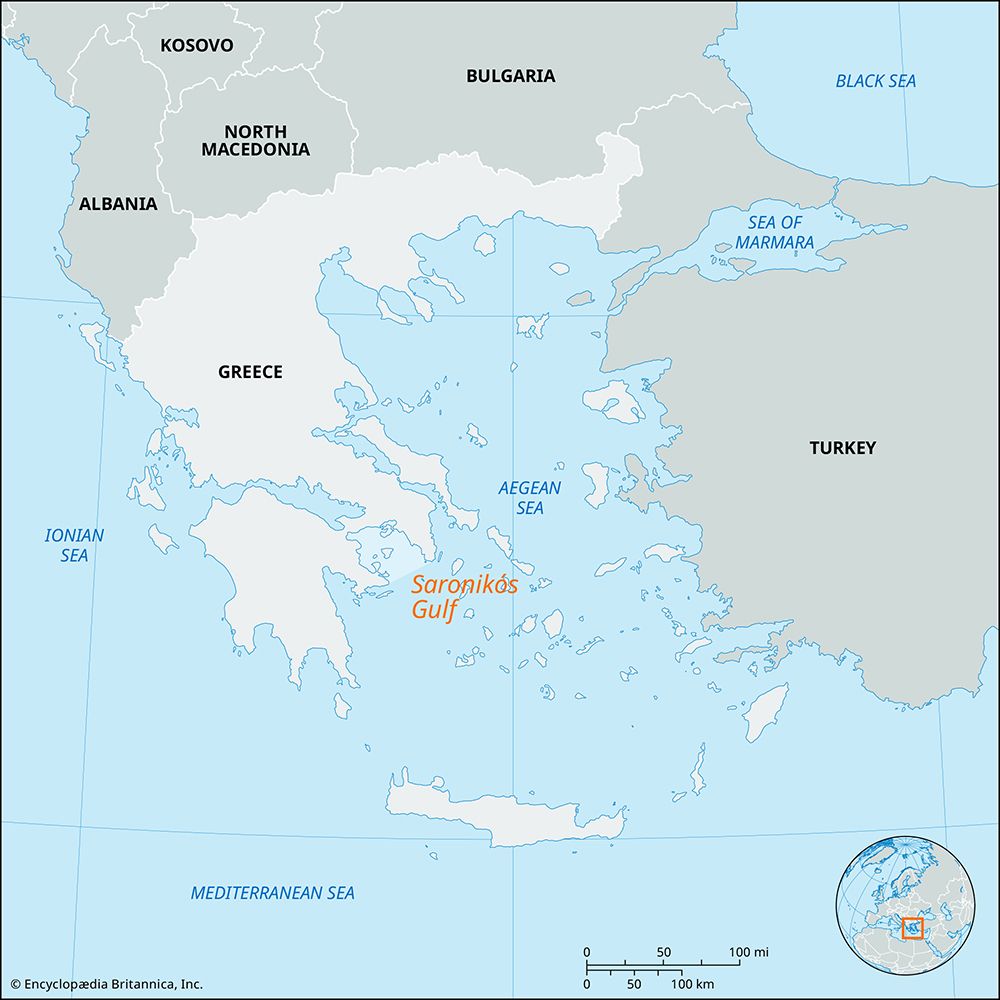
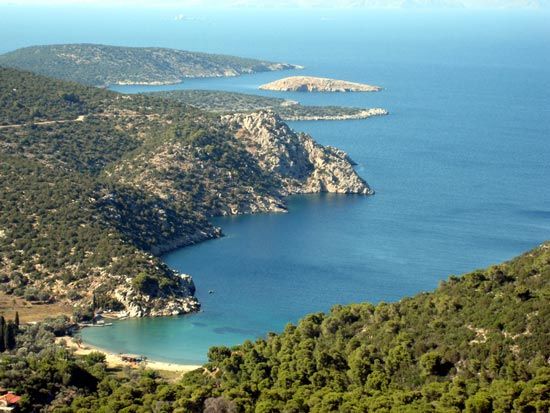
Póros is an island belonging to the Saronikós (Saronic) group in Greece. It is located in close proximity to the Argolís peninsula of the Peloponnese and is part of the Attica department.1
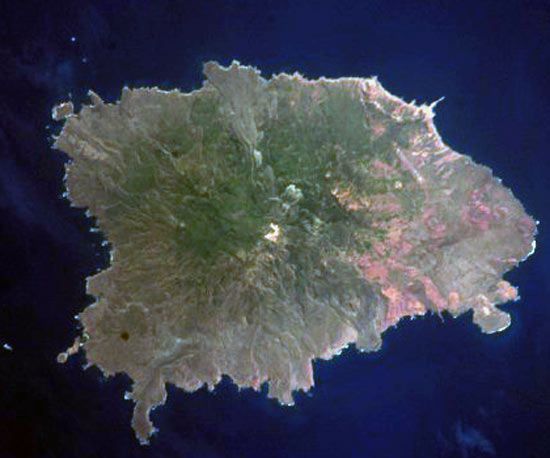
The island complex comprises two distinct landmasses that total 9 square miles (23 square km):1
- Kalávria: The larger, wooded limestone island, which is separated from the mainland village of Galatás by a narrow channel known as a poros.1
- Póros: A small, barren volcanic (trachyte) islet situated between the channel and Kalávria, which is connected to the larger island by a bridge.1
What role did Póros play during significant periods of Greek history, such as the Greek War of Independence?
Póros played a pivotal role in the diplomatic efforts surrounding the Greek War of Independence. In 1828, the island served as the meeting place for plenipotentiaries from England, France, and Russia. These representatives gathered on the island to deliberate and negotiate the future structure and sovereignty of the emerging Greek state.1
Beyond this diplomatic milestone, the island has long been a site of political and religious significance. In antiquity, the larger island of Kalávria served as the center of an amphictyony—a sacred league of maritime states—which met at the temple of Poseidon. Additionally, the island is famously associated with the Athenian orator Demosthenes, who sought sanctuary at the temple before taking his own life to avoid capture by his political adversaries.1
Sources
- Póros — Encyclopædia Britannica
- Páros — Encyclopædia Britannica
- poros — Merriam-Webster
- Puerto Rico: Country Facts — Encyclopædia Britannica
- Saronikós Gulf — Encyclopædia Britannica
- Gulf of Argolís — Encyclopædia Britannica
Published on · 3 min read