Saronikós Gulf
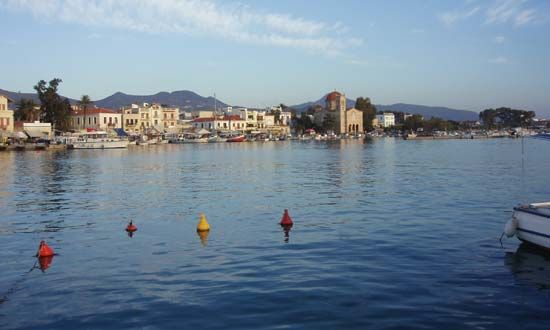
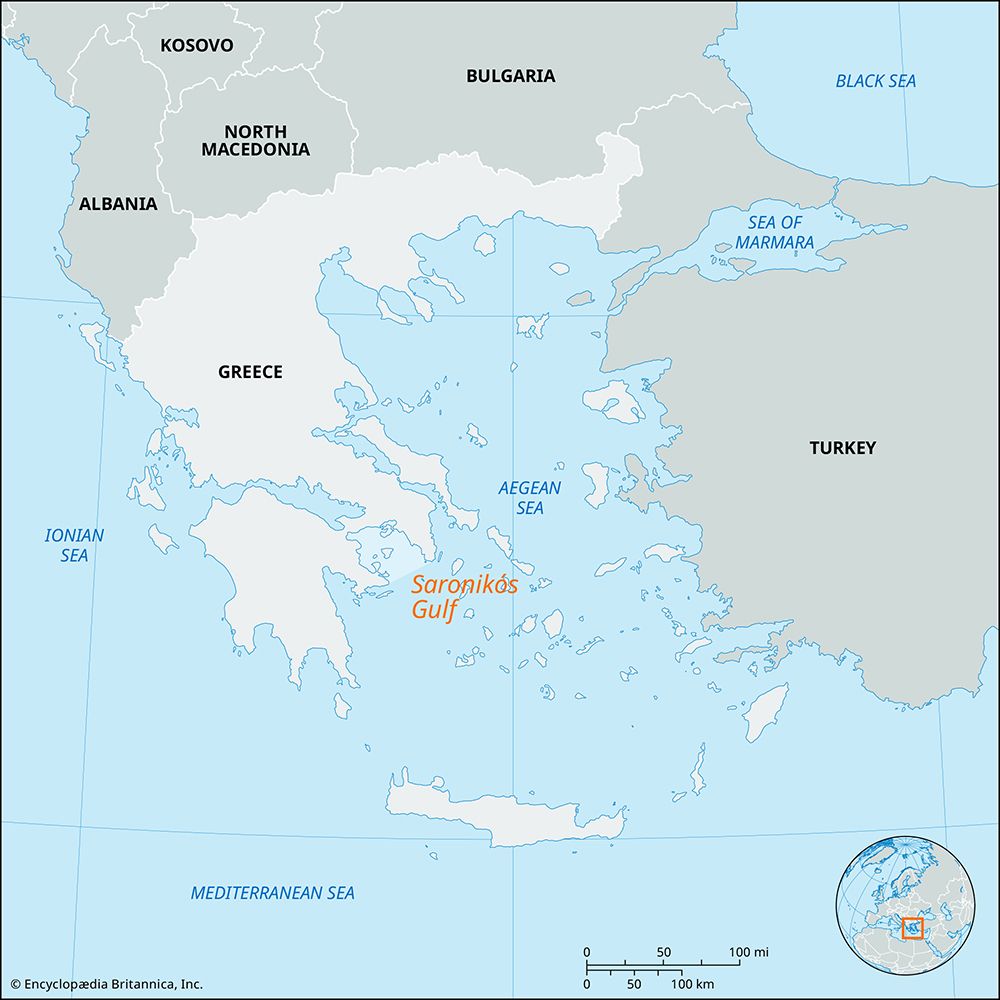
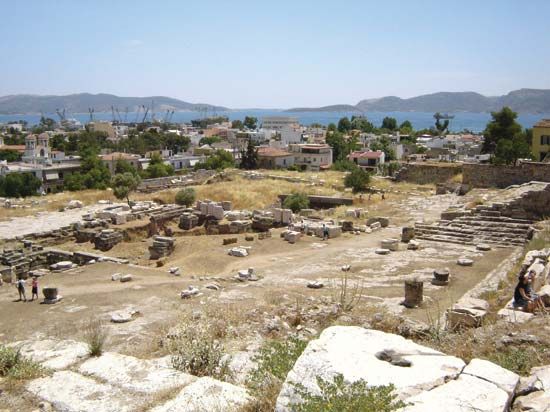
The Saronikós Gulf has been a vital maritime corridor in Greek history, serving as a strategic hub for trade, naval warfare, and religious life.
How has the Saronikós Gulf influenced ancient Greek history and mythology?
The Saronikós Gulf has been a vital maritime corridor in Greek history, serving as a strategic hub for trade, naval warfare, and religious life.
Historical Significance
The gulf’s most pivotal moment occurred in 480 BCE during the Greco-Persian Wars. The Battle of Salamis took place in the narrow straits between the island of Salamis and the mainland port of Piraeus. By luring the massive Persian fleet into these confined waters, the Greek commander Themistocles secured a decisive victory that halted Persian expansion. Additionally, the island of Aegina emerged as a leading maritime power in the 7th century BCE, utilizing its strategic position to dominate trade and issue its own silver currency.1234
Mythological and Cultural Context
The gulf was a center for ancient worship. On Aegina, the well-preserved 5th-century BCE Temple of Aphaea honors the deity Aphaea, who was closely linked to the Cretan goddess Britomartis and Artemis.4
How does the Saronikós Gulf contribute to Greece’s fishing industry?
Sorry, the Britannica knowledge base does not contain information regarding the specific contribution of the Saronikós Gulf to Greece’s fishing industry.
While general information about commercial fisheries and the biological resources of the Mediterranean Sea is available, the provided search results do not detail the regional fishing activities within the Saronikós Gulf.
How has the Saronikós Gulf been used for transportation throughout history?
The Saronikós Gulf has served as a critical maritime corridor for transportation and trade throughout Greek history. Its strategic importance is anchored by Piraeus, which has functioned as the primary port of Athens since the 5th century BCE. The development of the Long Walls in the mid-5th century BCE ensured secure communication and transport between the city and its harbor, a vital lifeline during times of siege.18
The gulf’s connectivity was further enhanced by its geography. It is linked to the Gulf of Corinth via the Corinth Canal, facilitating movement between the Aegean and Ionian seas. Today, Piraeus remains the largest port in Greece and serves as the central hub for sea transportation between Athens and the various Greek islands, while also acting as a major terminal for the national railway system.18
What is the geological formation of the Saronikós Gulf?
The provided search results do not contain information regarding the specific geological formation of the Saronikós Gulf. While the sources describe the gulf as an inlet of the Aegean Sea located between the Attica peninsula and the Peloponnese, they do not detail the tectonic or geological processes that formed it.19
Sources
- Saronikós Gulf — Encyclopædia Britannica
- Aegina — Encyclopædia Britannica
- Battle of Salamis — Encyclopædia Britannica
- Gulf of Argolís — Encyclopædia Britannica
- Salamis — Encyclopædia Britannica
- Mediterranean Sea - Biological resources — Encyclopædia Britannica
- Deepwater Horizon oil spill - Environmental costs — Encyclopædia Britannica
- Piraeus — Encyclopædia Britannica
- Greece - History — Encyclopædia Britannica
- Saronic Gulf — Merriam-Webster
Published on · 2 min read