Páros
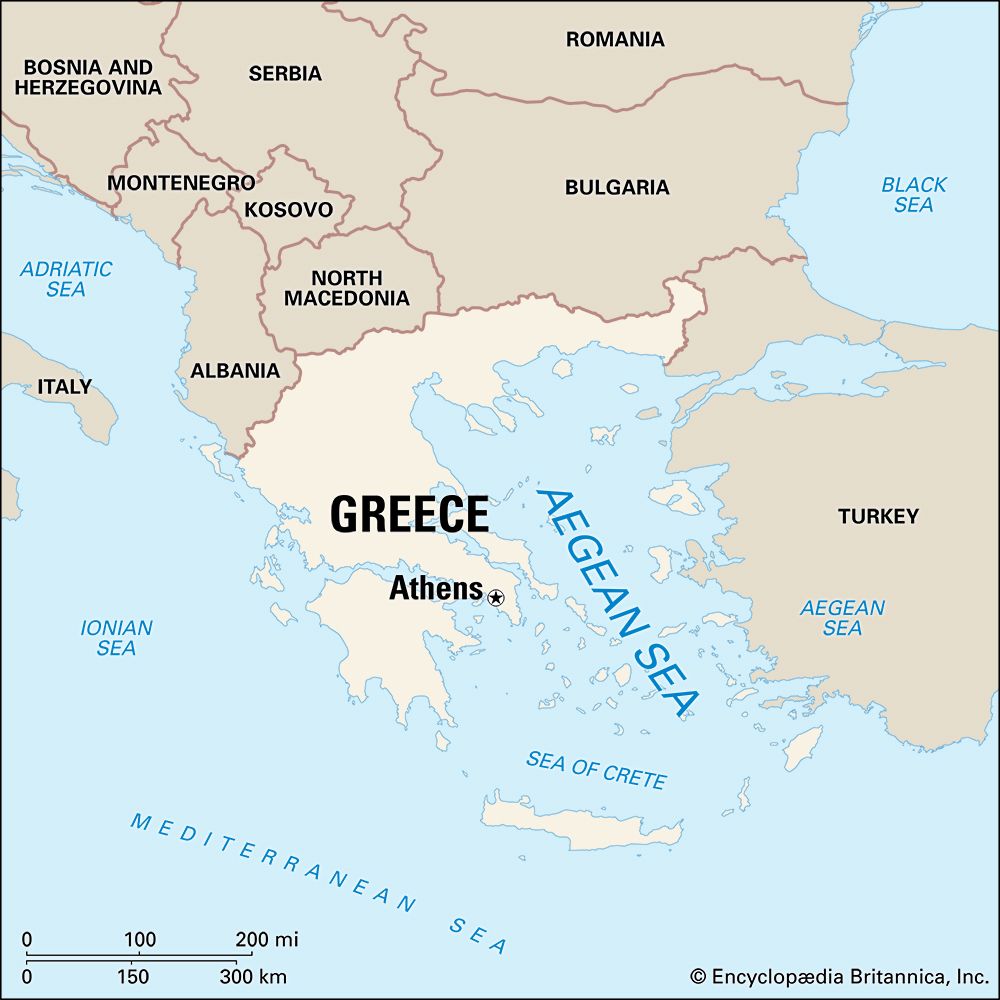
Páros is an island located in the Aegean Sea as part of the Cyclades island group in Greece. It is situated west of the island of Náxos, from which it is…
What is the geographical location and size of Páros island in Greece?
Páros is an island located in the Aegean Sea as part of the Cyclades island group in Greece. It is situated west of the island of Náxos, from which it is separated by a channel approximately 4 miles (6 km) wide.12
The island covers an area of 75 square miles (194 square kilometers). Geographically, it is defined by a single central peak, Profítis Ilías, which reaches a height of 2,530 feet (771 meters) and slopes outward toward a maritime plain.12
How has the population of Páros changed over time, and what factors have influenced these changes?
The population of the Páros municipality has shown growth in recent years, recorded at 12,514 in 2001 and increasing to 13,715 by 2011. Conversely, the population of the town of Páros (Paroikía) saw a slight decline during the same period, moving from 4,463 to 4,326.1
Historically, many islands in the Cyclades experienced rapid depopulation as residents migrated away from the region. However, this trend was significantly reversed by the development of tourism, which has become a primary pillar of the modern Parian economy alongside agriculture.31
While broader demographic trends in Greece have been influenced by international migration, shifting fertility rates, and urbanization, the specific growth of Páros reflects the island’s successful transition into a major tourist center. This economic shift has helped stabilize and grow the local population, contrasting with the stagnation or decline seen in other rural or island regions of the country.34
What is the significance of Parian marble in ancient and modern times?
Parian marble is a fine-grained, white, semitransparent marble quarried from the island of Páros in the Aegean Sea. Its unique properties, particularly its ability to transmit light, made it one of the most prized materials for sculpture in antiquity. sculpture in antiquity.65
Significance in Ancient Times
In the ancient world, Parian marble was the primary source of wealth for Páros. It was highly valued by Greek sculptors for its purity, uniform grain size, and translucency, which allowed for delicate, lifelike detail. The stone was extracted from subterranean pits on the north side of Mount Marpessa, and several of these ancient tunnels still survive today.65
Significance in Modern Times
The legacy of Parian marble continues to influence art and industry:
- Artistic Legacy: It remains a benchmark for high-quality statuary marble, alongside other famous varieties like Pentelic and Carrara marble.67
- Parian Ware: In the 19th century, the English firm Copeland & Garrett introduced a type of unglazed porcelain named “Parian ware.” This material was specifically developed to imitate the appearance and texture of Parian marble, becoming popular for Victorian-era figures and decorative objects.8
How does the local economy of Páros function, and what are its main industries?
The modern economy of Páros is primarily driven by two sectors: agriculture and tourism.
Agriculture
Agriculture remains a foundational element of the island’s economic activity. The local landscape supports the cultivation of several key products, including:
- Cereals
- Grapes
- Figs
- Olives
- Tobacco
Tourism
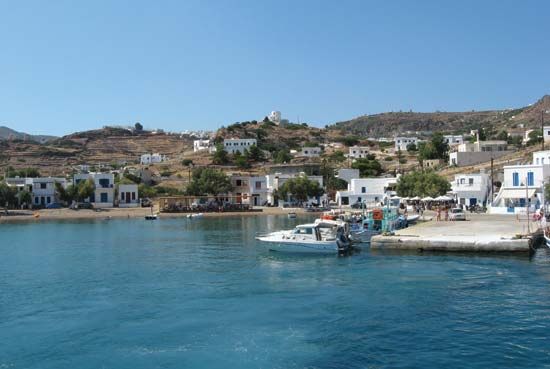
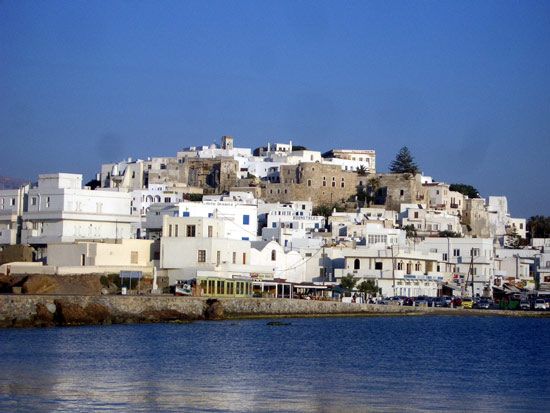
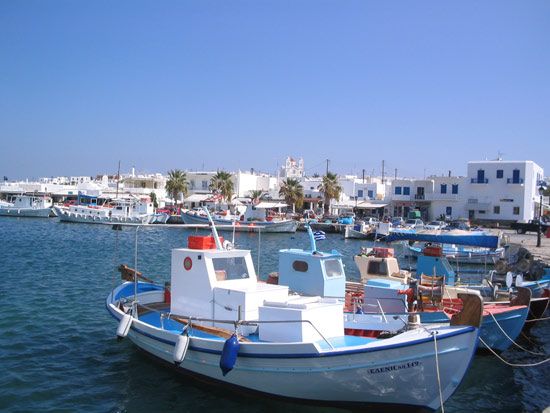
Tourism has developed into a vital pillar of the Parian economy. The island attracts visitors due to its historical significance as an archaeological site, its natural beauty, and its proximity to other destinations in the Cyclades. The infrastructure supporting this industry, including harbors and accommodations, plays a critical role in sustaining the island’s population and economic stability.
While ancient Páros relied heavily on the extraction and export of Parian marble as its chief source of wealth, the contemporary economy has successfully transitioned to these service- and land-based industries to maintain its growth.1
Sources
- Páros — Encyclopædia Britannica
- Páros — Merriam-Webster
- Cyclades — Encyclopædia Britannica
- Greece - Demographic trends — Encyclopædia Britannica
- Parian — Merriam-Webster
- marble — Encyclopædia Britannica
- Sculpture - Primary — Encyclopædia Britannica
- Parian ware — Encyclopædia Britannica
- Cyprus - Services — Encyclopædia Britannica
Published on · 3 min read