Potato
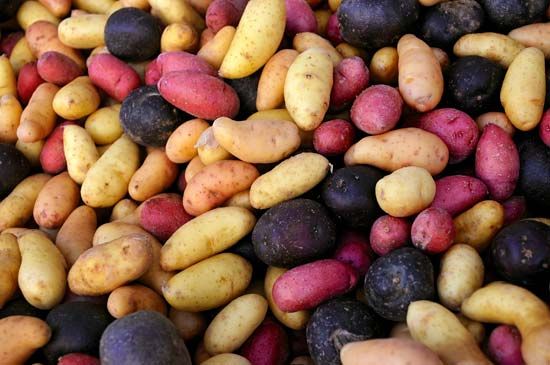
Potatoes (Solanum tuberosum) are primarily valued as a source of starch, which classifies them as starchy vegetables in nutritional contexts.
What are the main nutritional components of potatoes?
Potatoes (Solanum tuberosum) are primarily valued as a source of starch, which classifies them as starchy vegetables in nutritional contexts.12
Beyond their carbohydrate content, potatoes provide several essential nutrients, including:
- Vitamins: They are a source of vitamin C, thiamin, and niacin.12
- Minerals: They provide potassium.12
- Dietary Fiber: When consumed with their skins, potatoes are a good source of dietary fiber.12
While raw potatoes contain these nutrients, their composition can vary based on growing conditions and storage. It is important to note that the nutritional profile changes significantly when potatoes are processed; for example, potato chips have a much higher fat and energy content compared to raw potatoes.3
How are potatoes processed for various food products?
Potatoes are processed into a wide array of food products using techniques that range from traditional drying to modern industrial manufacturing.
Dehydration and Instant Products
Drying is a primary method for preserving potatoes, reducing their volume and weight for easier storage and transport.
- Instant Mashed Potatoes: These are produced as either granules or flakes. Granules are processed via air-lift drying and fluidized-bed drying, while flakes are created using a steam-heated drum drier. To maintain a mealy texture in flakes, potatoes undergo precooking, cooling, and the addition of emulsifiers to manage starch release.4
- Potato Snacks: Products like Pringles are created by processing dried potato flakes into a dough that is then formed and reshaped into uniform sizes.5
Starch and Flour Extraction
In large-scale industrial operations, potatoes are cleaned and disintegrated in raspers or hammer mills. The resulting pulp is separated into fibers and “starch milk” using centrifugal sieves. The starch is then washed, dried, and often treated with sulfurous acid to prevent microbial growth. Potato flour is similarly produced by drying, grinding, and sieving cleaned potato slices.6
Fried and Specialty Products
- Potato Chips: These are made by slicing potatoes thinly and frying or baking them until crisp. The development of continuous fryers in the 1920s allowed for large-scale production.5
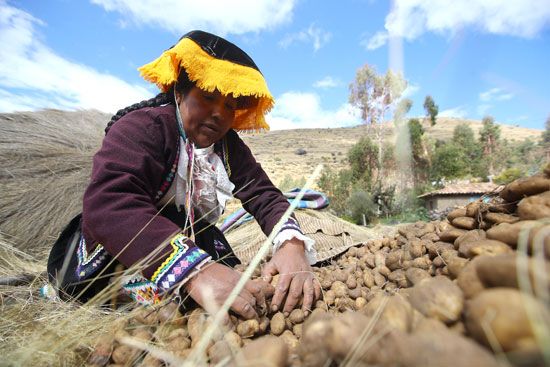
- Traditional Preservation: Historically, potatoes were preserved as chuño through a natural freeze-drying process, utilizing the cold nighttime temperatures and intense sunlight of the Andes.2
What is the botanical classification of the potato plant?
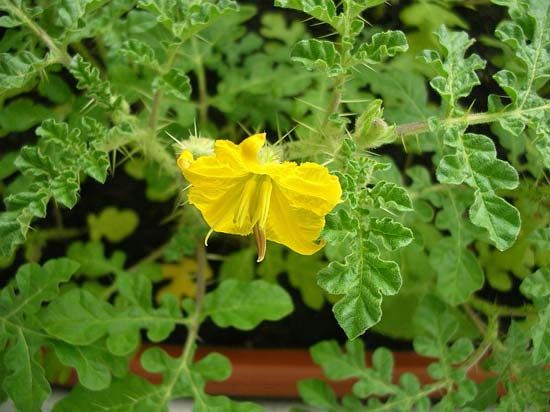
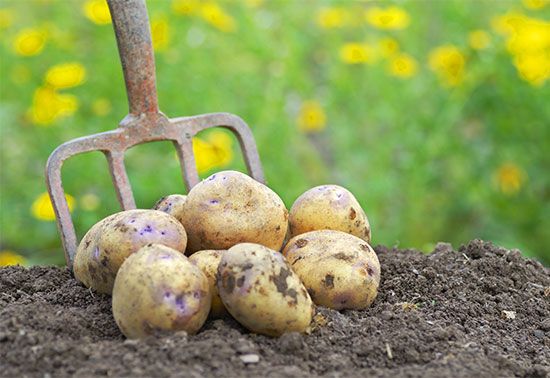
The potato plant (Solanum tuberosum) is botanically classified within the Solanaceae family, commonly known as the nightshade or potato family. This family belongs to the order Solanales.
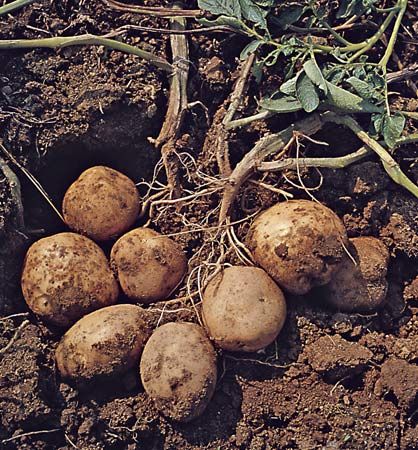
Within this family, the potato is placed in the genus Solanum, which is the largest genus of the family and includes other significant food crops such as the eggplant and tomato. The potato plant itself is a sprawling, strong-smelling herb that produces edible tubers, which are botanically defined as underground stems.78
How has genetic modification been used to improve potato crops?
Genetic modification has been used to improve potato crops by introducing specific traits that enhance productivity and sustainability. Through genetic engineering, scientists have developed potato varieties with improved resistance to pests, diseases, and environmental stressors.910
Key applications include:
- Pest and Disease Resistance: Similar to other crops, potatoes have been engineered to express genes from the bacterium Bacillus thuringiensis (Bt), which produces a natural Bt toxin that helps protect the plants from insect infestations, such as the Colorado potato beetle. This can lead to a reduction in the need for broad-spectrum chemical insecticides.11912
- Stress Tolerance and Efficiency: Genetic techniques are used to introduce or enhance genes that confer resistance to environmental challenges like drought or improve nutrient use efficiency, helping the plants thrive in varied conditions.10
- Regulatory Status: While various genetically modified (GM) potato varieties have been approved for field trials and consumption in the United States, they remain subject to rigorous safety standards regulated by agencies such as the U.S. Department of Agriculture (USDA), the Environmental Protection Agency (EPA), and the Food and Drug Administration (FDA).9
Sources
- vegetable processing - Nutritional value — Encyclopædia Britannica
- Potato — Encyclopædia Britannica
- Potato: Top Questions — Encyclopædia Britannica
- vegetable processing - Dehydration — Encyclopædia Britannica
- potato chip — Encyclopædia Britannica
- Cereal processing - Starch from tubers — Encyclopædia Britannica
- Solanaceae — Encyclopædia Britannica
- Solanales - Potato — Encyclopædia Britannica
- genetically modified organism - GMOs in agriculture — Encyclopædia Britannica
- Genetically modified organisms (GMOs) — Encyclopædia Britannica
- Genetically modified organisms (GMOs) - Con 2: Tinkering with the genetic makeup of plants can result in changes to the food supply that introduce toxins or trigger allergic reactions. — Encyclopædia Britannica
- genetically modified organism: Top Questions — Encyclopædia Britannica
- Genetically modified organisms (GMOs) - Pro 2: Genetic modification improves crop yields, lowers the price of food, and increases nutritional content, helping to alleviate world hunger. — Encyclopædia Britannica
- genetic engineering - Applications — Encyclopædia Britannica
Published on · 3 min read