Powder River
The Powder River is a stream located in the northwestern United States. It originates in the foothills of the Bighorn Mountains in Wyoming and flows…
What is Powder River?
The Powder River is a stream located in the northwestern United States. It originates in the foothills of the Bighorn Mountains in Wyoming and flows northward for 486 miles (782 km) before joining the Yellowstone River near Terry, Montana. Its tributaries include the Little Powder River and Crazy Woman Creek.1
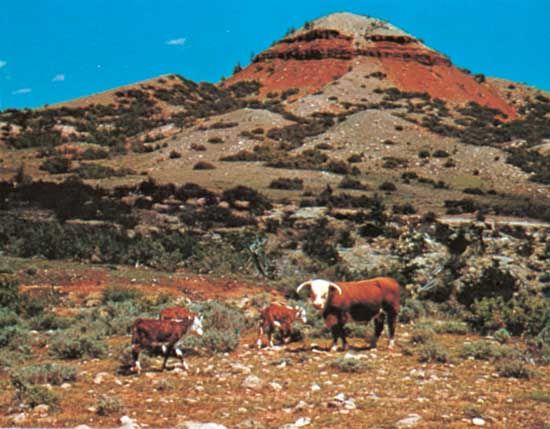
The river and its surrounding basin have historical significance, particularly regarding the conflicts between the U.S. military and Native American tribes during the 19th century. For instance, in November 1876, U.S. troops destroyed a large Cheyenne camp located at the Red Fork of the Powder River. Additionally, the Powder River basin is recognized as a prominent agricultural district where ranching has historically played a key role in the region’s development.23
What was the significance of the Bozeman Trail during the Plains Wars?
The Bozeman Trail served as a major flash point during the Plains Wars, acting as a catalyst for significant conflict between the U.S. government and a coalition of Oceti Sakowin (Sioux), Cheyenne, and Arapaho peoples.45
Created by John M. Bozeman in the 1860s to provide a direct route to gold-rush towns in Montana, the trail cut directly through sovereign lands that had been guaranteed to Native tribes by the Treaty of Fort Laramie (1851). The U.S. government’s attempt to fortify this route led to “Red Cloud’s War” (1865–67), a campaign led by the Oglala chief Red Cloud to protect vital hunting grounds.4625
The conflict reached a peak with the Fetterman Massacre in 1866, where Native warriors successfully ambushed and killed 80 U.S. soldiers near Fort Phil Kearny. This defeat, combined with the high cost of maintaining the trail, forced the U.S. to abandon the route under the terms of the Second Treaty of Fort Laramie in 1868.452
Who were some of the key Native American leaders involved in the conflicts near the Powder River?
Several prominent Native American leaders played pivotal roles in the conflicts surrounding the Powder River and the broader Plains Wars:
- Red Cloud: A principal chief of the Oglala Lakota, he led a coalition of Sioux, Cheyenne, and Arapaho in “Red Cloud’s War” (1865–67). He successfully resisted U.S. efforts to build the Bozeman Trail through vital hunting grounds, forcing the government to abandon its forts in the region.52
- Crazy Horse: An Oglala Lakota chief and skilled tactician, he was a key figure in the resistance. He participated in the Fetterman Massacre and later helped unite forces at the Little Bighorn to defeat U.S. troops.8
- Sitting Bull: A war and spiritual leader who united the Sioux nation. He was instrumental in the victory at the Battle of the Rosebud and provided the vision that inspired the coalition at the Little Bighorn.98
- Dull Knife: A Northern Cheyenne chief who led his people in a desperate attempt to return to their Montana homeland from confinement in Indian Territory. His camp on the Red Fork of the Powder River was attacked by the U.S. Army in 1876.10
- Little Wolf: A Northern Cheyenne war chief who, alongside Dull Knife, led the flight of the Cheyenne to escape reservation conditions.10
How did the discovery of gold in the Black Hills impact the region?
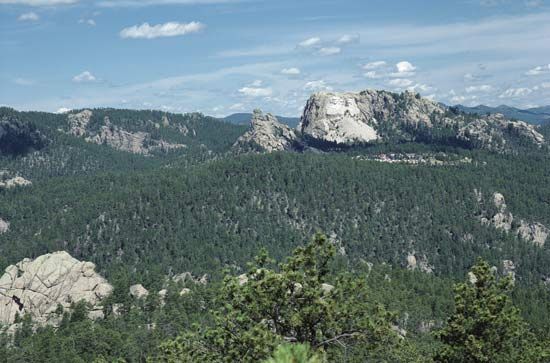
The discovery of gold in the Black Hills in 1874 by a military expedition led by George Armstrong Custer had profound and devastating consequences for the region and its Indigenous inhabitants.121314
Although the Second Treaty of Fort Laramie (1868) had guaranteed the Sioux exclusive possession of the land, the news of gold triggered a massive influx of thousands of miners and settlers. This illegal encroachment led to the Black Hills War (1876), a conflict marked by the Battle of the Little Bighorn. Despite Native American resistance, the U.S. government ultimately forced the Sioux to relinquish their claims to the territory in 1877.12144
The region was transformed by industrial mining, most notably through the Homestake Mine, which became the largest gold mine in the United States. The seizure of the Black Hills remains a significant historical injustice; in 1980, the U.S. Supreme Court ruled the taking was illegal and authorized compensation, which the Sioux have refused to accept, maintaining that the land is their sacred heritage and treaty right.141213
Sources
- Powder River — Encyclopædia Britannica
- Plains Wars - Defeat of the Plains Indians — Encyclopædia Britannica
- Powell — Encyclopædia Britannica
- Oceti Sakowin - The beginning of the struggle for the West — Encyclopædia Britannica
- Red Cloud — Encyclopædia Britannica
- John M. Bozeman — Encyclopædia Britannica
- Montana - U.S. exploration and settlement — Encyclopædia Britannica
- Dull Knife — Encyclopædia Britannica
- Sitting Bull: Top Questions — Encyclopædia Britannica
- Crazy Horse — Encyclopædia Britannica
- Plains Wars - Legacy of the Plains Wars — Encyclopædia Britannica
- South Dakota - Settlement and gold rush — Encyclopædia Britannica
- What was Ulysses S. Grant’s relationship with the Lakota Indians? — Encyclopædia Britannica
- Black Hills — Encyclopædia Britannica
Published on · 3 min read