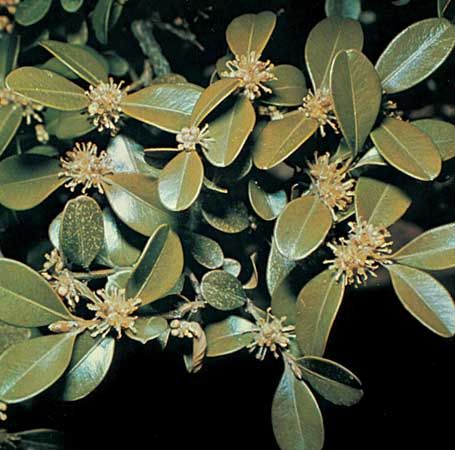
Buxales
Within the Buxales order, several species are recognized as threatened or endangered due to their limited distribution and environmental pressures.
Are there any endangered species within the Buxales order?
Within the Buxales order, several species are recognized as threatened or endangered due to their limited distribution and environmental pressures.
- Vahl’s boxwood (Buxus vahlii): This species is classified as a critically endangered species, as it is found in only two locations in Puerto Rico.1
- Malawi boxwood (Buxus nyasica): This species is endemic to Malawi and is listed as endangered.1
- Haptanthus hazlettii: Belonging to the family Haptanthaceae, this small tree native to Honduras is considered one of the rarest plants in the world. It was famously rediscovered in 2010 after being missing for over two decades.2
Protecting these rare plants is essential for maintaining global biodiversity and ensuring the survival of unique botanical lineages.
What is the evolutionary history of the Buxales order?
The Buxales order, which includes the Buxaceae family and the taxonomically contentious Haptanthaceae family, is classified within the Angiosperm Phylogeny Group III (APG III) system as part of the peripheral eudicots. This group also includes the Proteales, Ranunculales, and Trochodendrales orders.1
While the provided search results do not detail the specific chronological timeline of the order’s evolutionary emergence, they establish its position among the early-diverging lineages of eudicot flowering plants. The order is characterized by woody plants with distinct reproductive features, such as male flowers with anthers positioned opposite the perianth lobes and female flowers with styles that are stigmatic along their entire length.1
Please note that some older classification systems, such as those referencing the order Sapindales, are outdated regarding the placement of the Buxaceae family.3
How do scientists classify and study plants within the Buxales order?
Scientists classify and study plants within the Buxales order primarily through the Angiosperm Phylogeny Group (APG) system, which relies on molecular techniques rather than traditional morphological comparisons.
Classification and Molecular Analysis
Modern botanical classification has been transformed since the 1990s by the use of DNA sequencing, particularly from chloroplasts and cell nuclei. This molecular approach provides robust, testable data on plant phylogeny, often leading to revisions of older, morphology-based schemes like the Cronquist system. The APG system organizes plants into families and orders based on their evolutionary relationships, presuming that these groups are monophyletic—meaning all members share a common ancestor.1
Studying Buxales Characteristics
When studying Buxales, botanists examine specific physical traits that distinguish the order as a group of basal eudicots:
- Floral Morphology: Researchers analyze the reproductive structures, such as the male flowers, where anthers are positioned opposite the perianth lobes. They also observe the unique female flowers, where the styles are stigmatic (receptive) along their entire length, sometimes extending onto the ovary.5
- Pollen Structure: A key diagnostic feature for eudicots, including Buxales, is the presence of pollen that fundamentally features three furrows or pores (tricolpate), distinguishing them from the monosulcate pollen found in monocots and basal angiosperms.67
- Field Research: Because some species, such as the rare Haptanthus hazlettii, are extremely elusive, scientists rely on herbarium vouchers and field expeditions to locate and document these plants in their native habitats.5
How do plants in the Buxales order reproduce?
Plants within the Buxales order, particularly those in the Buxaceae family, exhibit specific reproductive characteristics:
- Monoecious Flowers: These plants are generally monoecious, meaning they produce separate male and female flowers on the same individual plant.1
- Floral Structure: The flowers are characterized by a rather inconspicuous perianth. In male flowers, the anthers are positioned opposite the perianth lobes.1
- Unique Stigmatic Surfaces: The female flowers possess distinctive styles that are receptive (stigmatic) along their entire length. In some cases, this stigmatic surface extends downward onto the ovary itself.1
While the order includes the rare Haptanthus hazlettii, the reproductive biology of the broader Buxales group is best exemplified by the widely cultivated Buxus (boxwood) genus, which follows these patterns of separate, specialized floral structures.1
Sources
- Buxales — Encyclopædia Britannica
- boxwood — Encyclopædia Britannica
- bivalve - Ecology and habitats — Encyclopædia Britannica
- Buxaceae — Merriam-Webster
- angiosperm - Annotated classification — Encyclopædia Britannica
- angiosperm - Eudicots — Encyclopædia Britannica
- eudicotyledon — Encyclopædia Britannica
Published on · 3 min read