Protoceratops
Protoceratops was a relatively large animal for a ceratopsian, though it was small compared to later, more derived members of the group. Adults typically…
How large was an average Protoceratops compared to other dinosaurs of its time?
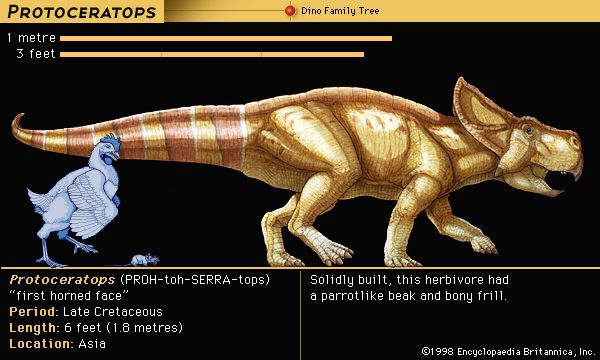
Protoceratops was a relatively large animal for a ceratopsian, though it was small compared to later, more derived members of the group. Adults typically reached lengths of about 1.8 metres (6 feet) and weighed approximately 180 kg (400 pounds).1
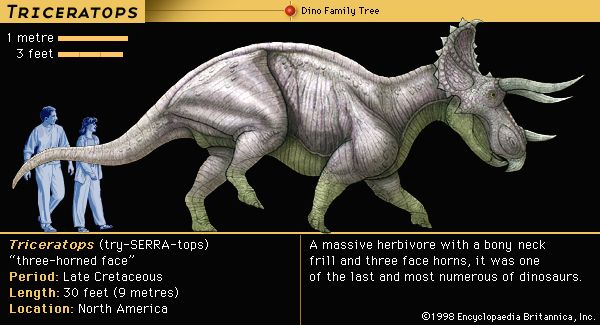
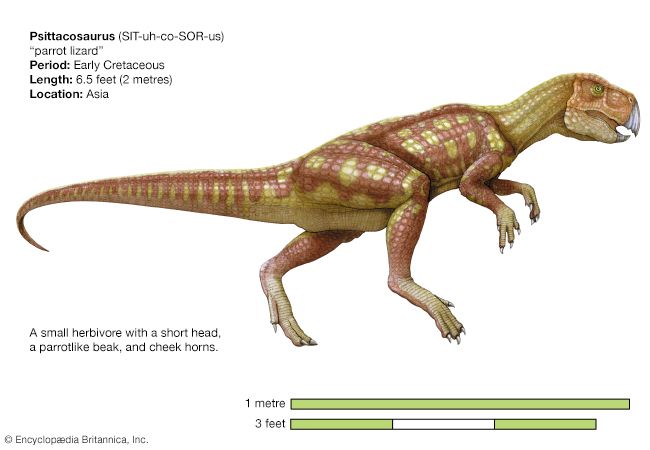
In the context of its time, Protoceratops was significantly smaller than the massive ceratopsids that evolved later, such as Triceratops, which could grow to nearly 9 metres (30 feet) in length and weigh several tons. For comparison, the skull of the torosaurus alone could reach 3 metres (10 feet) in length, which is longer than an entire adult Protoceratops. While Protoceratops was larger than its primitive, bipedal ancestors like Psittacosaurus, it remained a modest-sized herbivore compared to the giants of the Late Cretaceous.21
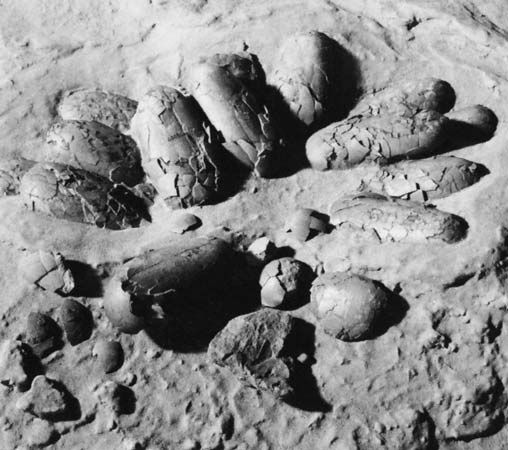
Are there any famous or particularly well-preserved Protoceratops fossils?
Yes, Protoceratops is one of the most well-documented dinosaurs in the fossil record, largely due to expeditions conducted by the American Museum of Natural History in the 1920s to the Gobi Desert of Mongolia.1
These expeditions yielded a “rare treasure” of hundreds of skeletal specimens, providing the first valid growth series for any dinosaur. This collection includes individuals ranging from newly hatched young to full-size adults, which has allowed paleontologists to study growth rates and biological variation within the genus.41
Perhaps the most famous discovery involving this dinosaur is the “fighting dinosaurs of Mongolia” specimen. This remarkable fossil features a small dromaeosaur, specifically a Velociraptor, locked in petrified combat with a small protoceratopsian. In the fossil, the Velociraptor is seen grasping the frill of the Protoceratops with its hands, while its foot talons are lodged in the herbivore’s throat, providing a rare and dramatic glimpse into the predatory interactions of the Late Cretaceous.3
How does Protoceratops fit into the evolutionary history of ceratopsian dinosaurs?
Protoceratops serves as a critical evolutionary link in the history of ceratopsian dinosaurs, representing a transitional stage between primitive, bipedal ancestors and the massive, quadrupedal ceratopsids of the Late Cretaceous.15
Evolutionary Position
Protoceratops belongs to the Protoceratopsidae, a group that evolved from small, bipedal forms like Psittacosaurus. While its ancestors were bipedal, Protoceratops transitioned to a quadrupedal stance, though it retained more strongly developed hind limbs, which resulted in a pronounced arch in its back.351
Anatomical Precursors
The anatomy of Protoceratops foreshadowed the specialized features of later, more derived ceratopsids in several ways:
- Skull and Frill: It possessed the characteristic rostral bone and a neck frill. While the frill of Protoceratops was a modest extension of cranial arches, it provided the structural foundation for the enormous, ornate frills seen in later genera like Triceratops and Torosaurus.15
- Horns: Protoceratops displayed a short, stout horn on its snout, marking an early development of the nasal structures that would become prominent, specialized horns in advanced ceratopsids.5
- Jaws: Its specialized, beaklike jaws and dental batteries, designed for shearing tough vegetation, established the feeding mechanics that supported the massive size of later ceratopsians.5
When and where did Protoceratops live?
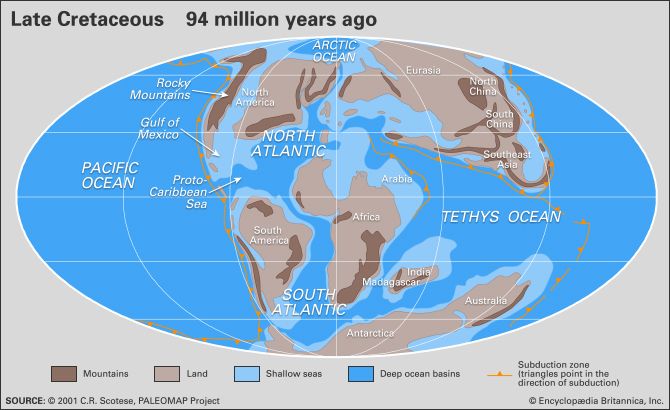
Protoceratops lived during the Late Cretaceous Period, approximately 80 million years ago. Its fossils have been discovered in the Gobi Desert of Mongolia, and the genus is known to have inhabited regions across both Asia and North America.15
Sources
- Protoceratops — Encyclopædia Britannica
- Oviraptor — Encyclopædia Britannica
- dinosaur - Ceratopsia — Encyclopædia Britannica
- dinosaur - Tetanurae — Encyclopædia Britannica
- ceratopsian — Encyclopædia Britannica
Published on · 3 min read