Protostomia
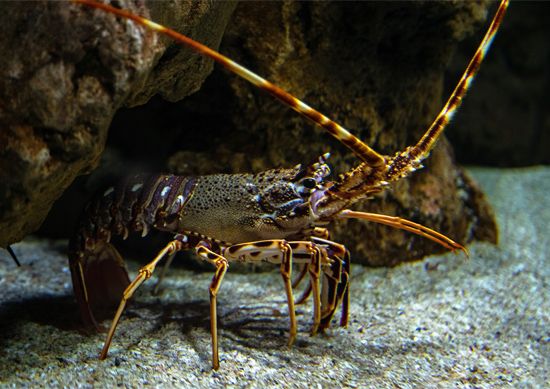
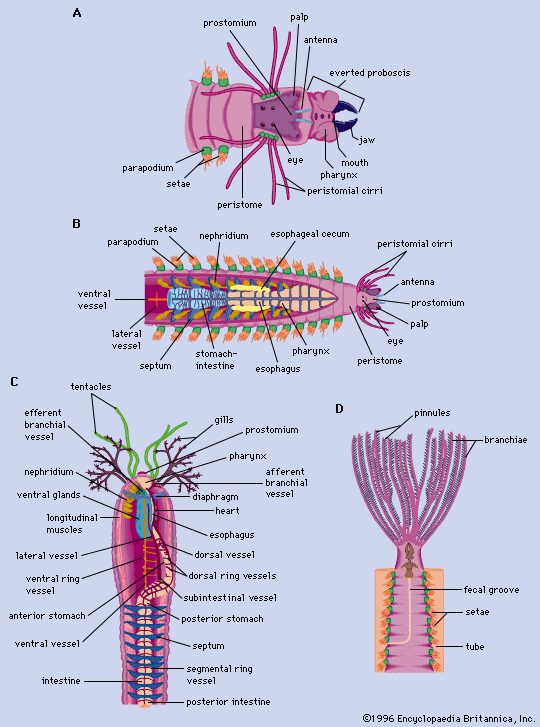
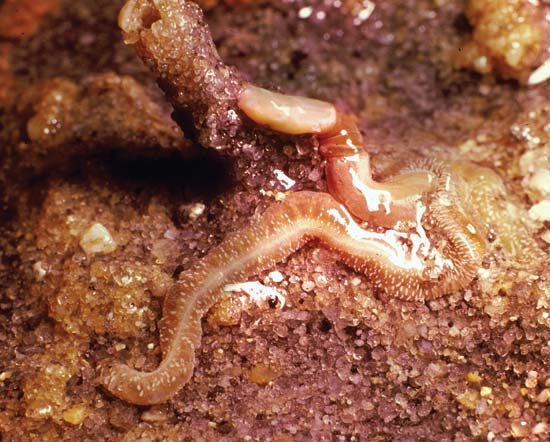
Protostomia is a major group of animals, including arthropods, mollusks, and annelid worms, classified primarily based on their patterns of embryonic…
What is Protostomia?
Protostomia is a major group of animals, including arthropods, mollusks, and annelid worms, classified primarily based on their patterns of embryonic development.12
The name is derived from the Greek words proto (“first”) and stoma (“mouth”), reflecting the fact that the mouth develops from the first opening into the embryonic gut, known as the blastopore.12
Key developmental characteristics of protostomes include:
- Cleavage: Early cell division is typically spiral and determinate, meaning the fate of each cell is fixed very early in development.2
- Coelom Formation: In most protostomes, the body cavity (coelom) forms through a process called schizocoely, where it arises from a split in the embryonic mesoderm.12
- Larval Stages: Many protostomes possess a characteristic larval form known as a trochophore.1
Protostomes represent one of the two primary divisions of coelomates, the other being the Deuterostomia, in which the blastopore becomes the anus rather than the mouth.12
How do deuterostomes differ from protostomes in their development?
Deuterostomes and protostomes are the two primary divisions of coelomates, distinguished by fundamental differences in their early embryonic development.13
The primary developmental differences include:
- Blastopore Fate: In protostomes, the blastopore—the first opening into the embryonic gut—develops into the mouth. In deuterostomes, the blastopore becomes the anus, and the mouth forms as a secondary opening.143
- Cleavage Patterns: Protostomes typically exhibit spiral and determinate cleavage, where the fate of each cell is fixed early in development. Deuterostomes display radial and indeterminate cleavage, where the fate of early cells is determined by their position later in development.456
- Coelom Formation: Most protostomes form their body cavity through schizocoely, a process involving a split in the embryonic mesoderm a split in the embryonic mesoderm. Deuterostomes typically undergo enterocoelous development, where the coelom forms from buds off the embryonic gut.143
These distinct pathways represent a major divergence in the evolutionary history of animals. Would you like to explore how these developmental differences relate to the specific animal groups within each lineage?4
What is the role of the coelom in animal body structure?
The coelom is a fluid-filled body cavity located between the digestive tract and the body wall, which plays a critical role in the structural and functional organization of many animals. Its presence and development are defining features of coelomates, a group that includes most complex, bilaterally symmetrical animals.101112
The coelom serves several vital functions:
- Hydrostatic Skeleton: By providing a closed, fluid-filled space, the coelom acts as a hydrostatic skeleton. This allows muscles to work against the incompressible fluid, facilitating locomotion and other body movements.1113
- Organ Support and Protection: The coelom provides a space where major internal organs—such as the digestive, circulatory, and reproductive systems—can be suspended, protected, and allowed to grow or move independently of the body wall.1415
- Physiological Efficiency: The cavity facilitates the transport of nutrients, gases, and waste products. In many animals, the coelom is associated with the development of a circulatory system, which overcomes the limitations of diffusion found in simpler, acoelomate organisms.16
The coelom is formed within the mesoderm during embryonic development, either through the splitting of mesodermal masses (schizocoely) or as pouches from the embryonic gut (enterocoely).1012
What are some examples of animals classified as deuterostomes?
Deuterostomes are a diverse group of animals classified by their unique embryonic development, where the blastopore becomes the anus rather than the mouth. Several major phyla fall under this classification:8
- Echinodermata: This phylum includes marine animals such as starfish, sea urchins, and sea cucumbers.818
- Chordata: This group encompasses a wide range of animals, including vertebrates (such as mammals, birds, and fish), as well as lower chordates like sea squirts (tunicates) and lancelets.81920
- Hemichordata: These include animals such as acorn worms, which are considered the closest relatives to the chordates.1920
- Chaetognatha: Commonly known as arrowworms, these are small, predatory marine invertebrates.819
- Brachiopoda: Often called lamp shells, these are marine animals that typically possess two unequal shells.8
Sources
- Protostomia — Encyclopædia Britannica
- Animal development - Cleavage — Encyclopædia Britannica
- Animal - Coelomates — Encyclopædia Britannica
- radial cleavage — Merriam-Webster
- blastopore — Encyclopædia Britannica
- spiral cleavage — Merriam-Webster
- cleavage — Encyclopædia Britannica
- Deuterostomia — Encyclopædia Britannica
- Animal development - Gastrulation — Encyclopædia Britannica
- schizocoelomate — Encyclopædia Britannica
- Animal - Bilateria: an organ level of organization — Encyclopædia Britannica
- skeleton - The hydrostatic skeleton — Encyclopædia Britannica
- Animal - Radiata: a tissue level of organization — Encyclopædia Britannica
- skeleton - Skeletomusculature of a mobile coelenterate — Encyclopædia Britannica
- Animal - Acoelomates — Encyclopædia Britannica
- echinoderm - Body wall and body cavity — Encyclopædia Britannica
- prenatal development - Coelom — Encyclopædia Britannica
- echinoderm - Size range and diversity of structure — Encyclopædia Britannica
- Chordate - Evolution and paleontology — Encyclopædia Britannica
- nervous system - The primitive condition — Encyclopædia Britannica
Published on · 3 min read