Pulicat Lake
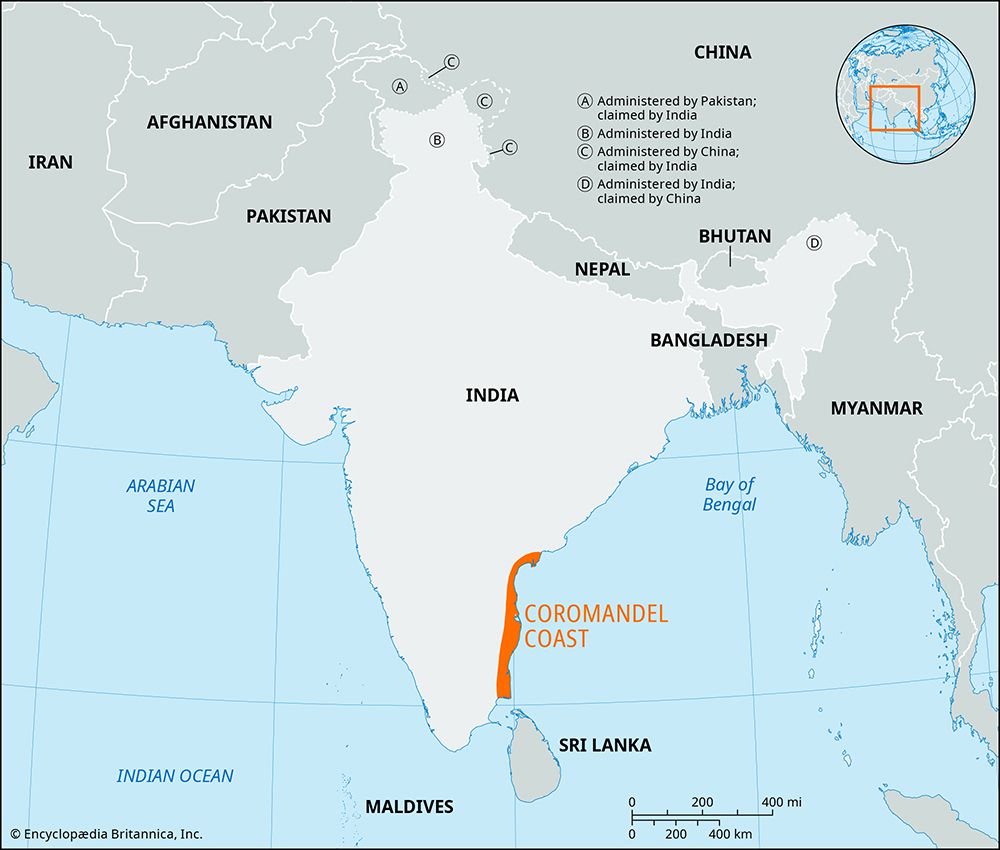
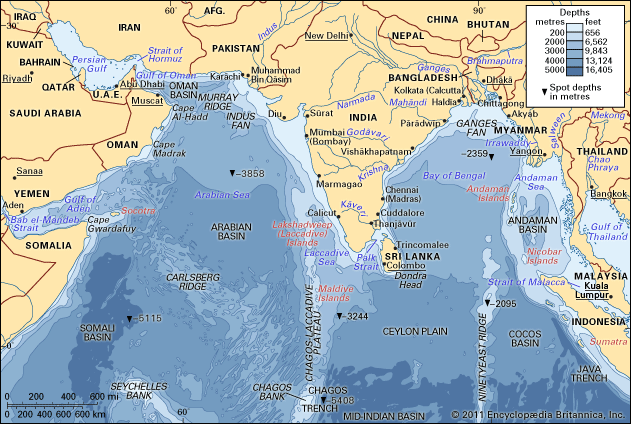
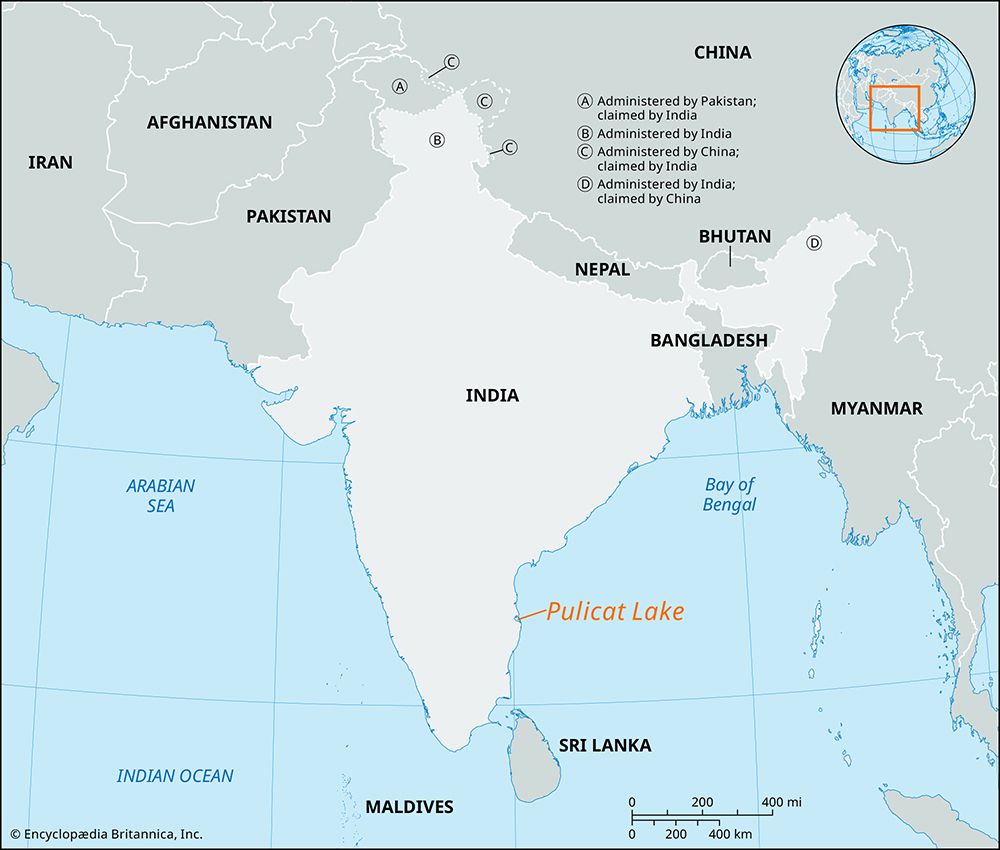
Pulicat Lake is a saltwater lagoon situated on the Coromandel Coast in southern India. Spanning the border between the states of Andhra Pradesh and Tamil…
What is Pulicat Lake?
Pulicat Lake is a saltwater lagoon situated on the Coromandel Coast in southern India. Spanning the border between the states of Andhra Pradesh and Tamil Nadu, the lake measures approximately 30 miles (50 km) in length and varies between 3 and 10 miles (5 to 16 km) in width.1
The lagoon is separated from the Bay of Bengal by the long, narrow Sriharikota Island, which serves as the location for India’s Satish Dhawan Space Centre. The only sea entrance to the lake is located at the southern end of this island, near the town of Pulicat. Economically, the lake is significant for its production of salt and prawns.1
What is the significance of Sriharikota Island?
Sriharikota Island is a long, narrow island located on the Coromandel Coast of Andhra Pradesh, India, where it serves as the barrier separating Pulicat Lake from the Bay of Bengal.1
The island is of immense national and scientific significance as the site of the Satish Dhawan Space Centre (SDSC), India’s primary satellite-launching facility. Formerly known as the Sriharikota Range (SHAR), the center was renamed in 2002 to honor Satish Dhawan, the aerospace engineer and former chairman of the Indian Space Research Organisation (ISRO) who was instrumental in developing India’s space program.12
Key milestones associated with the facility include:
- Lunar Exploration: The site hosted the launches of the Chandrayaan series, including the historic 2023 mission that made India the first nation to land a spacecraft in the Moon’s south polar region.3
- Earth Observation: The facility serves as the launch site for advanced missions like NISAR, a joint venture between NASA and ISRO designed to monitor Earth’s surface changes, including natural disasters and climate-related shifts.4
- Technological Advancement: The center has facilitated the launch of India’s indigenous satellite launch vehicles, telecommunications systems, and remote sensing satellites.2
How do saltwater lagoons form?
Lagoons are shallow, quiet bodies of water separated from the open sea by a protective barrier. Their formation generally follows two primary pathways depending on the nature of that barrier.5
Barrier Island Lagoons
These lagoons form on low-lying coasts where waves deposit sand or shingle to create barrier islands or spits. This process typically occurs when the coastal slope is flatter than the equilibrium slope required by incoming waves. As sea levels rise, low-lying land behind these barriers becomes flooded, creating a lagoon. These features are common on coasts with moderate to low tidal ranges and require an abundant supply of sediment to maintain the barrier.678
Coral Reef Lagoons
Alternatively, lagoons can be formed by coral reefs. In these environments, circular or irregular stretches of water are enclosed by atoll reefs or protected by barrier reefs from direct wave action. In these cases, sedimentation helps maintain moderate water depths, compensating for the subsidence that often accompanies reef development.5
What types of wildlife live in Pulicat Lake?
Sorry, the Britannica knowledge base does not contain information regarding the specific types of wildlife that inhabit Pulicat Lake.
Sources
- Pulicat Lake — Encyclopædia Britannica
- Satish Dhawan — Encyclopædia Britannica
- Chandrayaan — Encyclopædia Britannica
- NISAR — Encyclopædia Britannica
- lagoon - Barrier bars and sediment sources — Encyclopædia Britannica
- lagoon - Waves , tides, and surf — Encyclopædia Britannica
- lagoon — Encyclopædia Britannica
- lagoon - Water temperature and salinity — Encyclopædia Britannica
- lagoon - Storms and catastrophic events — Encyclopædia Britannica
- lagoon - Barrier island lagoons — Encyclopædia Britannica
Published on · 2 min read