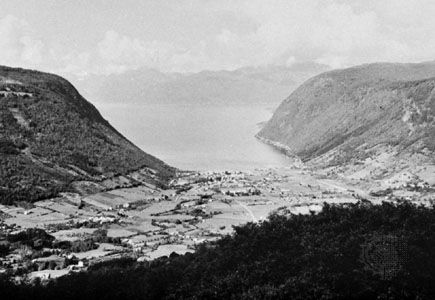
Sligo Bay
Sligo Bay is a bay located on the north coast of County Sligo in Ireland. It serves as the confluence for the estuaries of the Drumcliff, Bonet, and Unshin…
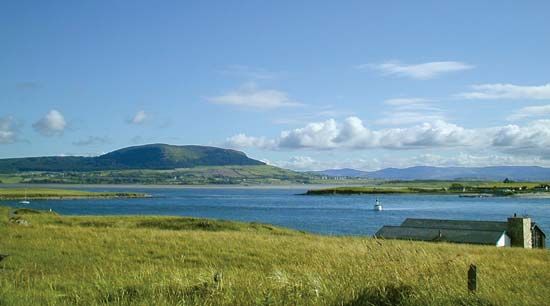
What is Sligo Bay?
Sligo Bay is a bay located on the north coast of County Sligo in Ireland. It serves as the confluence for the estuaries of the Drumcliff, Bonet, and Unshin rivers, which lead to the communities of Drumcliff, Sligo, and Ballysadare.12
The region has a long-standing tradition of fishing, though currently, only salmon remains a profitable industry. The bay is well-known for its five sandy beaches, with Rosses Point and Strandhill being particularly notable as tourist resorts. The town of Sligo, the county seat, is situated along the bay and the River Garavogue, serving as one of the three primary seaports on the west coast of Ireland. Recognized as part of Irish territorial waters, the area is also celebrated for its rich archaeological history and connection to the literary legacy of William Butler Yeats.12
Who was W.B. Yeats and why is he associated with Sligo?
William Butler Yeats (1865–1939) was a preeminent Irish poet, dramatist, and prose writer who served as a central figure in the Irish literary renaissance and European Modernism. In 1923, he became the first Irish writer to receive the Nobel Prize for Literature.34
Yeats’s deep association with Sligo began in his childhood, when he spent significant time there with his mother’s family. The region’s scenery, folklore, and supernatural legends profoundly influenced his work and provided the setting for many of his poems.5
His connection to the area was solidified by his final resting place in the village of Drumcliff. Yeats chose this site because an ancestor had served as rector there and because the churchyard sits at the foot of the mountain Ben Bulben, a landmark he associated with ancient Irish legends. He famously detailed his burial wishes in his poem “Under Ben Bulben,” requesting a simple limestone headstone inscribed with his enigmatic epitaph.64
What are the famous megalithic monuments found in County Sligo?
County Sligo is recognized as one of the richest archaeological regions in Europe, featuring numerous megalithic sites that date back to the Neolithic Period.72
The most prominent megalithic monuments in the county include:
- Carrowmore: This site contains a large and significant group of megalithic monuments. It is one of the primary passage tomb cemeteries in Ireland, representing the sophisticated megalithic traditions of the era.728
- Carrowkeel: Located within the county, this site is another major passage tomb cemetery, forming part of the great series of such monuments that extend across Ireland.7
- Knocknarea Cairn: Situated on the summit of Knocknarea, this large cairn is traditionally believed to be the burial place of Queen Maeve of Connaught.28
These passage tombs are typically set in round mounds, often located on hilltops, and are frequently grouped into cemeteries. They represent a highly integrated form of community burial compared to earlier long-barrow traditions.7
What makes the Dartry Mountains and Ben Bulben unique?
Sources
- Sligo Bay — Encyclopædia Britannica
- Sligo — Encyclopædia Britannica
- 21 Tombs Around the World - Grave of W.B. Yeats (Drumcliff, Ireland) — Encyclopædia Britannica
- William Butler Yeats: Top Questions — Encyclopædia Britannica
- William Butler Yeats - Early life and education — Encyclopædia Britannica
- William Butler Yeats - Marriage, Nobel Prize, and death — Encyclopædia Britannica
- Ireland - Neolithic Period — Encyclopædia Britannica
- Sligo — Encyclopædia Britannica
Published on · 2 min read