Puya
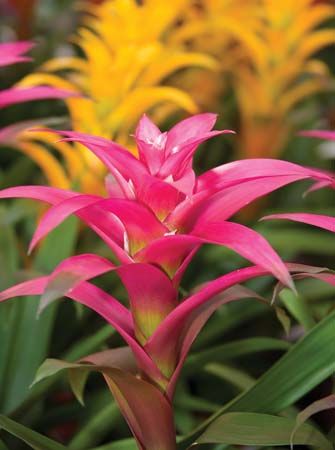
Puya is a genus of approximately 200 species of terrestrial plants belonging to the pineapple family (Bromeliaceae). These plants are primarily native to the…
What is Puya?
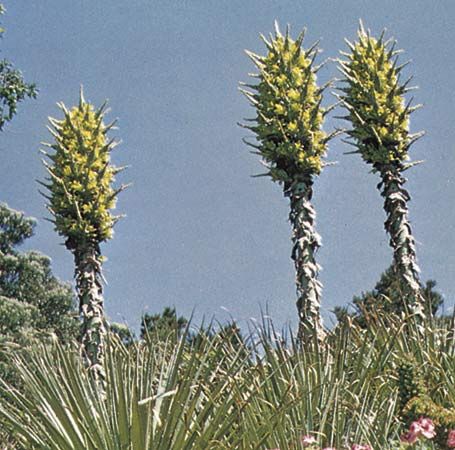
Puya is a genus of approximately 200 species of terrestrial plants belonging to the pineapple family (Bromeliaceae). These plants are primarily native to the cool, dry, stony slopes of the Andes mountains in South America, particularly in Peru and Chile.12
Key characteristics of the genus include:
- Physical Structure: They feature thick, woody stems and stiff, spiny-edged leaves arranged in a dense, basal rosette.12
- Height: The genus includes the tallest bromeliads. For instance, P. gigas (also known as P. raimondii) can reach heights exceeding 10 meters (about 33 feet), with a flower stalk that can grow nearly 5.4 meters tall.12
- Flowers: They produce showy, bracteate flowers in terminal racemes.2
- Uses: While some species like P. alpestris and P. chilensis are grown as decorative plants, the leaves of P. chilensis provide a fiber historically used for making fishing nets.1
The name “Puya” is derived from the Spanish word for “goad,” likely referencing the plant’s sharp, prickly leaves.2
What are the defining characteristics of the bromeliad family?
The Bromeliaceae family, commonly known as the pineapple family, consists of over 3,000 species of herbaceous evergreen perennials primarily native to the tropical New World and the West Indies.3
Defining characteristics of the family include:
- Growth Habit: Members are either terrestrial or epiphytic, with many species living in trees or on cacti.34
- Foliage: They feature simple, spirally arranged leaves that are often basal and spiny-edged. In some species, these leaves form a central rosette or “tank” that collects water, providing a habitat for various animals.34
- Flowers: The flowers are typically three-parted, similar to lilies, but they are distinguished by contrasting sepals and petals. They are often borne in dense spikes, panicles, or heads, frequently accompanied by large, brightly colored bracts.34
- Fruit: Most species produce fleshy fruit, though some develop dry capsules.3
While most are photosynthetic, a few specialized species are known to be carnivorous.3
How do plants adapt to the harsh environment of the Andes mountains?
Plants in the Andes Mountains have evolved various strategies to survive the harsh, high-altitude environment, which is characterized by low temperatures, intense wind, high radiation, and a short growing season.67
Key Adaptations
- Growth Forms: To cope with cold and wind, many plants adopt low-profile shapes. These include cushion plants and rosette plants, which grow close to the ground where temperatures are warmer and wind speeds are lower. In the páramo zones, plants like the Espeletia (frailejones) feature large bouquets of long, hairy leaves that help insulate the plant.87910
- Thermal Regulation: Some species possess hairy flower stalks that retain heat, raising the temperature near the plant by several degrees. Additionally, many alpine flowers are capable of absorbing sunlight to maintain temperatures significantly higher than the surrounding air.9
- Life Cycle Strategies: Because the growing season is often limited to only two to four months, many Andean plants are perennials that can rapidly complete their life cycles. They often rely on asexual reproduction—such as using runners or underground stems—to propagate when conditions are too severe for reliable seed production.97
- Structural Resilience: Woody species at high elevations may grow as prostrate shrubs in sheltered areas to avoid wind and ice damage. Some plants also utilize thick, waxy cuticles on their leaves to resist desiccation caused by high-altitude winds and intense solar radiation.7
What is the life cycle of the Puya raimondii?
The Puya raimondii, a member of the Bromeliaceae family, is a remarkable plant native to the high-altitude Andes. While the provided information identifies it as the tallest bromeliad—capable of reaching heights over 10 meters (33 feet) with a massive flower stalk—the specific details regarding its unique, long-lived life cycle are not contained within the current search results.
Because the available data does not detail the plant’s growth stages, flowering timeline, or reproductive cycle, I cannot provide a complete description of its life cycle at this time.
Sources
- Puya — Encyclopædia Britannica
- Puya — Merriam-Webster
- Bromeliaceae — Encyclopædia Britannica
- Bromeliaceae — Merriam-Webster
- angiosperm - General features — Encyclopædia Britannica
- Andes Mountains - Plant and animal life — Encyclopædia Britannica
- South America - Mountain vegetation — Encyclopædia Britannica
- tree - Tree lines — Encyclopædia Britannica
- Exploring 7 of Earth’s Great Mountain Ranges - Andes — Encyclopædia Britannica
- Tundra - Plant life — Encyclopædia Britannica
Published on · 3 min read