Pyrenees
The Pyrenees are a mountain chain formed by the renewal of an older Hercynian orogenic belt rather than recent, vigorous mountain-building. The range's…
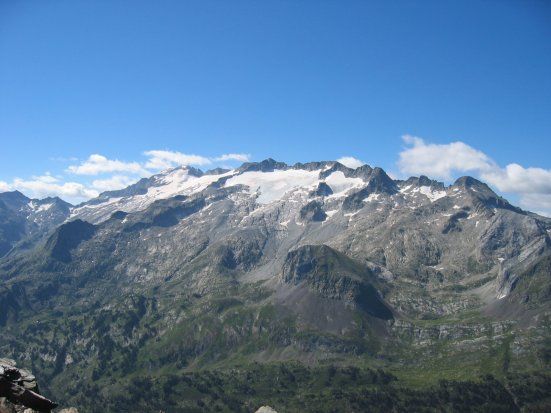
What are the major geological features of the Pyrenees mountain range?
The Pyrenees are a mountain chain formed by the renewal of an older Hercynian orogenic belt rather than recent, vigorous mountain-building. The range’s spine, or axial zone, consists of ancient rocks, including slates, schists, limestones transformed into marble, and various granites.1
The current structure resulted from the collision of the Iberian and European tectonic plates, primarily during the Eocene and Oligocene epochs. This process created a complex arrangement of folded linear ranges and flat-topped massifs. Geologically, the range features:12
- Axial Zone: The central core of the chain, characterized by rigid, fractured base rock.1
- Pre-Pyrenean Ridges: Parallel chains of more plastic, folded sedimentary layers located to the north and south of the axial zone.13
- Depressions: Broad areas, such as the Ebro basin, formed by erosion and internal deformation.32
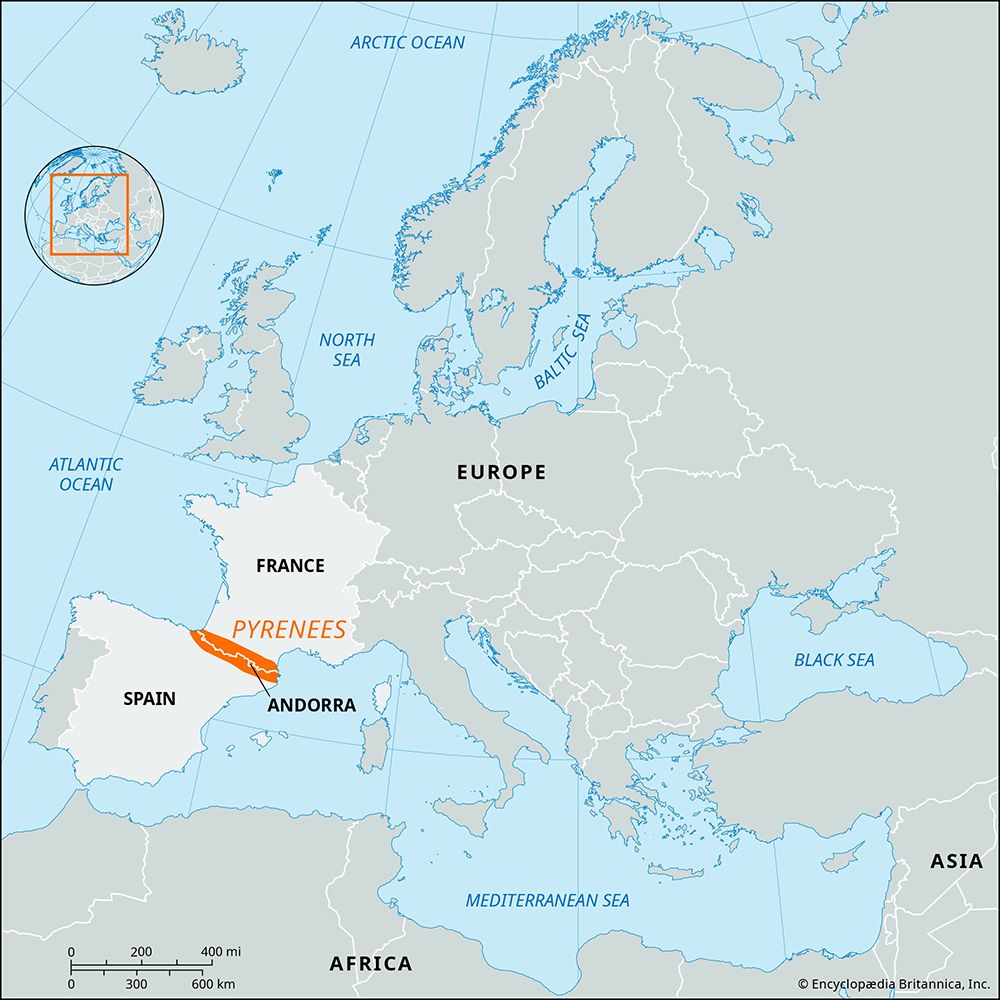
How have the Pyrenees influenced the cultures and histories of the surrounding regions?
The Pyrenees have served as a formidable natural barrier between the Iberian Peninsula and the rest of Europe, profoundly shaping the historical and cultural development of the region. By acting as a wall, the mountains encouraged Spain and Portugal to develop strong maritime ties and distinct associations, often looking toward Africa and the sea rather than the European continent.3
The range is home to diverse groups, including Basques, Catalans, Bérarnais, and Andorrans. These peoples have maintained unique languages and traditions, often fiercely defending their autonomy. The Basques, in particular, possess a non-Indo-European language and an identity that has persisted despite centuries of migration.45
Politically, the mountains have been a site of both conflict and diplomacy. The Peace of the Pyrenees, signed in 1659 on Pheasant Island, ended the Franco-Spanish War and established a new geopolitical order, signaling the rise of French hegemony. Today, the region remains a blend of distinct cultural identities, with the principality of Andorra standing as a unique sovereign state nestled among the peaks.634
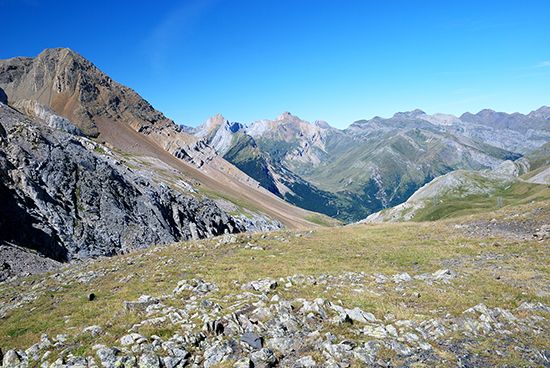
What is the highest peak in the Pyrenees, and how tall is it?
The highest peak in the Pyrenees is Aneto Peak, which reaches an elevation of 11,169 feet (3,404 meters). Located within the Maladeta massif in the Central Pyrenees of northeastern Spain, it stands as the tallest point in the entire mountain chain.37
What popular outdoor activities and tourist attractions can be found in the Pyrenees?
The Pyrenees have become a major destination for tourism, offering a wide array of outdoor activities and cultural attractions that have transformed the local economy.58
Outdoor Activities
The region’s diverse landscape supports numerous recreational pursuits:
- Winter Sports: The mountains are a popular destination for skiing and other winter activities.58
- Summer Recreation: Visitors flock to the area for hiking, fishing, and canoeing, particularly in the scenic Western Pyrenees National Park and along the Tarn River.58
- Wellness: Traditional spas, such as those in Ax-les-Thermes, Cauterets, and Bagnères-de-Bigorre, remain significant attractions for tourists.8
Cultural and Historical Attractions
Beyond outdoor sports, the region is rich in history and pilgrimage sites:
- Pilgrimage: Lourdes is one of the most visited pilgrimage sites in the world, drawing millions of visitors annually.8
- Archaeology and History: The area features significant historical sites, including the prehistoric cave paintings at Niaux and the Millau Viaduct, which is the world’s tallest road bridge.8
Sources
- Pyrenees - Geology — Encyclopædia Britannica
- Pyrenees - Physiography — Encyclopædia Britannica
- Pyrenees — Encyclopædia Britannica
- Peace of the Pyrenees — Encyclopædia Britannica
- Pyrenees - People and economy — Encyclopædia Britannica
- Basque Country — Encyclopædia Britannica
- Aneto, Pico de — Merriam-Webster
- list of cities and towns in France - Midi-Pyrenees ( région ) — Encyclopædia Britannica
- Midi-Pyrénées — Encyclopædia Britannica
Published on · 3 min read