Tarn River
The Tarn River flows through southwestern France, passing several notable towns and cities along its 233-mile course. Key locations include:
What are some of the main towns and cities located along the Tarn River?
The Tarn River flows through southwestern France, passing several notable towns and cities along its 233-mile course. Key locations include:1
- Florac: Situated near the river’s famous gorges, which stretch through the limestone plateaus of the Massif Central.1
- Millau: Located at the other end of the spectacular gorge section.1
- Albi: The capital of the Tarn département, this city is known for its medieval center, the Gothic Sainte-Cécile Cathedral, and the Berbie Palace, which houses works by Henri de Toulouse-Lautrec.12
- Montauban: The river passes near this city before being joined by the Aveyron tributary.1
- Moissac: The Tarn joins the Garonne River just below this town.1
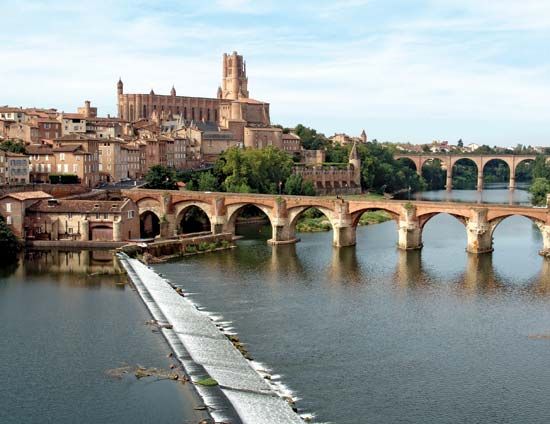
What is the length of the Tarn River and which major river does it flow into?
The Tarn River has a total length of 233 miles (375 km). It flows through southwestern France and eventually joins the Garonne River below the town of Moissac.1
How did the Tarn River get its name, and what does it mean?
The query incorrectly assumes that the name of the Tarn River is related to the English noun “tarn,” which refers to a small mountain lake. In reality, the river’s name is a distinct geographical proper noun and does not share the etymological origin of the Scandinavian-derived word for a mountain pool.3
The provided search results do not contain information regarding the specific etymology or linguistic origin of the name “Tarn” as it applies to the river in southern France. While the word “tarn” (meaning a mountain lake) has roots in Old Norse, there is no evidence linking this to the river’s naming.31
Are there any significant geological formations or natural attractions along the Tarn River?
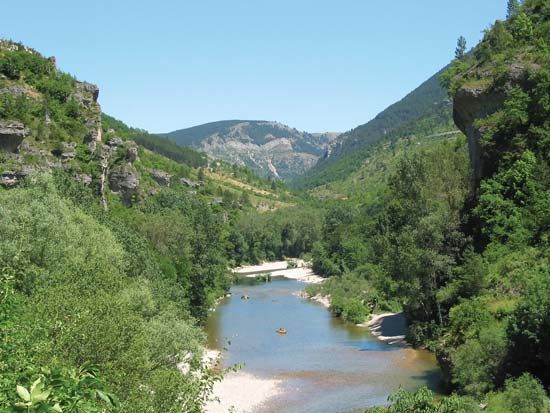
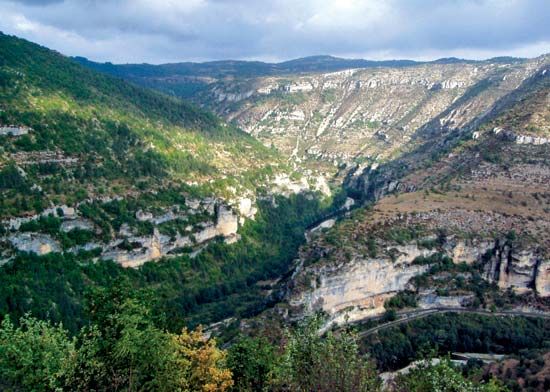
The Tarn River is renowned for its spectacular natural scenery, most notably its magnificent gorges. These dramatic limestone canyons stretch for more than 30 miles between the towns of Florac and Millau.1
The river carves its path through the limestone plateaus known as the Causse Méjean and the Causse de Sauveterre. These gorges are considered among the most significant tourist attractions in France due to their impressive geological scale and beauty.1
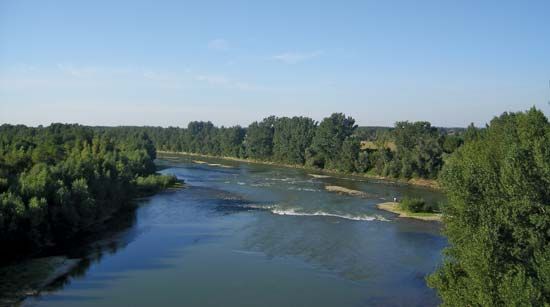
Beyond the gorges, the river flows into the fertile lowlands of Aquitaine, passing through the historic city of Albi before eventually meeting the Aveyron River near Montauban.1
Sources
- Tarn River — Encyclopædia Britannica
- Albi — Encyclopædia Britannica
- Tarn — Merriam-Webster
Published on · 2 min read