Niaux
The Niaux cave in France is renowned for its sophisticated wall paintings created during the Magdalenian period of the Paleolithic era. While much of its art…
Are there any unique features or symbols in the Niaux Cave paintings that set them apart from other cave art?
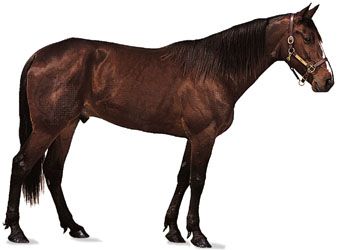
The Niaux cave in France is renowned for its sophisticated wall paintings created during the Magdalenian period of the Paleolithic era. While much of its art features animals common to the period—such as bison and horses—the cave is distinguished by specific technical and preservation features:12
- Black-Outlined Style: The paintings are characterized by a distinct black-outlined technique, which is a hallmark of classic Magdalenian art.1
- Floor Engravings: Beyond wall art, Niaux is notable for rare surviving drawings engraved directly into the cave’s clay floor, including depictions of fish and bison.1
- Chronological Depth: Radiocarbon dating has revealed that the artwork was not created in a single burst but belongs to at least two distinct phases, occurring approximately 14,000 and 13,000 years ago.1
- The Salon Noir: This central gallery contains highly preserved panels that serve as a primary example of the cave’s artistic focus.1
How does the Niaux Cave compare to other famous prehistoric cave art sites in Europe?
The Niaux cave shares many characteristics with other famous European Paleolithic sites, such as Lascaux and Altamira, but it possesses distinct features that define its place in prehistoric art history.
Comparative Features
- Subject Matter: Like Lascaux and Altamira, Niaux focuses primarily on animal imagery, specifically bison and horses, which became the dominant subjects in later Paleolithic periods compared to the formidable, extinct species found in older sites like Chauvet-Pont-d’Arc2.
- Artistic Technique: While Altamira is celebrated for its use of natural rock contours to create three-dimensional volume and polychrome pigments, Niaux is defined by a classic Magdalenian black-outlined style.134
- Unique Preservation: Niaux is particularly notable for its rare, surviving engravings found directly on the cave’s clay floor, a feature less commonly highlighted in the wall-dominant galleries of other famous sites.4
- Chronology: Unlike some sites once thought to be stylistically homogeneous, radiocarbon dating has confirmed that Niaux’s art was created in at least two distinct phases, reflecting a long-term cultural engagement similar to the multi-stage development seen at Altamira.43
What techniques were used by prehistoric artists to create the Niaux Cave paintings?
Prehistoric artists at the Niaux cave employed several sophisticated techniques to create their imagery during the Magdalenian period:
- Black-Outlined Painting: The most prominent technique is the use of a distinct black-outlined style. While the specific pigments used in Niaux are consistent with broader cave art traditions, these black pigments were typically derived from charcoal or manganese dioxide.15
- Engraving: Artists utilized engraving techniques to create detailed images. This was done by carving into hard surfaces with flint tools or by drawing directly into the soft clay of the cave floor with their fingers.15
- Chronological Layering: Through radiocarbon dating of the charcoal used in the drawings, researchers have determined that the art was not created in a single session. Instead, the paintings were executed in at least two distinct phases, approximately 14,000 and 13,000 years ago, demonstrating a long-term artistic tradition at the site.1
These methods allowed the Magdalenian people to produce remarkably durable and expressive works that have survived for millennia.
How was the Niaux Cave discovered, and when was it first explored by archaeologists?
The Niaux cave in Ariège, France, was first visited in 1864. Following this initial visit, the site was slowly explored by archaeologists and researchers over the course of the 20th century.
While the main cave system has been known since the mid-19th century, additional discoveries have occurred more recently; for instance, the Réseau Clastres—a gallery connected to Niaux that constitutes a separate cave—was discovered in 1970 and contains five paintings. Today, the site is recognized for its significant Magdalenian period wall paintings and engravings, which have been studied extensively to understand their chronological development through radiocarbon dating.
Sources
- Niaux — Encyclopædia Britannica
- Cave art — Encyclopædia Britannica
- 11 Caves That Made History - Altamira Cave — Encyclopædia Britannica
- Rock art - Cave painting in Europe — Encyclopædia Britannica
- Magdalenian culture — Encyclopædia Britannica
Published on · 3 min read