Variscan Orogenic Belt
The Variscan orogeny, occurring between 370 million and 290 million years ago, was a major mountain-building event caused by the collision between Africa and…
How did the Variscan orogeny affect the geography and topography of Europe?
The Variscan orogeny, occurring between 370 million and 290 million years ago, was a major mountain-building event caused by the collision between Africa and a North American–North European continent. This process fundamentally reshaped Europe’s geography and topography in several ways:1
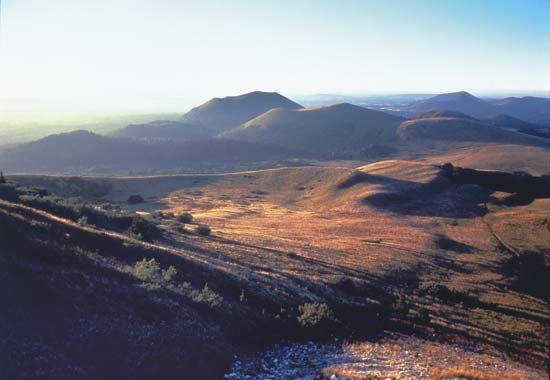
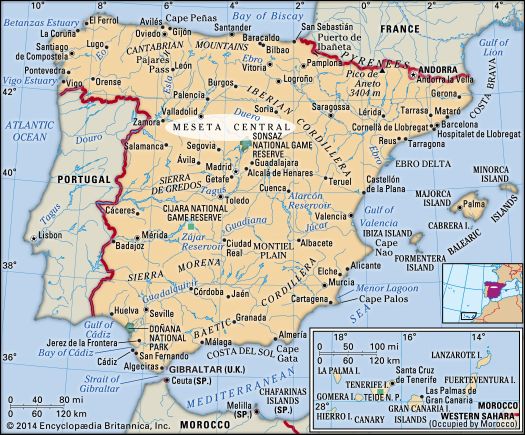
- Mountain Formation: It created a vast, sinuous mountain belt extending over 3,000 km from Portugal and Ireland through France and Germany to the Czech Republic. Remnants of this belt include the Massif Central in France and the Meseta Central in Spain.12
- Crustal Evolution: The collision caused significant crustal thickening, leading to subsequent uplift and erosion. In the Carboniferous Period, this activity facilitated the formation of important coal-bearing basins.1
- Structural Legacy: The belt’s complex history involved seafloor spreading and subduction. While later tectonic events, such as the Alpine orogeny, deformed the southern parts of the Variscan belt, its ancient, rigid foundations remain visible today in the axial zones of ranges like the Pyrenees.12
How has the Variscan orogenic belt influenced mineral and energy resource distribution in Europe?
The Variscan (or Hercynian) orogenic belt has been a critical factor in the economic development of Europe by concentrating a wide array of mineral and energy resources through its complex tectonic history.7
Energy Resources
The crustal thickening and subsequent extensional collapse of the Variscan mountain belt led to the formation of unstable, subsiding regions. During the late Carboniferous and Permian periods, these areas evolved into significant coal-bearing basins, such as those found in Silesia and the Massif Central.71
Mineral Deposits
The varied tectonic environments of the orogeny—including subduction, rifting, and crustal melting—facilitated the formation of diverse mineral deposits:
- Base Metals: Lead and zinc are found in shelf carbonate sediments, notably in Ireland and the Pennines of England. Copper, lead, and zinc sulfides are associated with rift environments, such as those in Silesia and the Riotinto Mines in Spain.7
- Metals and Radioactive Minerals: Crustal melt granites, particularly in Cornwall, the Massif Central, and the Iberian Peninsula, are rich in tin, tungsten, and uranium.7
What were the main geological processes involved in the formation of the Variscan orogenic belt?
The formation of the Variscan orogenic belt was driven by a complex sequence of tectonic events occurring between 370 million and 290 million years ago. The primary geological processes included:
- Plate Tectonics: The belt formed through the collision between Africa and a North American–North European continent. This process involved seafloor spreading and the subduction of oceanic crust.1
- Collisional Indentation: The sinuous shape of the belt resulted from the collisional indentation of one tectonic block into another.1
- Crustal Dynamics: The collision caused significant crustal thickening, which triggered subsequent uplift and erosion. This was followed by the extensional collapse of the belt’s central regions, such as the Massif Central and the Bohemian Massif, which facilitated the development of Carboniferous coal-bearing basins.1
Later, the southern portions of this belt were extensively deformed by the tectonic activity that created the Alps and Pyrenees, further altering the region’s structural legacy.1
We could dive deeper into how these specific tectonic phases influenced the metamorphic rock types found across the belt.
What is the difference between the Variscan orogeny and other major orogenies in Earth’s history?
The Variscan orogeny is distinguished primarily by its timing and its role in the assembly of the Pangea supercontinent, occurring between 370 million and 290 million years ago. While all major orogenies share fundamental plate-tectonic mechanisms—such as subduction, crustal thickening, and continental collision—they differ in their specific temporal and geographic contexts.18
Key differences include:
- Temporal Context: The Variscan orogeny peaked during the Carboniferous and early Permian periods, marking the final stages of Pangea’s amalgamation. In contrast, the Alpine orogeny occurred much later, during the Cenozoic Era (roughly 66 million years ago to the present), driven by the closure of the Tethys Sea.191011
- Structural Legacy: The Variscan belt is characterized by a sinuous outcrop resulting from the collisional indentation of tectonic blocks. Older orogenies, such as the Caledonian, reflect earlier cycles of ocean closure and continental assembly.11012
- Geological Evolution: Unlike the Cenozoic ranges, which remain high-standing mountain chains, the Variscan belt underwent significant extensional collapse and erosion, which was instrumental in forming the coal-bearing basins that defined European industrial history.1
Sources
- Variscan orogenic belt — Encyclopædia Britannica
- Pyrenees - Geology — Encyclopædia Britannica
- Caledonian orogenic belt — Encyclopædia Britannica
- Europe - Mesozoic and Cenozoic eras — Encyclopædia Britannica
- mountain - The western segment of the system — Encyclopædia Britannica
- North America - 600 to 250 million years ago — Encyclopædia Britannica
- Europe - Hercynian orogenic belt — Encyclopædia Britannica
- Europe - Chronological summary — Encyclopædia Britannica
- Appalachian orogenic belt — Encyclopædia Britannica
- orogeny — Encyclopædia Britannica
- Africa - The Cenozoic Era — Encyclopædia Britannica
- plate tectonics - Supercontinent cycle — Encyclopædia Britannica
- Cenozoic Era - Geologic processes — Encyclopædia Britannica
Published on · 3 min read