Radcliffe Line
The Radcliffe Line was the international boundary established in 1947 to demarcate the borders between India and Pakistan following the partition of…
What is Radcliffe Line?
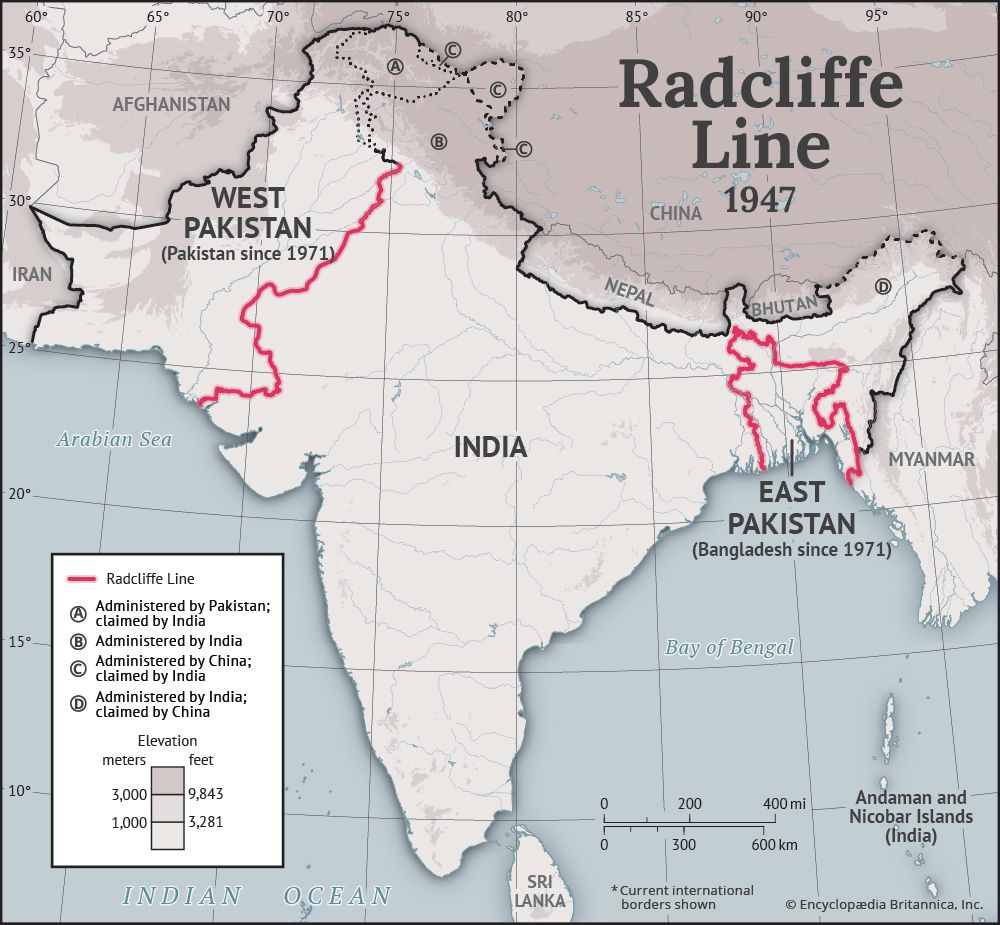
The Radcliffe Line was the international boundary established in 1947 to demarcate the borders between India and Pakistan following the partition of British-ruled India and the end of the British raj.12
Named after Cyril Radcliffe, the British lawyer who chaired the boundary commissions for Punjab and Bengal, the line was officially published on August 17, 1947. The creation of this boundary was a direct implementation of the Indian Independence Act and resulted in the division of the Indian subcontinent into two independent dominions.2
The process was deeply tragic, triggering one of the largest mass migrations in history and widespread communal violence. The boundary cut through heterogeneous regions, separating communities and leaving millions displaced. Witnessing the resulting bloodshed, Radcliffe famously refused his payment for the task.23
What was the Indian Independence Act of 1947?
The Indian Independence Act was a piece of legislation passed by the Parliament of the United Kingdom on July 18, 1947, which provided for the establishment of two independent dominions, India and Pakistan, effective August 15, 1947.45
Key provisions of the act included:
- Partition: The provinces of Bengal and Punjab were dissolved and divided between the two new nations.45
- Sovereignty: Both dominions were granted the power to make their own laws and modify existing British legislation.45
- Princely States: British control over the princely states lapsed, and the British monarch ceased to use the title “Emperor of India.”45
- Governance: Each dominion was to have a governor-general, and the British Indian armed forces were to be divided.5
The act marked the end of the British raj but triggered a massive, violent population transfer as millions migrated across the newly demarcated borders. Both nations remained dominions within the Commonwealth until adopting their own constitutions in 1950 and 1956, respectively.54
How did the partition affect the Sikh community in Punjab?
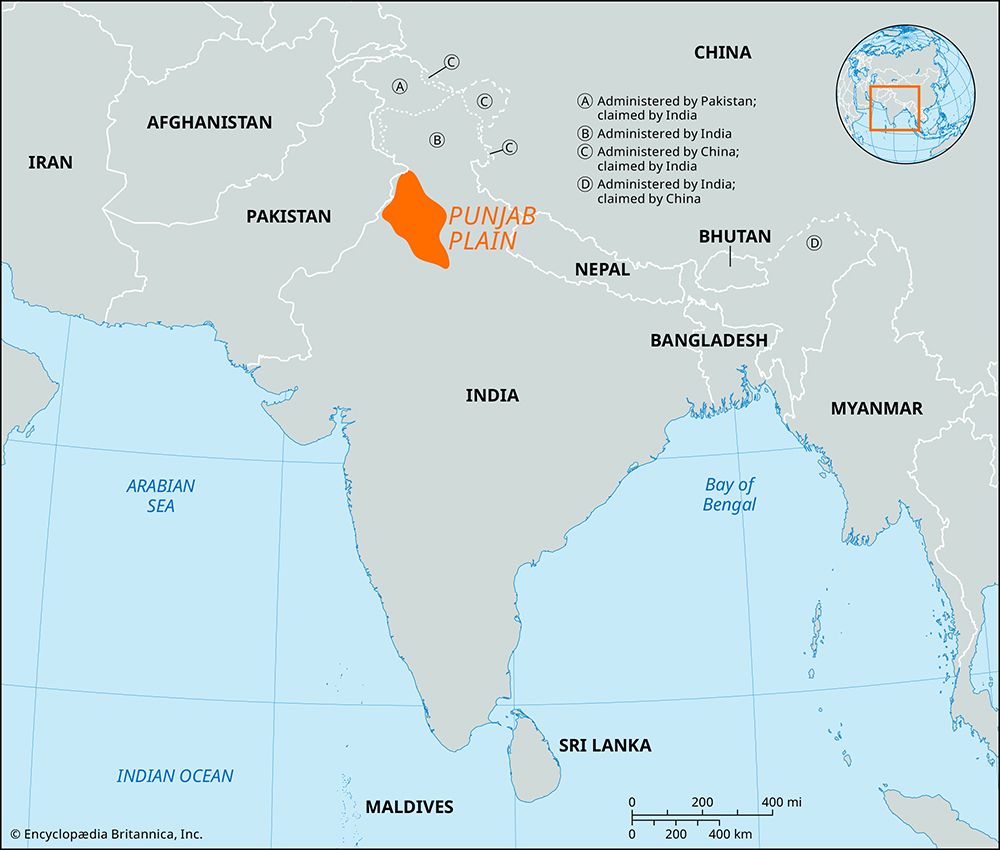
The partition of 1947 had a profound and devastating impact on the Sikh community in Punjab, as the newly drawn borders effectively cut their population in half.83
The community faced significant anxiety regarding potential Muslim rule, rooted in the historical memory of the Mughal empire’s persecution of their Gurus8. While the Boundary Commission placed Amritsar, the Sikhs’ most sacred city, within India, many other vital shrines and ancestral landed estates were left on the Pakistani side of the border.38
Initial attempts by Sikhs in western Punjab to retain their property were met with violent reprisals, leading to a mass exodus. Ultimately, nearly the entire Sikh population fled to the Indian side of the border. During the ensuing communal violence, Sikhs suffered the highest proportion of casualties relative to their total population. This tragic displacement and the loss of their traditional lands left deep, lasting scars on the community’s history and identity.83
What led to the creation of Bangladesh from East Pakistan?
The creation of Bangladesh from East Pakistan was the result of long-standing political, economic, and cultural grievances between the two wings of Pakistan, which were separated by 1,000 miles of Indian territory.910
Underlying Tensions
Following the 1947 partition, the central government in West Pakistan dominated the bureaucracy and military, while East Pakistan felt marginalized. Key drivers of discontent included:9
- Language: The government’s attempt to impose Urdu as the sole official language sparked the Language Movement, as the majority of East Pakistanis spoke Bengali majority of East Pakistanis spoke Bengali.910
- Economic Disparity: Development aid and military installations were heavily concentrated in the west, leaving the east economically neglected.9
- Political Suppression: Despite winning a majority in the 1970 general elections, the Awami League, led by Mujibur Rahman, was prevented from forming a government by West Pakistani leaders.911
- Natural Disaster: The inadequate government response to the Bhola cyclone of 1970, which killed hundreds of thousands, intensified feelings of political indifference and neglect.111213
The Liberation War
In March 1971, the Pakistani military launched Operation Searchlight, a brutal crackdown targeting activists, students, and the Hindu minority10. This triggered the Bangladesh Liberation War, during which millions of refugees fled to India. Following a military intervention by India, Pakistani forces surrendered on December 16, 1971, securing Bangladesh’s independence.14911
Sources
- Radcliffe Line: Top Questions — Encyclopædia Britannica
- Radcliffe Line — Encyclopædia Britannica
- Radcliffe Line - Implementation — Encyclopædia Britannica
- Indian Independence Act: Top Questions — Encyclopædia Britannica
- Timeline of the Indian Independence Movement — Encyclopædia Britannica
- Indian Independence Act — Encyclopædia Britannica
- princely state - Participation in the Independence Movement — Encyclopædia Britannica
- Indian Independence Movement - The Partition of India and Pakistan — Encyclopædia Britannica
- History of Bangladesh - East Bengal as a Pakistani province, 1947–71 — Encyclopædia Britannica
- Awami League - Liberation movement and wars — Encyclopædia Britannica
- Bangladesh Liberation War - Conflict — Encyclopædia Britannica
- 1971 India-Pakistan War - A liberation movement: Bangladesh’s perspective — Encyclopædia Britannica
- 10 Deadliest Cyclones in History: Top Questions — Encyclopædia Britannica
- 12 of the World’s Deadliest Natural Disasters - Bhola cyclone of 1970 — Encyclopædia Britannica
Published on · 3 min read