Punjab Plain
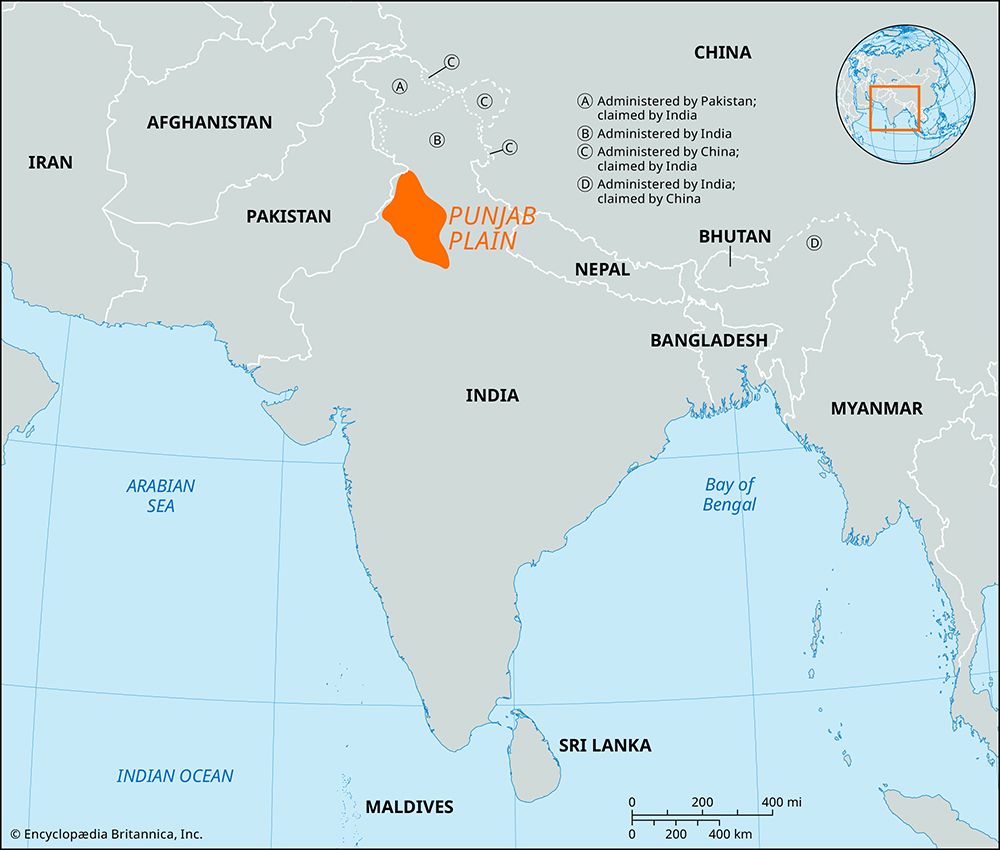
The Punjab Plain is defined by several perennial rivers, most notably the Ravi, Beas, Sutlej, and Yamuna. The region’s name itself, Punjab, translates to…
What are the major rivers that flow through the Punjab Plain, and how do they contribute to its fertility?
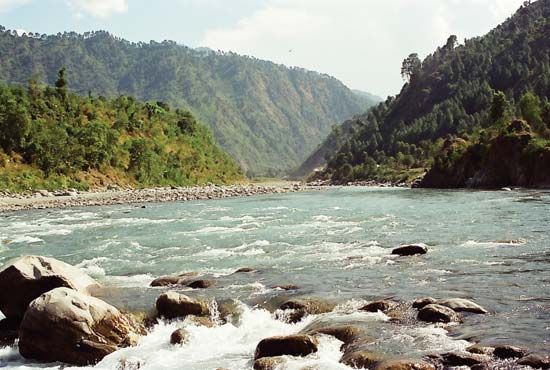
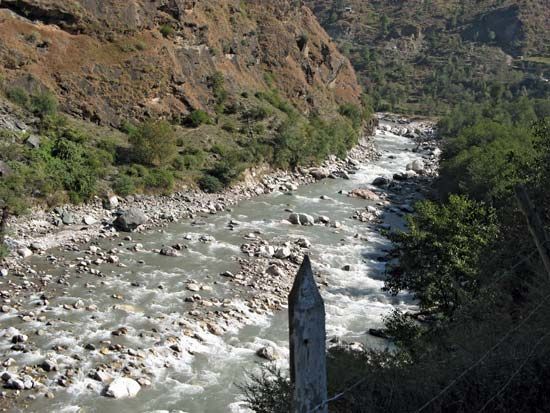
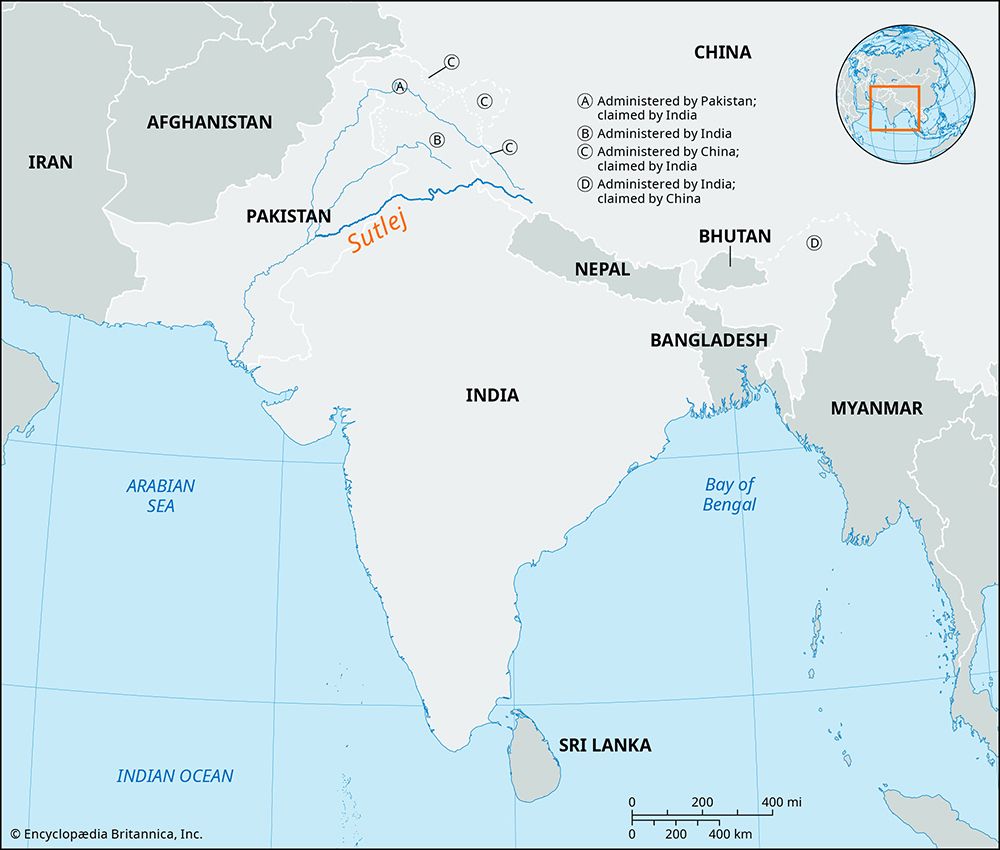
The Punjab Plain is defined by several perennial rivers, most notably the Ravi, Beas, Sutlej, and Yamuna. The region’s name itself, Punjab, translates to “Five Rivers,” referring to the major tributaries of the Indus River that historically shaped the landscape.12
These rivers contribute to the region’s exceptional fertility primarily through the deposition of alluvial soil. Over millions of years, the silting action of these meandering streams built up the plain, creating a fertile, slightly undulating surface. This new alluvium, known as khadar, is highly productive and uniform in texture.134
Furthermore, the rivers provide the essential water supply for the region’s extensive irrigation networks, including canals and major projects like the Bhakra-Nangal Project. This reliable access to water, combined with the nutrient-rich soil, has made the Punjab Plain a cornerstone of agricultural production, supporting the cultivation of cereals, cotton, and sugarcane.251
What are some of the major industries besides agriculture in the Punjab Plain?
While agriculture remains the primary economic driver of the Punjab Plain, the region supports a diverse and robust industrial sector. Major urban centers such as Delhi, Amritsar, Ludhiana, Jalandhar, Chandigarh, Faisalabad, Rawalpindi, and Gujranwala serve as hubs for large-scale manufacturing and services.47
Manufacturing Industries
The region’s manufacturing output is varied, producing a wide array of goods for both domestic and international markets, including:
- Textiles and Floor Coverings: A significant component of the industrial base.47
- Machinery and Tools: Production includes machine tools, agricultural implements, and various types of heavy machinery.47
- Transportation: Manufacturing of bicycles, bicycle parts, and rickshaws.47
- Consumer and Specialized Goods: Electrical appliances, surgical instruments, sporting goods, and metal products.47
- Chemicals and Processing: Production of processed foods, rosin, turpentine, and varnish.47
Services Sector
Beyond manufacturing, the services sector has experienced rapid growth since the late 20th century and now represents the largest component of the economy in parts of the region. This sector encompasses:
- Trade, transportation, and storage services.8
- Financial services and real estate.8
- Public administration and other professional services.8
How has the Punjab Plain influenced agriculture and food production in India?
The Punjab Plain is a cornerstone of India’s food security, serving as a primary source of the nation’s wheat and rice stocks held in the national Central Pool.4
This high productivity is largely a legacy of the Green Revolution in the 1960s, which introduced high-yielding crop varieties and advanced agricultural technologies to the region. The plain’s fertility is supported by extensive irrigation infrastructure, including government-owned canals and wells, as well as major projects like the Bhakra Dam. Beyond cereals, the region produces significant quantities of corn, cotton, sugarcane, and various fruits.41
However, these intensive practices have created environmental challenges. The heavy reliance on water-intensive crops has strained groundwater reserves, and the practice of stubble burning—used to clear fields quickly between harvest cycles—contributes significantly to severe air pollution across northern India. While the region remains vital to India’s food production, balancing this output with sustainable environmental management remains a critical concern.9
What is the climate like in the Punjab Plain, and how does it affect agriculture?
The Punjab Plain features a continental, semiarid to subhumid climate characterized by significant seasonal temperature variations. Summers are intensely hot, with temperatures often exceeding 100 °F (38 °C) in June, while winters are cool, with temperatures typically ranging from the mid-40s to mid-60s F (7–18 °C).11
Impact on Agriculture
The region’s climate is a primary determinant of its agricultural cycles and water management needs:
- Rainfall Patterns: Annual precipitation is relatively low, averaging about 16 inches (400 mm) statewide, with a marked decrease from the north and northeast toward the southwest. Most rainfall occurs during the southwest monsoon (July to September), which is vital for water supply. Winter rains from western cyclones provide additional, though limited, moisture.117
- Reliance on Irrigation: Because natural rainfall is insufficient for intensive farming, the region relies heavily on an extensive network of irrigation canals and wells. This infrastructure, supported by projects like the Bhakra Dam, allows for the large-scale production of wheat, rice, and other crops.1213
- Environmental Challenges: The climate-driven need for irrigation, combined with government policies favoring water-intensive crops, has strained groundwater reserves. Furthermore, the pressure to clear fields quickly between harvest cycles—compounded by seasonal weather patterns—has led to the practice of stubble burning, which significantly degrades air quality across the region.4
Sources
- Punjab Plain — Encyclopædia Britannica
- Sutlej River — Encyclopædia Britannica
- Indus River - Irrigation of the Indus River — Encyclopædia Britannica
- Punjab - Agriculture — Encyclopædia Britannica
- India - Alluvial soils — Encyclopædia Britannica
- Punjab - Relief, drainage, and soils — Encyclopædia Britannica
- Punjab — Encyclopædia Britannica
- Punjab - Services — Encyclopædia Britannica
- pollution in India - Modern agricultural practices — Encyclopædia Britannica
- Origins of agriculture - Irrigation — Encyclopædia Britannica
- Punjab - Climate — Encyclopædia Britannica
- India - The southwest monsoon — Encyclopædia Britannica
- South Asia: Top Questions — Encyclopædia Britannica
Published on · 3 min read