Tadoba National Park
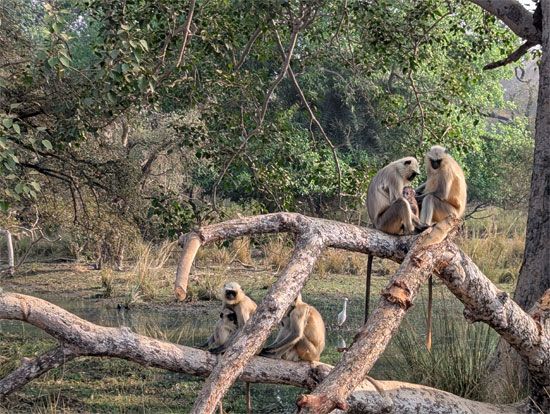
Tadoba National Park is a protected national park located in the eastern region of Maharashtra, India. Originally established as a wildlife sanctuary in…
What is Tadoba National Park?
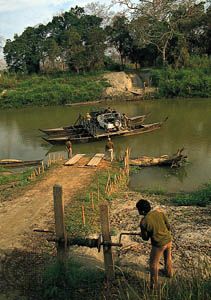
Tadoba National Park is a protected national park located in the eastern region of Maharashtra, India. Originally established as a wildlife sanctuary in 1935, it was declared a national park in 1955. In 1995, it was merged with the Andhari Wildlife Sanctuary to form the Tadoba-Andhari Tiger Reserve, which spans 242 square miles.1
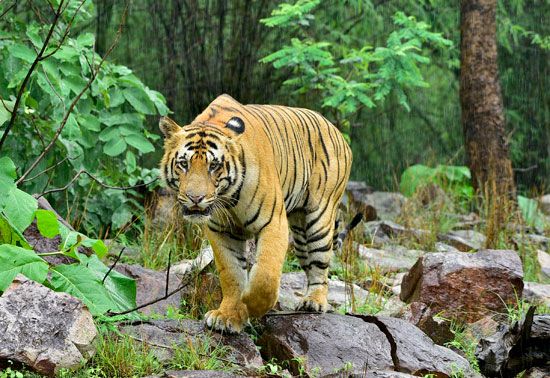
The park features dense forests dominated by teak, sal, and bamboo, alongside diverse water bodies like Tadoba Lake. It is a significant habitat for a wide array of wildlife, including tigers, leopards, sloth bears, and marsh crocodiles, as well as hundreds of bird and insect species. Visitors can explore the area via a network of roads and observation towers, with the city of Chandrapur serving as the nearest urban center.1
What makes the Bengal tiger an endangered species?
The Bengal tiger is classified as an endangered species primarily due to human-driven pressures that threaten its survival in the wild. The most significant factors contributing to this status include:23
- Poaching: The illegal shooting and trapping of tigers for commercial profit remain a major existential threat. Despite international regulations like the Convention on International Trade in Endangered Species, hunters continue to target these animals, pushing them toward extinction.43
- Habitat Loss and Fragmentation: As human populations in India, Bangladesh, Bhutan, and Nepal grow, the tiger’s natural environment is increasingly converted into agricultural land, roads, and other human-controlled spaces. This loss of territory limits the range available for hunting and breeding.23
- Human-Wildlife Conflict: The encroachment of human activity into forest areas increases the potential for direct conflict, which further endangers the species.2
While conservation initiatives like Project Tiger have helped stabilize populations in protected areas, wildlife outside these reserves remains vulnerable to pollution and uneven enforcement of protection laws.5
How do tiger reserves help in wildlife conservation?
Tiger reserves play a vital role in wildlife conservation by providing a protected framework for in situ conservation, which preserves species within their natural habitats. Through initiatives like Project Tiger, these reserves implement comprehensive strategies to stabilize and recover endangered populations.364
Key conservation methods employed by these reserves include:
- Habitat Management: Reserves focus on ecological restoration, such as controlling invasive weeds, restoring grasslands, managing water sources, and preventing forest fires to maintain a healthy ecosystem.3
- Scientific Monitoring: Officials conduct long-term monitoring of wildlife populations and habitat health to inform management decisions.3
- Human-Wildlife Coexistence: Many models involve the relocation and resettlement of human populations from core zones to minimize conflict and reduce habitat fragmentation.3
- Species Recovery: Reserves support the reintroduction of locally extinct species and the rewilding of captive-raised animals to bolster wild populations.3
- Protection and Enforcement: Patrolling by game wardens and the use of observation towers help deter poaching, which remains a primary threat to biodiversity.37
These efforts have proven effective, contributing to a significant increase in India’s tiger population and the recovery of other species, such as the barasingha.63
What are the unique characteristics of teak and sal forests?
Teak and sal are two of the most significant timber species in the Indian subcontinent, both thriving in deciduous forest environments. While they share commercial importance, they possess distinct characteristics and geographic distributions.8910
Teak (Tectona grandis)
Teak is a large deciduous tree valued for its extraordinary durability and dimensional stability.9
- Physical Traits: It features a straight, often buttressed stem and large, rough leaves. Its heartwood is prized for a pleasant, aromatic fragrance and a golden-yellow color that darkens to brown upon seasoning.9
- Habitat: It is largely confined to the Indian peninsula and avoids coastal areas. It thrives on low hills up to 900 meters.910
- Uses: Due to its resistance to decay and termites, it is a premier choice for shipbuilding, fine furniture, and structural elements like bridges and railway cars.9
Sal (Shorea robusta)
Sal is a tall, evergreen tree belonging to the family Dipterocarpaceae.8
- Physical Traits: It is considered the second most important timber tree in the region. Beyond its timber, it is ecologically and economically significant for supporting the culture of lac scale insects, which produce resin used in shellac.8
- Habitat: Unlike teak, sal is primarily found in the lower Himalayas, as well as in states such as Uttar Pradesh, Bihar, Jharkhand, Chhattisgarh, Assam, and Madhya Pradesh.10
- Uses: It is a vital source of hardwood timber and various resins.8
Both species are major components of India’s moist and dry deciduous forests, which are defined by annual rainfall patterns.10
Sources
- Tadoba National Park — Encyclopædia Britannica
- Bengal tiger — Encyclopædia Britannica
- Environment and sustainable development in India - Wildlife — Encyclopædia Britannica
- poaching — Encyclopædia Britannica
- Which is bigger: A Siberian tiger or a Bengal tiger? — Encyclopædia Britannica
- Kanha National Park — Encyclopædia Britannica
- Ranthambore National Park: Top Questions — Encyclopædia Britannica
- Shorea — Encyclopædia Britannica
- teak — Encyclopædia Britannica
- India - Vegetation — Encyclopædia Britannica
Published on · 3 min read