Raspberry
Raspberries are highly regarded for their nutritional profile, offering several key components that contribute to a healthy diet. These fruits are a natural…
What are the nutritional benefits and health properties of raspberries?
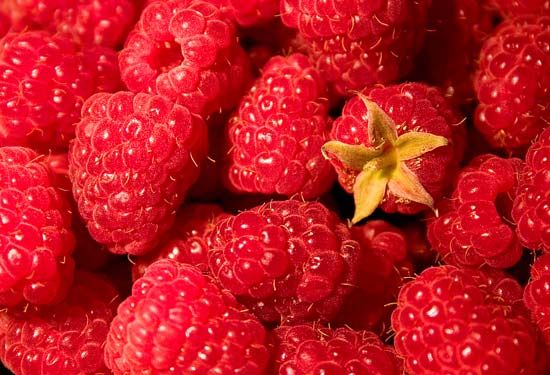
Raspberries are highly regarded for their nutritional profile, offering several key components that contribute to a healthy diet. These fruits are a natural source of iron, which is essential for oxygen transport in the body, and vitamin C, a vital nutrient that supports immune function and skin health.12
Additionally, raspberries are rich in antioxidants, which are compounds that help protect cells from damage caused by free radicals. Because of these properties, they are frequently enjoyed fresh, though they are also commonly processed into jams, jellies, and pastry fillings.12
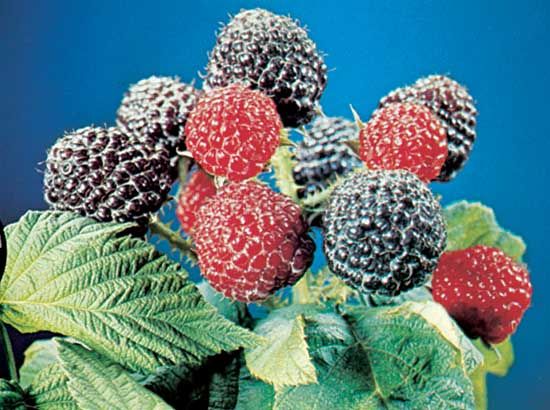
What are the different varieties of raspberries and how do they differ?
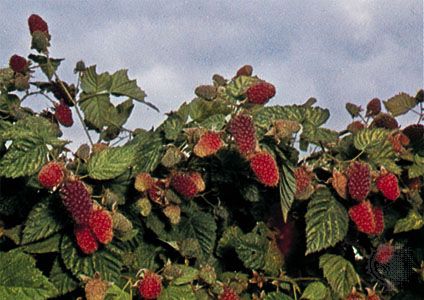
Raspberries, members of the genus Rubus, are categorized by the color of their fruit, which can range from red and purple to black, and occasionally orange, amber, or pale yellow. These fruits are technically aggregates of drupelets, and their classification often depends on the species or cultivar.1
The primary varieties grown commercially include:
- Red Raspberries: Most commercial red varieties are hybrids or cultivars derived from Rubus idaeus and R. strigosus. These plants are typically propagated using suckers—adventitious shoots that grow from the parent plant’s roots.1
- Black Raspberries: Primarily represented by the North American species R. occidentalis and R. leucodermis, these are grown commercially on a more limited scale. Unlike red varieties, black and purple raspberries feature arched canes and are propagated by tip layering, where the shoot tips are buried in the soil to encourage rooting.1
While they share similar botanical characteristics, such as being perennial plants with two-year canes, their propagation methods and growth habits differ significantly.1
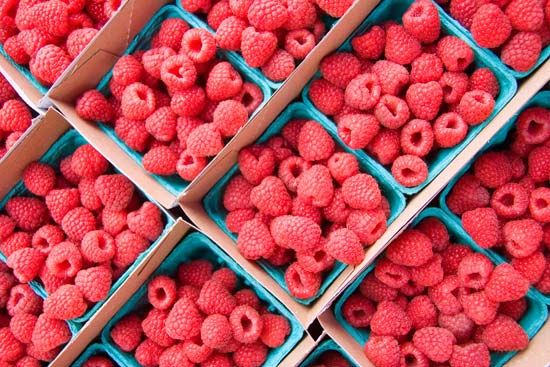
What are some cultural and historical significance of raspberries in different parts of the world?
While raspberries are widely recognized for their economic importance and nutritional value, their historical and cultural significance is primarily tied to their role in culinary traditions and language. Originating in eastern Asia, these fruits have become a staple crop across northern Europe, the United States, and Canada.1
Culturally, the raspberry is a classic dessert fruit, frequently served fresh with cream or ice cream. Beyond fresh consumption, they hold a long-standing place in food preservation and production, commonly used in jams, jellies, pastry fillings, and as a flavoring for various liqueurs.13
Interestingly, the term “raspberry” has also evolved in English-speaking cultures to carry a figurative meaning. It serves as a slang expression of disapproval or contempt, referring to a sound made by protruding the tongue between the lips and expelling air. This usage originated as rhyming slang, where “raspberry” was short for “raspberry tart,” which rhymed with “fart”.2
What are the differences between red and black raspberries?
Red and black raspberries differ primarily in their species, growth habits, and methods of propagation.
Species and Cultivation
- Red Raspberries: Most commercial varieties are hybrids or cultivars derived from Rubus idaeus and R. strigosus.1
- Black Raspberries: These are primarily represented by the North American species Rubus occidentalis and R. leucodermis. While grown commercially, their production is more limited compared to red varieties.1
Growth and Propagation
The physical structure and reproduction methods of these plants also vary:
- Propagation: Red raspberries are typically propagated using suckers—adventitious shoots that emerge from the roots of the parent plant. In contrast, black and purple varieties feature arched canes and are propagated by tip layering, a process where the tips of the shoots are buried in the soil to encourage rooting.1
- General Characteristics: Both types are perennial plants with two-year canes that require staking or trellising to manage their growth.1
Sources
- Raspberry — Encyclopædia Britannica
- Raspberry: Top Questions — Encyclopædia Britannica
- European raspberry — Merriam-Webster
- raspberry — Merriam-Webster
Published on · 3 min read