Rat Snake
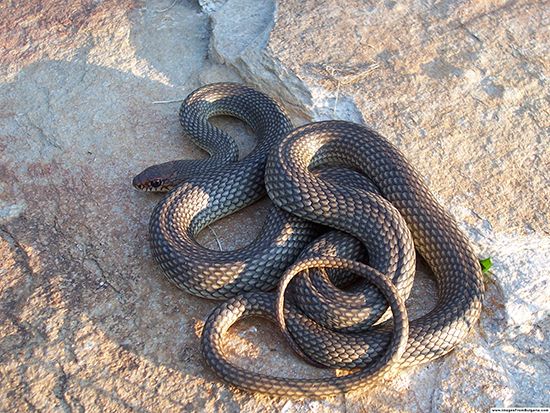
Rat snakes are a diverse group of nonvenomous, egg-laying snakes belonging to the family Colubridae. While taxonomy has evolved—with many North American…
What are the key characteristics that define rat snakes as a species?
Rat snakes are a diverse group of nonvenomous, egg-laying snakes belonging to the family Colubridae. While taxonomy has evolved—with many North American species now classified under the genus Pantherophis—they share several defining characteristics:12
- Diet and Hunting: They are named for their ability to hunt and consume rodents, though their diet also includes birds, eggs, frogs, lizards, and small mammals. They kill prey primarily through constriction.12
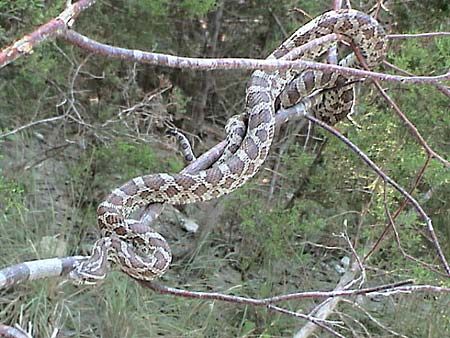
- Physicality: These are generally large snakes, with some species exceeding 2.5 meters (8 feet) in length. Many are proficient climbers, and arboreal species often possess keeled (ridged) ventral scales to aid in movement.12
- Behavior: While typically docile, they employ defensive tactics when threatened, such as vibrating their tails, emitting a foul-smelling secretion from their anal glands, and striking from an upreared position.12
- Habitat: They are found across North America, Europe, and Asia, occupying varied environments ranging from woodlands and farmlands to swamps and rocky cliffs.12
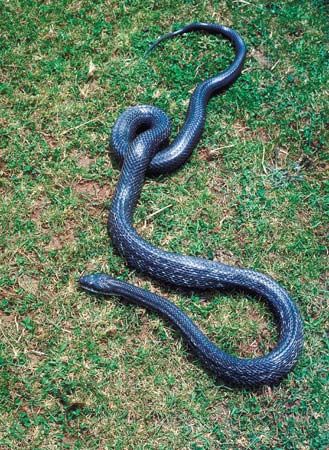
Where are rat snakes commonly found, and what types of habitats do they prefer?
Rat snakes are widely distributed across various regions, including North America and temperate Eurasia. In North America, the black rat snake (or western rat snake) is commonly found in the eastern and central United States, with a range extending from southern Louisiana and Texas northward through Oklahoma, Kansas, Nebraska, Iowa, and southeastern Minnesota. In Asia, rat snakes are represented by various genera, such as Elaphe and Ptyas, and are notable for being among the few arboreal snakes in the temperate zone of Eurasia.425
Regarding their preferred environments, these snakes are highly adaptable and occupy a diverse range of habitats, including:
- Natural Landscapes: Forests, fields, swamps, and marshes.4
- Topographical Features: Brush, caves, canyons, and rocky cliffs.4
- Human-made Structures: Undisturbed farms, houses, building foundations, and derelict wells, which are often used for shelter or as overwintering sites.4
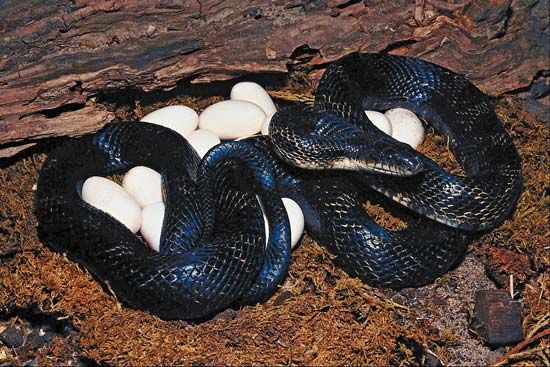
How do rat snakes hunt and what is their primary diet?
Rat snakes are nonvenomous predators that primarily hunt by using constriction to subdue their prey before swallowing it whole. They are highly adaptable hunters, capable of climbing trees to reach birds and eggs, or foraging on the ground for other food sources.42
Their primary diet consists of a variety of animals, including:
- Mammals: Rodents (such as mice and rats), small rabbits, and bats.143
- Birds and Eggs: They frequently raid nests to consume both birds and their eggs.143
- Other Prey: Frogs and lizards also form part of their regular diet.43
Because of their efficiency in consuming rodents, these snakes are considered an important natural means of controlling rodent populations in various environments.4
What are the different species of rat snakes, and how do they vary?
Rat snakes comprise between 40 and 55 species, primarily within the genus Elaphe and the genus Pantherophis (which includes the North American P. obsoletus complex). These snakes vary significantly in their geographic distribution, physical appearance, and size.
North American Species
The P. obsoletus complex, resolved by genomic data in 2020, includes four distinct species:
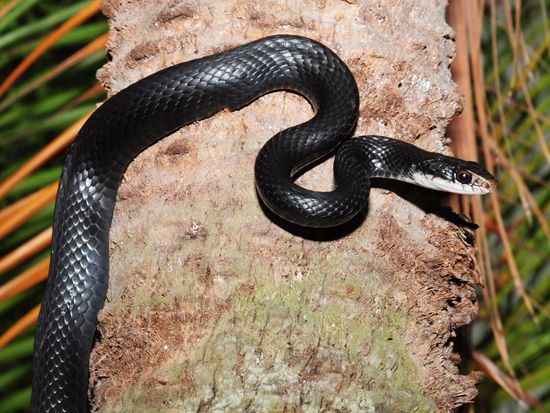
- Western rat snake (P. obsoletus): Often called the black rat snake, it is typically black with a white chin and throat, though coloration can vary based on climate.
- Central rat snake (P. alleghaniensis)
- Eastern rat snake (P. quadrivittatus)
- Baird’s rat snake (P. bairdi)
Other notable North American species include the corn snake (E. guttata), which features red blotches, and the fox snake (E. vulpina), known for its strong dark blotches and yellowish-brown coloration.
Eurasian Species
Eurasian rat snakes exhibit diverse traits:
- Four-lined snake (E. quatuorlineata): One of Europe’s largest, reaching up to 1.8 meters.
- Aesculapian snake (E. longissima): A plain, dark-colored snake historically associated with the god of medicine.
- Leopard snake (E. situla): Distinguished by large, round red markings.
- Asian species: These include the strongly arboreal “chicken snakes” (E. prasina and E. oxycephala) and the Oriental rat snake (Zaocys carinatus), which can reach lengths of 3.7 meters.
Variation among these species is often linked to their environment, such as the development of keeled scales for climbing or color variations that aid in thermoregulation and camouflage.
Sources
- rat snake — Encyclopædia Britannica
- Black rat snake — Encyclopædia Britannica
- Black rat snake: Top Questions — Encyclopædia Britannica
- rat snake — Merriam-Webster
- reptile - Asia — Encyclopædia Britannica
Published on · 3 min read