House Snake
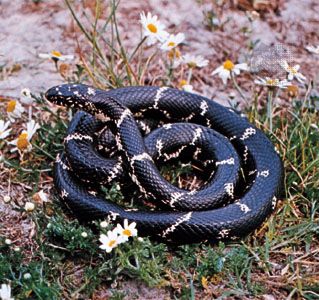
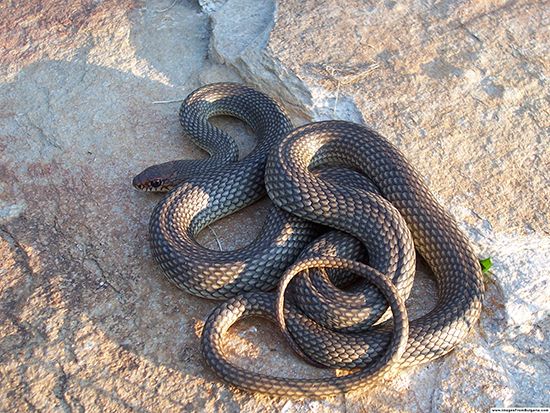
The term "house snake" refers to several nonvenomous snake species that are commonly found living in or near human dwellings. Because they are harmless to…

What is house snake?
The term “house snake” refers to several nonvenomous snake species that are commonly found living in or near human dwellings. Because they are harmless to humans and primarily feed on rodents, they are often considered beneficial neighbors.12
The identity of the house snake varies by region:
- In the United States: The name is frequently used to describe the milk snake, a member of the king snake group.12
- In Africa: The term refers to species within the genus Lamprophis (or Boaedon), which belong to the family Colubridae. These snakes are known for being effective mouse and rat catchers. For example, the brown house snake (L. fuliginosus) is found throughout sub-Saharan Africa, while other species like L. lineatus are often discovered in eaves or under mats.12
These snakes are generally shy and inoffensive, playing a natural role in controlling rodent populations.13
What are the main differences between venomous and nonvenomous snakes?
The primary distinction between venomous and nonvenomous snakes lies in their specialized biological equipment for capturing prey and defending themselves. While all snakes are predators, only a small percentage—roughly 700 species—are venomous, and even fewer are capable of inflicting a lethal bite on humans.4
Key Differences
- Venom Apparatus: Venomous snakes possess specialized salivary glands that produce toxic secretions and modified teeth—such as tubular fangs or grooved teeth—to inject this venom into their prey. Nonvenomous snakes lack these specific glands and delivery systems.5
- Feeding Strategies: Venomous snakes often use their toxins to rapidly immobilize or kill prey, allowing them to hunt more efficiently or wait for the prey to succumb. In contrast, many nonvenomous snakes, such as boas and pythons, utilize constriction to suffocate their prey.56
- Terminology: It is a common misconception to call venomous snakes “poisonous.” Technically, a poisonous animal is one that is harmful only if consumed, whereas venomous animals actively inject their toxins.4
- Behavioral Adaptations: Some venomous species have evolved aposematic (warning) coloration to signal danger to predators, whereas many nonvenomous snakes rely on camouflage to remain hidden.3
It is important to note that snakes are generally shy and inoffensive, often biting humans only when they feel cornered or provoked.4
How do snakes help control rodent populations in human environments?
Snakes play a significant role in managing rodent populations in human environments, particularly around farm buildings and woodlands, by acting as natural predators. Many species, such as the rat snake, are specifically adapted to hunt mice and rats.89
These snakes typically utilize constriction to kill their prey, a method that allows them to effectively subdue rodents without the need for venom. Because they are nonvenomous and generally docile, they are often tolerated or even welcomed by humans for their ability to keep pest populations in check. In addition to rodents, their diet may include other small animals such as birds, eggs, and lizards, further contributing to the balance of local ecosystems.810
By naturally reducing the number of rodents that might otherwise damage crops or infest structures, these snakes provide a valuable ecological service in agricultural and residential areas.8
What are some common misconceptions people have about snakes?
Snakes are frequently misunderstood, leading to several common misconceptions about their nature and behavior. Here are some of the most prevalent myths:
- “Poisonous” vs. Venomous: People often refer to dangerous snakes as “poisonous,” but this is technically incorrect. A poisonous animal is harmful only if consumed, whereas venomous snakes actively inject toxins through fangs or grooved teeth. Very few snakes are truly poisonous.3
- Snakes are Deaf: Because they lack external ears, it is a common belief that snakes are deaf. In reality, while they lack an external opening, they possess an internal mechanism involving the quadrate bone that allows them to perceive low-frequency airborne sound waves, in addition to vibrations transmitted through the ground.1213
- Snakes are Aggressive: Many people believe snakes are inherently aggressive or will attack unprovoked. Most snakes are actually shy and prefer to retreat; they typically bite only when they feel trapped, cornered, or are being handled. Furthermore, about 40 percent of human bites are “dry,” meaning the snake chooses not to inject venom, as it is a precious resource reserved for hunting.3
- All Snakes are Dangerous: While fear of snakes is common—sometimes manifesting as ophidiophobia—only a small percentage of the world’s snake species are venomous, and even fewer are capable of inflicting a lethal bite on humans.314
Sources
- house snake — Encyclopædia Britannica
- house snake — Merriam-Webster
- snake - Snakes and humans — Encyclopædia Britannica
- snake - Specializations for securing food — Encyclopædia Britannica
- Venom — Encyclopædia Britannica
- snake - Form and function — Encyclopædia Britannica
- snake - Coloration — Encyclopædia Britannica
- What eats snakes? — Encyclopædia Britannica
- rat snake — Merriam-Webster
- rat snake — Encyclopædia Britannica
- Black rat snake: Top Questions — Encyclopædia Britannica
- sound reception - Snakes — Encyclopædia Britannica
- snake: Top Questions — Encyclopædia Britannica
- Why are people afraid of snakes? — Encyclopædia Britannica
Published on · 3 min read