Dodo
Efforts to "de-extinct" the dodo have gained momentum following the sequencing of its genome in 2016. These initiatives rely on advanced biotechnology and…
What efforts have been made to potentially ‘de-extinct’ the dodo?
Efforts to “de-extinct” the dodo have gained momentum following the sequencing of its genome in 2016. These initiatives rely on advanced biotechnology and genetic engineering rather than traditional cloning.12
In 2025, the company Colossal Biosciences announced a significant step by successfully growing primordial germ cells from the Nicobar pigeon, which is the dodo’s closest living relative. The proposed strategy involves:1
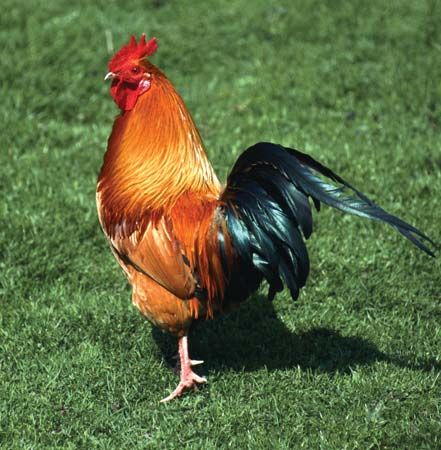
- Genetically modifying chickens to carry these pigeon germ cells.1
- Using these chickens as surrogates to produce a colony of pigeons.1
- Applying gene editing to this colony to introduce dodo-like physical characteristics into their offspring.1
While these scientific advancements are notable, they remain a subject of intense debate. Critics question the feasibility of truly resurrecting an extinct species and raise ethical concerns regarding the potential to alter natural history, the welfare of the animals involved, and the implications of condoning extinction by suggesting it can be reversed.12
What factors led to the extinction of the dodo bird?
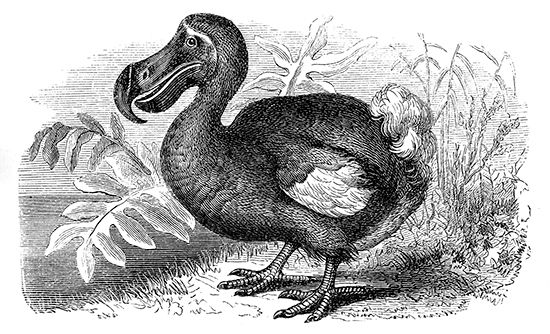
The extinction of the dodo (Raphus cucullatus) was a direct result of human activity following the arrival of sailors on the island of Mauritius in the early 16th century.31
Several key factors contributed to the species’ rapid decline:
- Hunting: Sailors, particularly the Dutch, hunted the dodo for its meat. Because the birds were endemic to an isolated island and had evolved without natural predators, they lacked the instinct to fear humans, making them easy to capture.13
- Invasive Species: The introduction of non-native animals—including pigs, dogs, cats, and rats—proved devastating. These predators roamed the island and preyed opportunistically on dodo eggs, fledglings, and juveniles.1
- Lack of Adaptive Defenses: As a flightless bird, the dodo could not use flight to escape these new threats. Its inability to adapt to the sudden introduction of predatory mammals, combined with its lack of defensive behaviors, left the population unable to survive.31
By 1681, the dodo was extinct, serving today as a prominent symbol of human-induced extinction.1
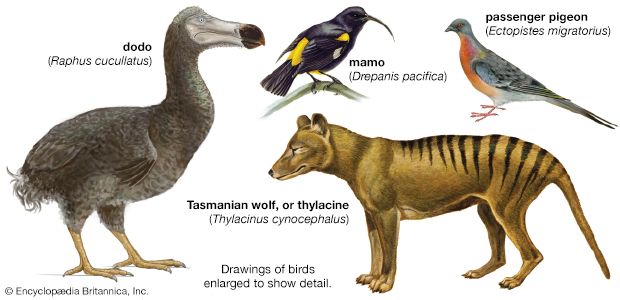
How have scientists learned about the dodo despite its extinction centuries ago?
Scientists have learned about the dodo primarily through the study of its physical remains and, more recently, through advanced genetic analysis.
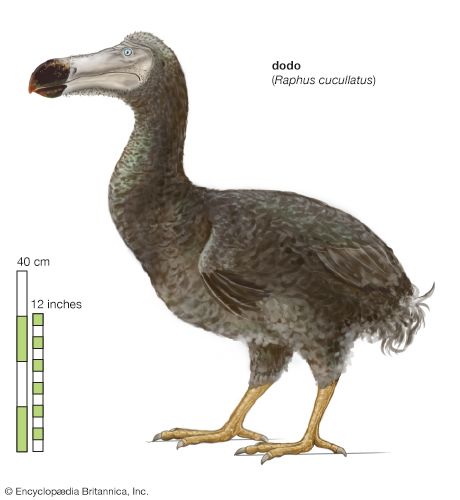
Despite the species’ extinction in 1681, various museums in Europe, the United States, and Mauritius hold skeletons that are more or less complete. Other preserved specimens include a head and foot at Oxford, a foot in the British Museum, and a head in Copenhagen. Morphological studies of these bones have allowed researchers to estimate the bird’s weight, size, and physical characteristics, such as its blue-gray plumage, small wings, and stout legs. Furthermore, analysis of these remains has provided insights into the dodo’s diet, suggesting it was adapted to forage on seeds, fruit, and snails.1
In 2016, geneticists reached a new milestone by successfully sequencing the dodo genome. This breakthrough has enabled scientists to better understand the bird’s evolutionary history and has provided the foundational data necessary for ongoing, albeit debated, de-extinction research.1
How did the dodo’s inability to fly affect its survival?
The dodo’s inability to fly was a critical factor in its extinction, as it left the bird without the necessary adaptive defense to survive the arrival of new threats on Mauritius.31
Because the dodo evolved on an isolated island without natural predators, flight became an unnecessary trait, and the species lost the ability to escape through the air. When human hunters and invasive species—such as pigs, dogs, cats, and rats—were introduced to the island, the dodo lacked both the instinct to fear these predators and the physical capability to flee from them.351
Unlike some other flightless birds that survived by evolving alternative defenses, such as the ability to run at high speeds or reaching a massive size to deter predators, the dodo remained vulnerable. Its naivety toward these new threats, combined with its inability to use its wings for a quick escape, made the population easy to decimate through hunting and the predation of its eggs and young.351
Sources
- Dodo — Encyclopædia Britannica
- de-extinction — Encyclopædia Britannica
- Flightless bird — Encyclopædia Britannica
- Columbiform - Evolution and paleontology — Encyclopædia Britannica
- Bird - Flightlessness — Encyclopædia Britannica
- Bird: Top Questions — Encyclopædia Britannica
Published on · 3 min read