Cloud Rat
Cloud rats are specialized, tree-dwelling rodents native to the Philippines. Their adaptations for an arboreal lifestyle include:
What unique adaptations do cloud rats have for living in trees?
Cloud rats are specialized, tree-dwelling rodents native to the Philippines. Their adaptations for an arboreal lifestyle include:
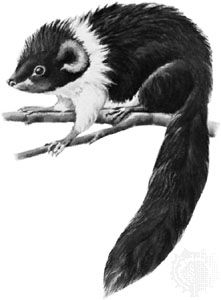
- Tail Specialization: A defining feature of the bushy-tailed cloud rats (Crateromys) is their long, bushy, and hairy tail, which is unique among Old World rats and mice. This tail can account for nearly half of the animal’s total length, likely aiding in balance while navigating forest canopies.12
- Nesting Habits: These animals are highly adapted to utilizing the vertical structure of their environment. They build stick nests in the crowns of trees, occupy hollows within tree trunks, find shelter in cavities among tree roots, and even den inside large tree ferns.1
- Dietary Adaptations: Their arboreal foraging is supported by a specialized diet consisting of tender young leaves, fruits, seeds, pine buds, and bark, allowing them to thrive within the canopy of old-growth tropical forests.1
What is the scientific classification of cloud rats?
Cloud rats are classified within the order Rodentia and belong to the “true” mouse and rat family, Muridae1.
Within this family, they are categorized into two distinct genera:
- Genus Phloeomys: This group consists of two species of giant, or slender-tailed, cloud rats.1
- Genus Crateromys: This group comprises four species of bushy-tailed cloud rats.1
These rodents are closely related to other Philippine-endemic groups, specifically the Luzon tree rats (Carpomys) and hairy-tailed rats (Batomys).1
What are cloud rats and where are they primarily found?
Cloud rats are a group of six species of slow-moving, nocturnal, tree-dwelling rodents that are endemic to the Philippines. They belong to the “true” mouse and rat family, Muridae, and are categorized into two genera: Phloeomys (giant or slender-tailed cloud rats) and Crateromys (bushy-tailed cloud rats).1
These animals are found exclusively in Philippine forests, where they are intimately tied to old-growth tropical environments. Their distribution is localized to specific islands, including:
- Luzon: Home to both Phloeomys species and the Luzon bushy-tailed cloud rat.1
- Catanduanes: Inhabited by P. cumingi.1
- Panay: Home to the Panay Island cloud rat (C. heaneyi).1
- Dinagat: The location of the Dinagat bushy-tailed cloud rat (C. australis).1
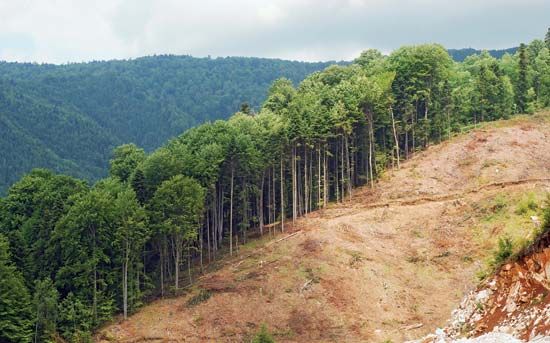
- Ilin: The historical habitat of the Ilin bushy-tailed cloud rat (C. paulus), though it may now be extinct there due to deforestation.1
How many species of cloud rats are known to exist?
There are currently six known species of cloud rats. These rodents are categorized into two distinct genera:
- Genus Phloeomys: Includes two species of giant, or slender-tailed, cloud rats.1
- Genus Crateromys: Includes four species of bushy-tailed cloud rats.1
While these six species are recognized, scientists note that additional, as-yet-undiscovered species may exist on other islands within the Philippines.1
Sources
- cloud rat — Encyclopædia Britannica
- cloud rat — Merriam-Webster
Published on · 2 min read