Redbud
Redbud trees (genus Cercis) are members of the pea family that typically grow as shrubs or small trees. They are widely recognized for their showy…
What are the key characteristics of redbud trees, including their size and appearance?
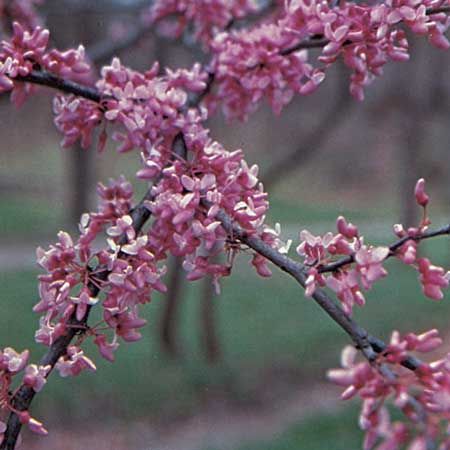
Redbud trees (genus Cercis) are members of the pea family that typically grow as shrubs or small trees. They are widely recognized for their showy, purplish-pink flowers, which bloom in clusters on old stems and branches during early spring, appearing before the foliage emerges.1
The leaves are distinctively heart-shaped or roundish. They often appear bronzy when they first unfurl, transition to a bright green throughout the growing season, and eventually turn yellow in the autumn.1
Regarding size and variety:
- Eastern redbud (Cercis canadensis): The hardiest species, capable of reaching heights up to 12 meters (40 feet).1
- Chinese redbud (C. chinensis): Often maintains a shrubby habit when cultivated.1
- Judas tree (C. siliquastrum): A Mediterranean species associated with historical and religious folklore.1
Where are redbud trees native to, and in what regions can they be commonly found?
Redbud trees (genus Cercis) are native to a broad range of regions across the Northern Hemisphere, specifically including North America, southern Europe, and Asia.1
Because of their ornamental value, they are widely planted in gardens and landscapes globally. While their native distribution is diverse, specific species are often associated with particular geographic areas:1
- North America: Home to the eastern redbud (Cercis canadensis), which is recognized as the hardiest species in the genus.1
- Mediterranean Region: The location where the Judas tree (C. siliquastrum) is native.1
- Asia: The native range for species such as the Chinese redbud (C. chinensis).1
What are the different species of redbud trees, and how do they vary?
The genus Cercis comprises approximately 10 species of shrubs and small trees within the pea family. While they share common traits—such as heart-shaped leaves and clusters of purplish-pink flowers that bloom on old wood in early spring—they vary in size, hardiness, and cultural significance.1
Key species include:
- Eastern redbud (Cercis canadensis): The most resilient species, capable of reaching heights of 12 meters (40 feet). It is highly valued for its distinct branch patterns and rosy-purple flowers, with white-flowered varieties also available.1
- Chinese redbud (C. chinensis): This species is noted for its tendency to maintain a shrubby growth habit when cultivated.1
- Judas tree (C. siliquastrum): Native to the Mediterranean, this species is steeped in folklore. It is traditionally associated with Judas Iscariot, with legends suggesting the tree’s flowers turned red following his betrayal of Christ.’s flowers turned red following his betrayal of Christ.134
How are redbud trees used in landscaping and gardening?
Redbud trees are highly valued in landscaping and gardening primarily for their ornamental qualities and their ability to provide seasonal interest throughout the year.1
Gardeners and landscape designers often utilize these shrubs and small trees for the following reasons:
- Showy Spring Displays: Their most prominent feature is the clusters of small, purplish-pink flowers that emerge on old stems and branches before the leaves appear, providing a vibrant early-season focal point.1
- Foliage Progression: The heart-shaped to roundish leaves offer a dynamic aesthetic, starting with a bronzy hue as they unfurl, transitioning to bright green during the growing season, and finally turning a striking yellow in the fall.1
- Structural Variety: Depending on the species, such as the eastern redbud or the Chinese redbud, they can be used as specimen trees for their interesting branch patterns or as shrubby additions to garden borders.1
- Versatility: Because they are relatively compact, they are well-suited for smaller residential landscapes where larger trees might not be appropriate.1
Sources
- redbud — Encyclopædia Britannica
- redbud — Merriam-Webster
- Judas tree — Merriam-Webster
- Judas thorn — Merriam-Webster
Published on · 3 min read