Republican River
The Republican River is a 445-mile (716 km) waterway in the United States that originates from the confluence of the North Fork of the Republican River and…
What is Republican River?
The Republican River is a 445-mile (716 km) waterway in the United States that originates from the confluence of the North Fork of the Republican River and the Arikaree River near Haigler, Nebraska.12
The river flows eastward through Nebraska, passing towns such as McCook, Red Cloud, and Superior, before turning southeastward through Kansas. It eventually joins the Smoky Hill River at Junction City to form the Kansas River.12
As a vital component of the Missouri River Basin flood-control and land-reclamation project, the river system features several significant dams, including the Harlan County Dam and the Milford Dam. Various tributaries are also managed through structures such as the Bonny, Enders, and Lovewell dams.1
How does the Kansas River system connect to the Missouri River?
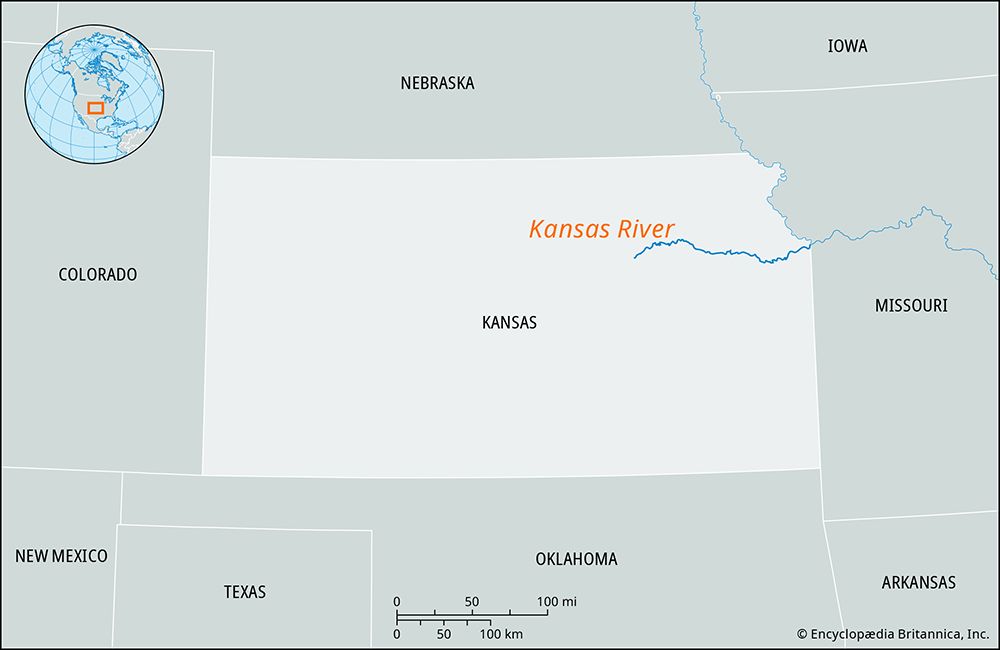
The Kansas River connects to the Missouri River at Kansas City, where it flows into the larger waterway after traveling approximately 170 miles (275 km) eastward from its formation at Junction City.3
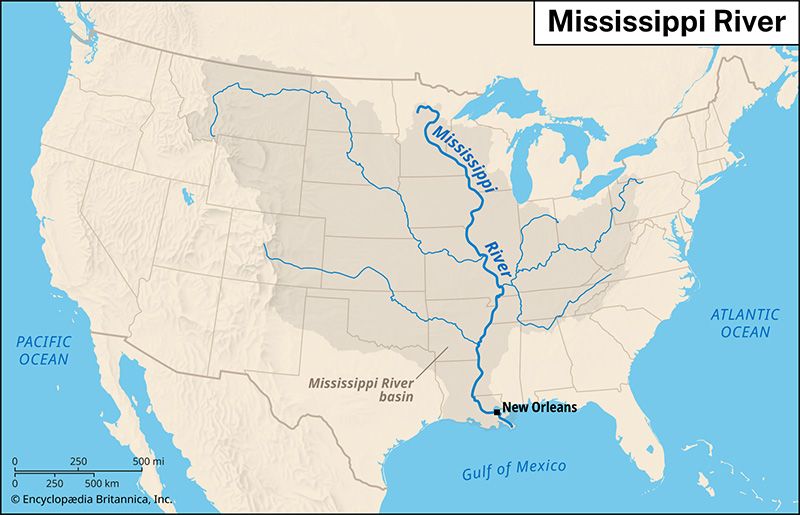
The Kansas River serves as a major tributary to the Missouri River, which is the longest tributary of the Mississippi River. The Kansas River system itself is formed by the confluence of the Republican and Smoky Hill rivers, and it is further joined by the Big Blue River near Manhattan, Kansas.345
What role do dams play in flood control for the Great Plains?
In the Great Plains, dams play a critical role in managing the volatile flow of rivers, which are prone to violent fluctuations that cause erosion and silting. A comprehensive program for flood control and water resource development, authorized by the U.S. Congress in 1944, established a system of over 100 dams and reservoirs across the Missouri River basin.4
These structures function by impounding tributary floods, which helps “starve” the main river of excess water during peak flow periods. By regulating the release of water, this system has significantly reduced flooding, provided irrigation for millions of acres of cropland, and supported hydroelectric power generation.64
However, these engineered solutions have limitations. Once flood-control reservoirs reach capacity, they can no longer mitigate incoming water, as all inflow must be released downstream. Consequently, modern management strategies are increasingly focusing on balancing these structural defenses with floodplain management, such as limiting land use in flood-prone areas to activities that can tolerate periodic inundation.6
How do rivers influence agricultural development in Nebraska and Kansas?
Rivers and their associated water resources are fundamental to the agricultural development of Nebraska and Kansas. The Missouri River drainage system serves as the primary hydrological framework for the region, with major tributaries like the Platte River and the Kansas River providing essential water for irrigation and crop production.
The alluvial soils found in the valleys of these rivers are particularly outstanding for raising corn and other crops. Beyond surface water, the region benefits from the Ogallala Aquifer, a vast underground water source that has enabled extensive well irrigation across the Great Plains, from Nebraska to the Texas Panhandle.789
Following the challenges of the 1930s, agricultural stability was further bolstered by the construction of numerous dams in the Missouri River basin after World War II. These projects provided critical flood control, hydroelectric power, and reliable irrigation, allowing farmers to diversify their operations and integrate livestock production, such as cattle feedlots, with grain farming.9
Sources
- Republican River — Encyclopædia Britannica
- Republican — Merriam-Webster
- Kansas River — Encyclopædia Britannica
- Missouri River — Encyclopædia Britannica
- Kansas - Drainage — Encyclopædia Britannica
- Mississippi River - Flood control — Encyclopædia Britannica
- Nebraska - Drainage — Encyclopædia Britannica
- aquifer and Agriculture — Merriam-Webster
- Nebraska - Soils — Encyclopædia Britannica
- Origins of agriculture - Irrigation — Encyclopædia Britannica
- Great Plains - The people and economy — Encyclopædia Britannica
Published on · 2 min read