Kansas River
The Kansas River is a 170-mile-long (275 km) stream located in northeastern Kansas, United States. It is formed at Junction City by the confluence of the…
What is Kansas River?
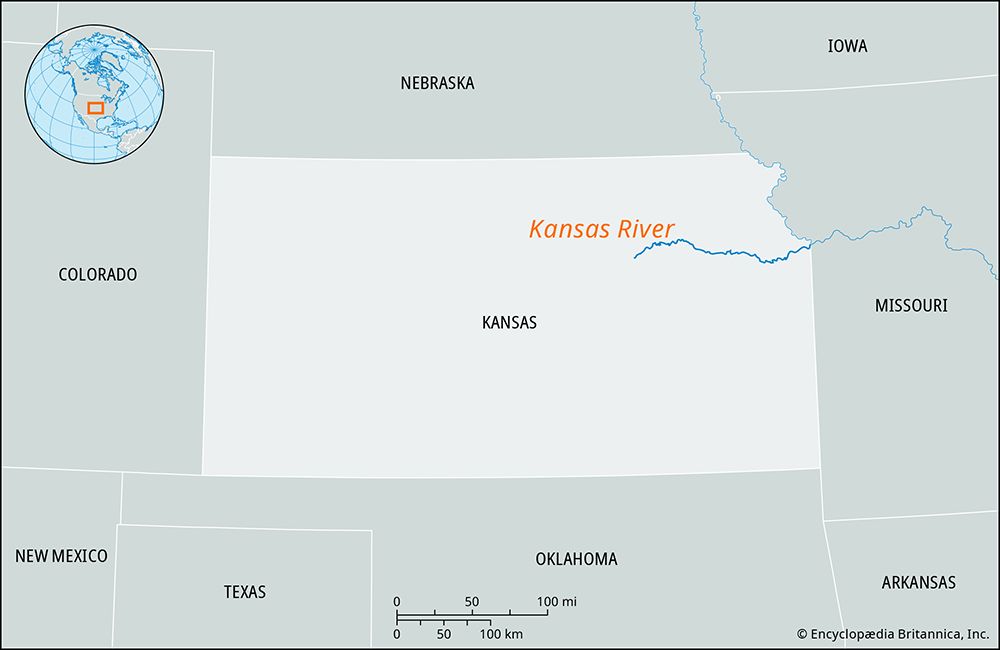
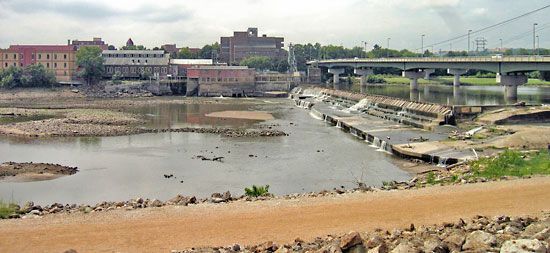
The Kansas River is a 170-mile-long (275 km) stream located in northeastern Kansas, United States. It is formed at Junction City by the confluence of the Republican and Smoky Hill rivers.12
As it flows eastward, the river is joined by the Big Blue River near Manhattan before eventually emptying into the Missouri River at Kansas City. The river’s drainage basin covers 61,300 square miles (158,770 square km), extending across northern Kansas and into parts of Nebraska and Colorado. Throughout its history, the river has been subject to periodic, damaging floods, most notably in 1951, 1977, and 1993.1
How do man-made reservoirs help manage flooding in Kansas?
While Kansas has few natural lakes, the state has constructed a large number of man-made reservoirs to address its history of periodic, damaging floods. These reservoirs serve as critical infrastructure for flood control, as well as for irrigation and other water management needs.214
By damming rivers, these projects create reservoirs that can capture and store excess water during periods of high flow, preventing it from overwhelming downstream areas. For example, the flood-control dam on the Smoky Hill River near Kanopolis, constructed in 1948, is a key component of the broader Missouri River Basin project designed to mitigate flood risks.45
The U.S. Army Corps of Engineers plays a central role in these efforts, as their civil works activities traditionally focus on the planning, construction, and maintenance of rivers and flood control systems. Through these engineered interventions, the state manages the flow of major waterways to protect buildings, farms, and communities from the devastating impacts of flooding.314
What is the difference between a river’s headstream and its confluence?
A river’s headstream and its confluence represent two distinct stages in the life of a waterway:
- Headstream: This refers to the beginning part or source of a stream. It is the point of origin where the water first arises, often fed by springs, melting snow, or other natural features in higher elevations.67
- Confluence: This is the point where two or more separate streams or rivers meet and flow together to form a single, larger body of water. While a headstream marks the start of a river’s journey, a confluence marks a junction where the river’s volume typically increases as it merges with another tributary.89
In short, the headstream is where a river begins, while the confluence is where it joins forces with other waterways.
How does the Missouri River connect to the Mississippi River system?
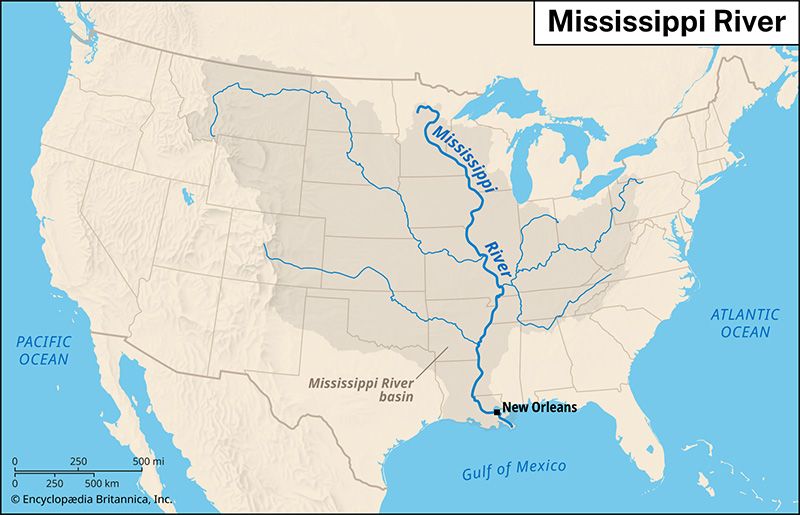
The Missouri River connects to the Mississippi River system by serving as its longest tributary. After flowing across the Great Plains and meandering through the state of Missouri, the river makes its final eastward turn near Jefferson City. It continues this course until it joins the Mississippi River approximately 10 miles (16 km) north of St. Louis.10
This confluence marks the end of the Missouri’s 2,315-mile journey, where it discharges into the larger Mississippi system at an elevation of about 400 feet (120 meters) above sea level.10
Sources
- Kansas River — Encyclopædia Britannica
- Kansas - Drainage — Encyclopædia Britannica
- Smoky Hill River — Encyclopædia Britannica
- Elk River — Encyclopædia Britannica
- U.S. Army Corps of Engineers — Encyclopædia Britannica
- headstream — Merriam-Webster
- confluence — Merriam-Webster
- headstreams — Merriam-Webster
- confluents — Merriam-Webster
- Missouri River — Encyclopædia Britannica
Published on · 2 min read