Rift Valley
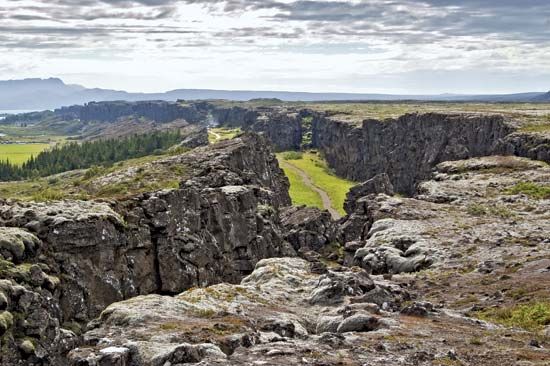
A rift valley is an elongated trough formed by the subsidence of a segment of the Earth’s crust between parallel faults. Unlike valleys carved by glaciers or…
What is a rift valley and how is it formed?
A rift valley is an elongated trough formed by the subsidence of a segment of the Earth’s crust between parallel faults1. Unlike valleys carved by glaciers or rivers, rift valleys are tectonic features created when the crust is displaced downward.12
These valleys form at divergent plate boundaries, where two lithospheric plates are pulling apart. The process typically begins with the upwelling of magma, which causes the overlying crust to uplift and stretch. As the plates diverge, the crust fractures and the central blocks settle, creating a valley.23
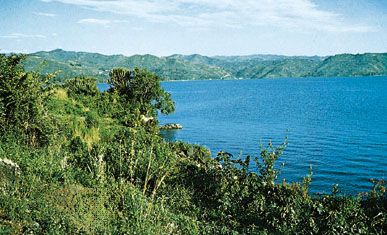
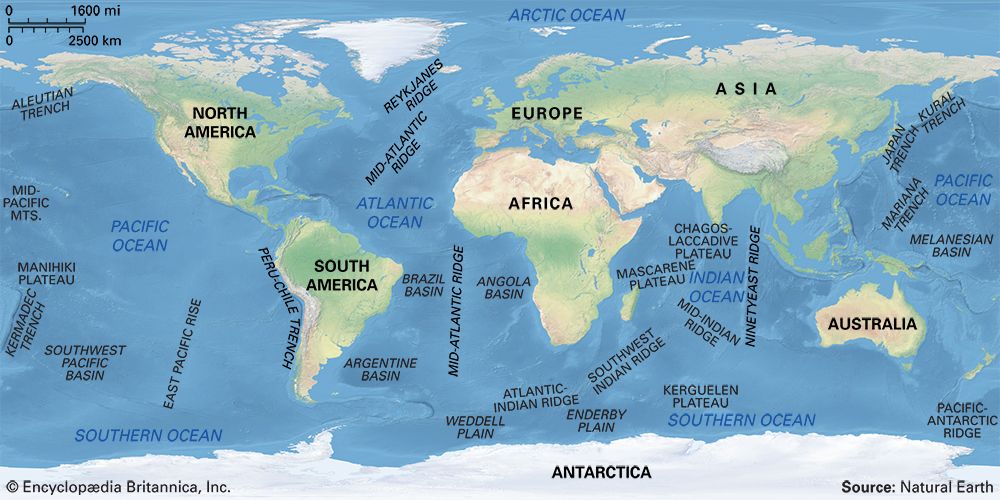
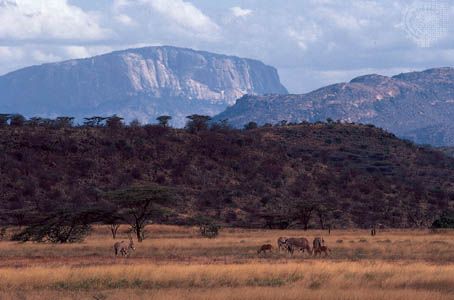
On continents, this process can lead to the formation of systems like the East African Rift Valley. If the rifting continues, the crust thins until the plates separate entirely, allowing new oceanic crust to form and creating an oceanic ridge along the site. Consequently, many submarine rift valleys are found along the crests of these ridges throughout the world’s oceans.32
How do scientists study rift valleys, and what can we learn from them?
Scientists study rift valleys to gain critical insights into the Earth’s internal processes and the history of its crustal movements. By analyzing these features, researchers can better understand the mechanisms of plate tectonics and the evolution of our planet’s surface over millions of years.1
Methods of Study
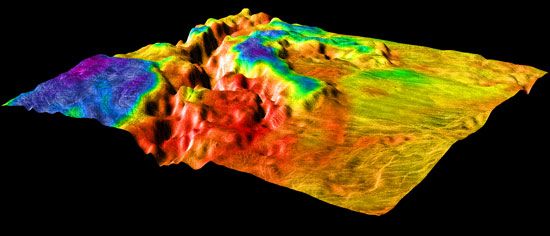
- Geophysical Surveys: Scientists use systematic measurements of ocean depth and three-dimensional relief mapping to identify and characterize rift valleys, particularly those along oceanic ridges.5
- Radiometric Dating: Modern analytical techniques, such as measuring the radioactive decay of uranium to lead in zircon, allow researchers to determine the age of geologic events with high precision, helping to date the formation of rift sequences.6
- Seismic Analysis: Monitoring earthquakes helps scientists identify extensional environments where the crust is being stretched, providing evidence of active rifting.5
What We Learn
Studying these valleys reveals how continents break apart and how new oceanic crust is created through seafloor spreading. They also provide a window into the Earth’s mantle, as the thinning of the lithosphere allows hot material from the asthenosphere to rise, often resulting in volcanism. Furthermore, these studies help reconstruct the positions of ancient continents, such as the breakup of the supercontinent Rodinia.76
What role do rift valleys play in plate tectonics and continental drift?
Rift valleys are fundamental features in plate tectonics, serving as the primary surface expression of divergent plate boundaries where the Earth’s lithosphere is being pulled apart.13
Role in Continental Drift
Rift valleys represent the initial stage of continental breakup. As tectonic plates diverge, the crust undergoes uplift and stretching, often accompanied by the upwelling of magma. This process creates fractures that allow continental blocks to subside, forming a rift valley.
As rifting progresses, the continental crust thins significantly. If the divergence continues, the plates eventually separate entirely, leading to the creation of a new ocean basin. At this stage, the rift valley is replaced by an oceanic ridge, where magma cools to form new oceanic crust, effectively driving the continents further apart through seafloor spreading.3
Key Characteristics
- Tectonic Subsidence: Unlike erosional valleys, rift valleys are formed by the downward displacement of crustal segments between normal faults.1
- Volcanism: Many rift systems, such as the East African Rift System, are associated with volcanic activity caused by the rise of hot material from the asthenosphere through the thinned crust.5
- Structural Diversity: These valleys can be symmetrical or asymmetrical, often featuring complex internal structures like horsts and deep, sediment-filled floors.15
What are the main geological features typically found in a rift valley?
Rift valleys are elongated tectonic troughs formed by the subsidence of the Earth’s crust between normal faults. Unlike valleys carved by erosion, these features are created by the extension and divergence of lithospheric plates.58
Key geological features typically found in rift valleys include:
- Normal Faults: These fractures define the valley margins, where the hanging wall moves downward relative to the footwall, creating steep, often stepped or terraced walls.518
- Grabens and Horsts: Rift valleys often exhibit horst and graben topography. A graben is the down-dropped valley floor, while a horst is a narrow, elevated block of crust bounded by faults that remains at a higher relative elevation.51
- Volcanoes: Many rift axes feature volcanoes formed by the upwelling of hot material from the asthenosphere through thinned crust, though this is not universal.58
- Sediment-Filled Floors: The valley floors are often relatively flat due to the accumulation of volcanic deposits and lacustrine or marine sediments, which frequently host deep lakes.58
- Asymmetrical Profiles: Many rifts are asymmetrical, featuring one steep, fault-bounded wall and a gentler, tilted side formed by the flexing of the lithosphere.5
Sources
- rift valley — Encyclopædia Britannica
- rift valley — Merriam-Webster
- plate tectonics - Continental rifting — Encyclopædia Britannica
- mid-ocean ridge — Merriam-Webster
- tectonic basins and rift valleys - Rift valleys — Encyclopædia Britannica
- plate tectonics - Discovery of ocean basin features — Encyclopædia Britannica
- plate tectonics - Continental reconstructions — Encyclopædia Britannica
- normal fault — Encyclopædia Britannica
Published on · 4 min read