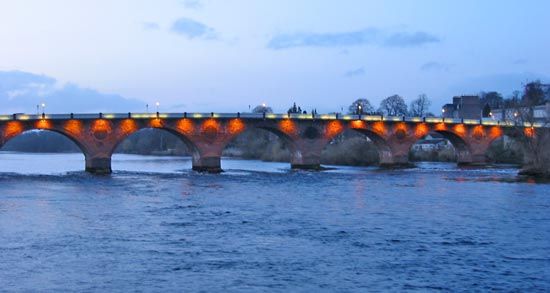
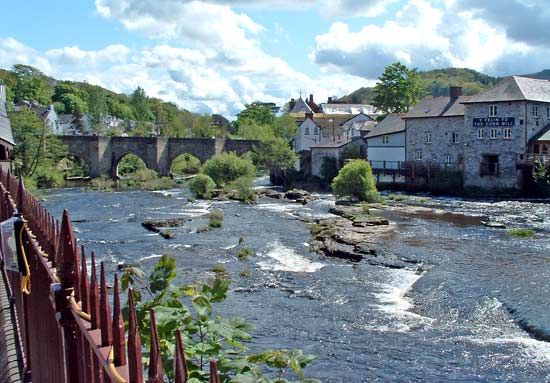
River Clyde
The provided search results do not contain information regarding how the River Clyde has been featured in Scottish literature and art. While the sources…
How has the River Clyde been featured in Scottish literature and art?
The provided search results do not contain information regarding how the River Clyde has been featured in Scottish literature and art. While the sources detail the river’s historical significance as a center for shipbuilding, coal mining, and industrial development in Glasgow and Clydebank, they do not discuss its representation in creative works.12

How has the River Clyde influenced the industrial development of the region?
The River Clyde has been the primary catalyst for the industrial transformation of west-central Scotland, evolving from a natural waterway into a vital engine for global trade and heavy manufacturing.14
Early Industrial Foundations
In the early 19th century, the river’s geography played a crucial role in early industrialization. The Falls of Clyde provided essential waterpower for local cotton mills, establishing an early manufacturing base. As trade with the New World expanded in the 18th century, the river was systematically dredged and deepened, allowing it to become navigable to the heart of Glasgow.14
The Rise of Heavy Industry
This accessibility turned Glasgow into a major industrial hub. The region became synonymous with:
- Shipbuilding: The Clyde developed into the world’s largest shipbuilding center, with yards lining the river for 20 miles below Glasgow. Towns like Clydebank, Port Glasgow, and Greenock became global leaders in marine engineering and vessel construction.153
- Coal and Iron: The lower Clyde valley became a dominant center for coal mining, iron founding, and chemical manufacturing, fueling the broader Industrial Revolution.14
While these industries faced significant decline following the World Wars, the river remains a central feature of the region’s economic identity, transitioning toward modern sectors like renewable energy, aerospace technology, and tourism.1453
Where does the River Clyde originate, and where does it flow into?
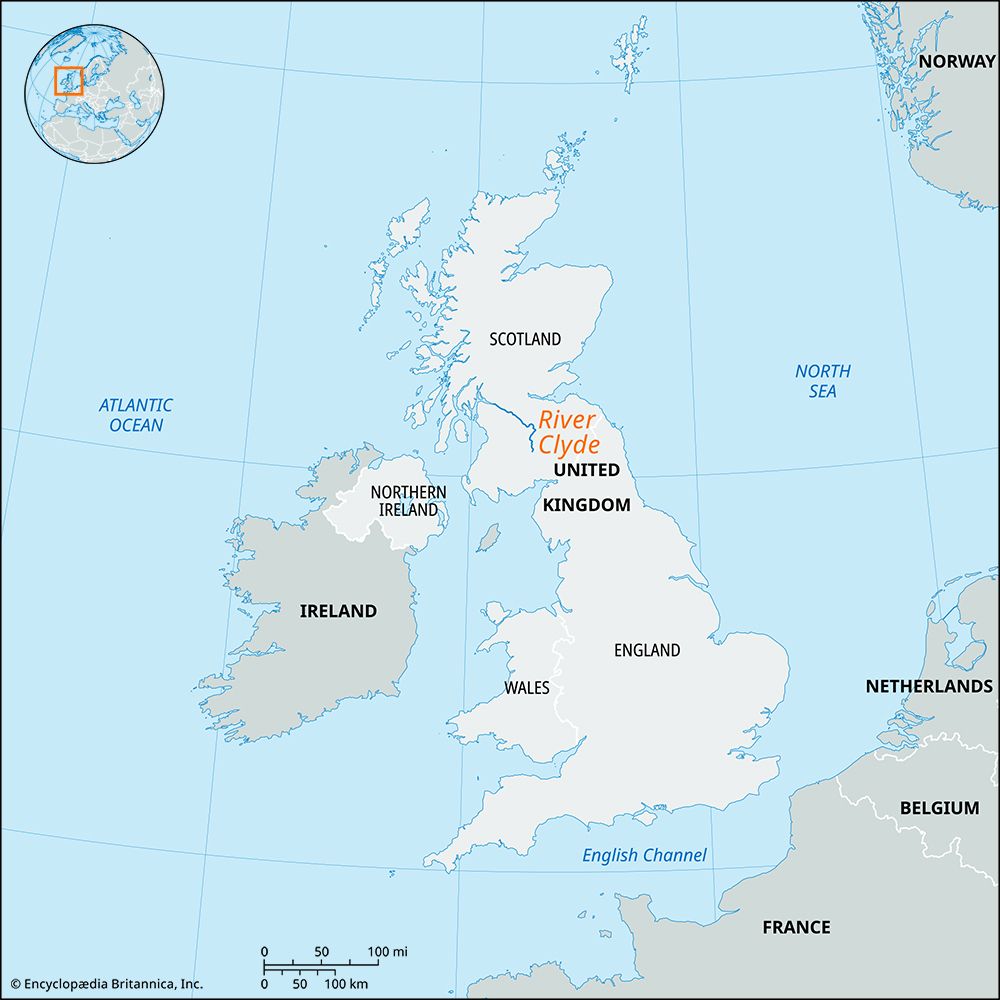
The River Clyde originates in the moorlands of the Southern Uplands in Scotland. From its source, it flows northward and then northwestward, eventually discharging into the Atlantic Ocean via its estuary, the Firth of Clyde, on the western coast of Scotland.1
What is the historical significance of the River Clyde for Glasgow and Scotland?
The River Clyde is historically significant as the primary engine of Scotland’s Industrial Revolution. Its transformation from a natural stream into a navigable waterway was essential to the growth of Glasgow and the nation’s economic prosperity.16
Key historical contributions include:
- Manufacturing Foundations: Early 19th-century cotton mills relied on waterpower from the Falls of Clyde, while the dredging of the river enabled large-scale trade with the New World.1
- Industrial Dominance: The river corridor became a powerhouse for coal mining and iron production. By the mid-19th century, heavy industry replaced agriculture as Scotland’s primary economic focus.16
- Shipbuilding Supremacy: The Clyde became the world’s largest shipbuilding center. Marine engineers like Robert Napier helped establish a global reputation for marine engineering and vessel construction that defined the region for over a century.16
Sources
- River Clyde — Encyclopædia Britannica
- 14 Buildings That Lay Bare Scotland’s Soul - Glasgow School of Art — Encyclopædia Britannica
- Clydebank — Encyclopædia Britannica
- Glasgow — Encyclopædia Britannica
- Inverclyde — Encyclopædia Britannica
- Scotland - The Industrial Revolution — Encyclopædia Britannica
Published on · 2 min read